Thursday, April 24, 2014

IN SESSION: An interview with JOSS STONE

Joss Stone laying it down.
Photo by Cynthia Serenissima 
Mid-way through recording her seventh album, soul pop icon JOSS STONE takes some time out to bring ANDY HAZEL up to speed on resurrecting lost songs, the Spice Girls and her ambitious touring plans.

When Joss Stone plans a world tour, she really doesn’t mess around. “The idea is to play at least one show in every country in the world,” she explains keenly and without a flicker of doubt. “After Australia and New Zealand, we’re in Dubai, then Europe. We’re in the process of booking everywhere else. I want to play a show, look about the place, see what good we can do while we’re there, and see what music we can listen to while we’re there. In Australia, I’m hoping to find some music that originates in Australia. Rather than sitting in my hotel, I’ll get out and about and see what’s going on.”

Playing with Archie Roach and the Black Arm Band last time she was in Melbourne (an experience she describes as “really wicked”), this monumentally ambitious tour may not be as farfetched as it seems for someone with the career trajectory of Stone; TV talent contest winner at 13 and multi-million seller at 17. “I’d like to go further into Australia. Dive right into the middle of the country and see what happens. The whole tour will be documented on my website every two or three days. We’ll post a short video from each place, maybe put a documentary together later, but for now it’s just something fun people can follow.”

Having taken nine months off from a hectic touring schedule, our interview finds Stone taking a break from recording her forthcoming album in her newly finished home studio. “I’m in the process of recording it right now,” she says happily. “In fact at the moment I’m cutting violin - they’re in the other room. After I chat to you we’re back to it.”

Still unnamed and unfinished, Stone says the album will be “a lot more groove-oriented. There are lots of ideas going round, and I don’t want to say what they are yet. It’s got a reggae backbone. It’s a bit hip hop and RnB. It’s not really the usual wailing vocal thing I’ve done in the past.”

While Stone may be focusing more on rhythm than before, she won’t be abandoning her first love anytime soon. “Soul music is an expression of emotion. It’s feelings, and whether or not you like the notes being played is irrelevant in soul music. Actually, as I get older it bothers me more, but soul music is just music that’s meant. That’s what I like about it. If it meant something to me as a little girl, it will never not mean something to me. It’s the same with pop songs. Some of the Spice Girls’ songs I danced around to aged 10 still make me smile, and they mean something, that’s never going to change. A lot of pop songs now, they don’t really sit close to your heart in the same way.” Would collaborating with Mel C be out of the question? She laughs loudly at the suggestion. “Wow! That would be a laugh! I’d love to hear that! Mel C has an amazing voice and she’s really lovely. Ha!”

In a career marked by lending her youthful energy and rich voice to revitalising obscure soul songs or duetting with other artists, Stone still has many unfulfilled ambitions. “There are a lot of people I want to work with, but there’s not one person I think ‘fuck I want to nail that person down and just do it’,” she explains. “If the person wants to collaborate with me, it’s going to be a really good piece of music. If that person isn’t passionate, forthcoming, or hard to find then it was never meant to be. But, if you don’t ask you don’t get,” she qualifies, before considering Music, her duet with reclusive neo-soul icon Lauryn Hill. “That took a long time not because she was holding out, but because it’s hard to get hold of her. I knew she was right, and I knew it was in the stars, so I kept trying and she did it. It was a beautiful thing. I felt very honoured.”


The songs Stone is most famous for singing, she reminds listeners, aren’t hers. This role of interpreter is something with which she is wholly comfortable. “In interviews, I always made a point of saying ‘this song is not my song, it’s by the Isley Brothers, or Womack and Womack or whoever’ because it’s important people type that in and see where this song came from, why it’s lived for so long and who inspired it,” she says avidly. “Super Duper Love was a song we hardly changed at all. Sugar Billy wrote it and he’d lived his whole life pretty much unknown and almost no one had heard it. Because I did it and people heard it, he died a happy man and I hold that close to my heart. I didn’t know half of these songs for very long before I recorded them either. I was shown something by [producer] Steve [Greenberg], and I showed it to someone else, so it’s a circle really.”

Tuesday, April 22, 2014

LEAVING HOME BEHIND: An interview with Alex Ebert of Edward Sharpe and the Magnetic Zeroes

Alex Ebert, aka Edward Sharpe. Photo by Will Schube.
No longer just a singer in a “drugged out naïve hippy band”, ALEX EBERT of Edward Sharpe and the Magnetic Zeros is now a Golden Globe-winning composer who's writing a screenplay he began working on with Heath Ledger.

A new resident of New Orleans, Alex Ebert has spent the last two months neck deep in the glitzy side of his previous home, Los Angeles. The move satisfies his love for community. A love that has seen him take on the persona of Edward Sharpe, the bearded, wild-haired singer for ragtag collective the Magnetic Zeros. Ebert explains “LA has no community so, growing up, I imagined it. A while back, my mom showed me a story I wrote when I was six and it began: ‘Once there was a boy who had a crew’. That touched me, because I hadn’t seen that in what…25 years, and it was fun to know I always had my eye on that,” he says, laughing quietly.

“I’m actually doing a lot of writing about the concept of childhood and cool, a friend and I are working on a book called Kingdom Cool. All of those qualities – communities, optimism earnestness – they’re the counterculture now, they’re the un-cool thing.”

Increasingly, Ebert is no longer being seen as part of the culture with which he has been so closely associated. Still writing instantly catchy and hummable songs like Home and 40 Day Dream, attention has been coming his way for his more ambitious projects. Winning a Golden Globe for Best Original Score for the Robert Redford-starring film All Is Lost, he believes he’s no longer considered a singer in, as he puts it “a drugged out naïve hippy band".

"Leading right up to the announcement I was jittery, jittery, jittery,” he says happily reliving the moment. “But I was able to watch myself be jittery, so I started thinking ‘maybe I’m jittery for a reason, maybe I’m going to have to deliver some kind of speech’. It was a very surreal thing. Awards shows are very glitzy and nothing more than a popularity contest on some level. To be recognised for something you worked really hard at – and I really loved working on that score, and I love the film – to be recognised for something you put all your heart and soul into, was amazing.”

Despite the accolade, Ebert still feels the outsider, at least on a personal level. “There was a fun moment at the Golden Globes where [Robert] Redford was talking to Bono and I was standing behind them and I heard them talking about me and Redford said: 'now he really understands silence’. I thought that was so amazing that I just had to say something, so I excitedly blurted out this long-winded monologue and basically proved I didn’t understand silence at all,” he chuckles.

Ostensibly in Australia to promote last year’s eponymous album, his band’s third, Ebert has no qualms about the fact his mind is far from organising music into releasable packages. “The album is dead for me. It always has been, but I love writing songs so I’m writing a lot of songs. I’m scoring a Pixar short film, which I’m really excited about,” he says happily. “It’s a beautiful, beautiful story, so I’m having fun doing stuff.”

Stuff, it turns out, includes writing a screenplay he developed with sadly departed good friend Heath Ledger. “It’s a musical I’ve been developing that with a director who uh…I shouldn’t give away his name, but he’s a very respected director. I pitched him the idea and he loves it. It’s a bizarre, out-there musical that I can’t talk too much about, but it’s certainly great to be carrying on anything I talked about with Heath.”

While winning the Golden Globe has, he admits, opened up new doors and lead to working on several scores with “well-respected directors” he can’t name, Ebert is still most glad for the chance to simply be heard, and to move on from his past experiences with drugs and poverty.

“Composing orchestral music is seen as being a bit…heavy, and it’s not actually. I’d gone so far down in some people’s estimation it’s nice to know that people might consider that we have something else to say now, and my opinions will be heard by different people.”

What Ebert plans to say to this new audience is however, unclear. As with most people in Hollywood, he’s working on a lot of projects and, with luck, one might find funding. An avid and productive, if unpublished, screenwriter, Ebert is most excited about the conversion of one of his scripts into a film.

"I’d written a screenplay two nights before the awards, now I’m on the third draft and I’m very excited about it. The source is quite strange,’ he says struggling to explain it. “It’s kind of a Native American version of The 400 Blows. It’s a very important story to me, I have a lot of people helping me get the script together.”

For a man who makes singing folk pop and driving an old bus full of new friends into a desert for a party seem like the best idea ever, what excites Ebert most now is revolutionising taxation, and no, that’s not a euphemism.

“I’m working on a few socio-political web-based problem solving techniques - basically big new ideas, at least to me,” he explains keenly, sounding like an excited social science teacher. “Taking the idea of acting ‘as if’ – virtual reality ideas, basically – and applying them to problem solving strategies to bypass the red tape of politics and social change.”

Before confusion sets in, Ebert clarifies. “I bought the domain thenewirs.com, because I’m making a new IRS – the Inland Revenue Service, our national taxation system here. With The New IRS, you’re able to choose where you’d like your tax dollars to go. It’s designed to allocate percentages of your income taxes into categories so you can fund what you’d like to.”

The website, now live, means that, along with his other projects, an Edward Sharpe tour may be increasingly rare; his name becoming more common in film credits, and his Pied Piper charisma and yearning for community finding new outlets.

Live Review: BURNT LETTERS, THE ACFIELDS

Burnt Letters, bringing the pain. Photo by Roisin Malone.
Retreat Hotel, 
Apr 5

For reasons best known to the venue’s management, tonight’s show takes place in the sardine-tin of the stage-less front bar rather than the spacious band room. What the place lacks in space and sight-lines, it more than makes up for in vibe, and, as tonight’s show teaches us, that’s what it’s all about.

Folk duo The Acfields are one of the least pretentious bands you’re ever likely to see, and playing to a room crowded to temperature and humidity bolstering capacity, their set seems like an accidental victory. The brother-sister combination of Dan and Hannah Acfield pen songs about their grandparents, their car and each other, each one leavened by their sterling harmonies. Freely chatting to the audience between (and during) songs, they trample all over the line between audience and band, giving instruments to the crowd and starting conversations. Songs like After You, Taking Your Time and Green Mazda earn a rapturous applause from a chipper crowd.

Opening a set with a sing-along of the traditional Down to the River to Pray is an ambitious move for an alt-country duo like Burnt Letters. If, however, you’ve brought along a swathe of the Melbourne Mass Gospel Choir, it turns out to be a smart one. After turning the pub into a church, singer-songwriters Lou Pine and Kinch Kinski replace the choir with a backing band (spontaneously named the Roughshod Angels by Kinski), and rip the tarp off a stellar set.

Quick Against the Moon, Sweet Face and Split in Two (a song about “The sort of women that stay up all night talking politics and drinking goon,”) show off the duo’s songwriting skills and the (Werckmeister-esque) harmonies. Acknowledging their influences both local and legendary in the rowdy East Brunswick Club and the band’s skills in building an atmosphere in Knotted Pine, it’s the crowd-rousing take on Son of a Preacher Man that gets the biggest response. A sense of humour and humility combined with songwriting and vocal talent this good is rare. To see it generate such an enthusiastic response is cockle-warming like a small town welcome. Closing with Talk to You, the opening track from the debut EP tonight’s show is launching, the choir return and Burnt Letters give us another emphatic example of inclusive warmth.

Tuesday, April 8, 2014

Live Review: DEAR PLASTIC, INVISIBLE DEARS, OH PEP!

Scarlette Baccini, on form as ever. Photo by Dee Dee
Ding Dong Lounge, 28 Mar

While other Dear Plastic fans are presumably elsewhere frantically scrabbling for Kate Bush tickets, the few punters who catch the opening set from half of Oh Pep! see something very special. Missing their rhythm section, the duo of Olivia Hally and Pepita Emmerichs play a folksy Americana that makes you wish you were sitting on a hay bale in a Mississippi twilight. Dedicating the song Big Strong Man to their missing male members (heh heh), Emmerichs’ crystalline harmonies and tumbling violin and mandolin melodies show her fearsome skills, though these never detract from Hally’s beguiling, seemingly wood-aged songs. Travelling and new song Railroad sound ancient, and news of their imminent five-month tour of the US and Europe is heartening. Any band that has customised crockery as merchandise deserves a far bigger audience.

Invisible Dears are a five piece with a superfluity of technical skills and ideas, and it's these qualities that are both their biggest asset and weakness. Faultlessly shifting styles and tempos several times each song (though never straying far from soundtracking a Dolmio ad) is as fun to play as it is alienating to a non-virtuoso listener and suggests the band are constantly bored of their own songs. While individual segments are interesting, do you, dear reader, think Daniel Johnson's fragile masterpiece Walking the Cow needs to be injected with optimistic funk, sped up and played ‘right’? Didn’t think so.

With the venue near capacity by the time they go on, Dear Plastic take to a stage that resembles a model of a city block; a teetering tower of Moog gear, squat amplifiers, expansive synthesizers and a lone microphone stand. After an arresting instrumental piece, singer Scarlette Baccini joins her bandmates, opens her mouth and sets jaws dropping. Expressive, rich, dazzling, it’s rare to stumble across an instrument this natural and distinctive. Best given the room to shine as it is on recent single, the Goldfrapp-esque Everything’s Coming Up Roses, and tonight’s launched single Buck Up and Pay the Reaper, these songs aim high and rarely miss.

Without dramatic shifts in dynamics or obvious choruses, songs like No Way to Know, Physical Chemical and Bridge to Burn are surging, enveloping creations. Hooks emerge from clouds of rich keyboard textures though sometimes obscure each other and the chiming guitar lines. Baccini, resplendent in multi-coloured Lycra top and striped leggings, is an engaging presence, constantly in motion, always in control. Like a fervent soundtrack to a David Lynch film, Dear Plastic are not, as they claim on their Bandcamp page ‘dishing out more melancholy than Radiohead’, their emotional range is far greater than that. It's a revealing and distinctive set, and one that promises even better to come.

Saturday, April 5, 2014

Live Review: SNAKADAKTAL, CITY CALM DOWN

Snakadaktal in action. Photo by Arianna Lucente
Northcote Social Club, March 29 2014

A young, loved up and turned out crowd packs the room early on for this, the last ever show from one of Melbourne's most galvanising bands. But before 2011's Triple J Unearthed winners can take to the stage, City Calm Down kick out some jams. Skillfully deploying keys, dub-deep bass and punchy drums, all the ingredients are in place for new wave dance-floor bangers. Riding between the clean groove of LCD Soundsystem and louche funk of A Certain Ratio, new song Pavement is a fiery calling card, proving the four-piece are hitting new heights. Over buzzing 16-beats, chugging basslines and spiraling synth arpeggios, singer Jack Bourke channels the dramatic bluster of Ian McCulloch. Lost: Trapped, Speak to No End and closing epic Dare are longer than they need to be (though not long enough if you’re dancing, but, being Melbourne no one is), and demand a bigger stage. CCD would be a perfect Golden Plains discovery for those not already won over.

To deafening cheers, Snakadaktal arrive on stage, stand in a line and smile tiredly at each other. “The summer of year nine, we were all at Phoebe's house,” explains drummer Barna Nemeth, of their journey to now. “Since then we've experienced so much awesome stuff, and we're forever grateful. Thank you.” Occasional outbursts of sincerity pepper tonight’s emotional set. With the audience giving the band far more than they give us, the night plays out like a sleepwalker being shouted at by a drunken football team. Singer Phoebe Cockburn couldn’t invest the songs with less effort or emotion, yet the audience responds as if she were invisibly administering cocaine. With only the atmospheric noodling of Joseph Clough’s Rickenbacker (and Cockburn forgetting the lyrics to Isolate) enlivening the first half of the set, song after song (Union, Hung on Tight, Air, Wake Up) vanishes like a rescinded uncertain suggestion. This is the sound of commitment-phobia, of respectfully keeping it down, of really nice people being really nice.

Until, finally, songs cease to resemble their sedate recorded versions and a thrilling Too Soon, Fall Underneath and Dance Bear burst into being. No longer a set more suited to a sensory depravation chamber, moshing, crowd surfing, girls on the shoulders of boyfriends, and a dancer dressed as a crocodile appears on stage transform the venue into the first night of Schoolies week. Closing with The Sun III, instead of an encore we get a teary group hug and scarcely a wave goodbye. An ironically bombastic end to a career of a band that, like them or not, never faked a note, and chose to float away rather than self-destruct.

Live Review: WENDY RULE

Northcote Uniting Church, 22/02/2014

Half an hour after doors open, a line of fans threads their way blackly down High Street. Longhaired and mostly female, the line enters the church hall through clouds of burning frankincense, past autumnal branches and clusters of candles. Before a note is played it’s apparent a Wendy Rule concert is about far more than just music.

Launching her seventh album Black Snake, by playing it through, possibly, she tells us, for the only time, Rule has assembled an adoring crowd and stellar septet to back her. Arriving on stage in a long flowing dark silk dress, she begins with the titular song, her deep, expressive voice instantly arresting and the artful deployment of marimba, guitar, flute, percussion, cello and violin inspired.

Standing before a pentagram of candles she moves into Juniper, a slow celebration of new marriage. Vaguely reminiscent of British folk singers from the 1960s, her overt spirituality sets her apart. "This album comes from soul journeying. Deep journeying and crossing thresholds," she says by way of introducing Rewind, another intensely personal ode to a recent life event. After fifteen years documenting her personal and spiritual journeys in music, it’s unsurprising that the atmosphere in the hall is one of mutual love and respect, and if that sounds bit hippy, it is. This is a woman who introduces a song called Why Must Love Be Twined with Sorrow? with the laughing admission, "Of course, it's written by a Scorpio!"

Many of her songs are given a shot in the arm by the mercurial violin of Aaron Barden, including the solemn ode to Mother Earth A Will of Its Own. Rule is likely to be the only singer who introduces a song (Ereshkigal) with both a brief guide to Mesopotamian goddesses, and a dance ensemble that interpret the five elements; a performance more ceremony than gig. Ever the high priestess, Rule plays a role she is both beloved in, and born to.

After a 20-minute break we move to the album’s second half. A stirring song "about our role in the cosmos and how we are all connected," From Great Above to Great Below follows. Several about her favourite topic, the movement of time and the seasons, After The Storm, Winter and Home follow. Closing with another hymn for the Wiccan church of the earth, All Life Flows into the Great Mother, the (expected) encore sees a dance troupe assemble, all long dresses and flicking hair. Rule leads the band through Horses and Zero, an early song "about magic", with its Einstein-defying chorus of "all space is here / all time is now". Frankly, she's Wendy Rule and reductionist materialism be damned, she is a woman who knows exactly what she's doing.

Wednesday, April 2, 2014

Live Review: SUNNYBOYS, RON S PENO AND THE SUPERSTITIONS

L-R. Richard Burgman, Jeremy Oxley, Peter Oxley. Photo by Carbie Warbie
Forum Theatre,
21 March 2014

Far from the hordes of Cat Empire fans across the road in Federation Square in average age and explicit enthusiasm, tonight the Forum attracts a more discerning crowd. Selling out the first of two shows, Australian power-pop legends Sunnyboys are amidst a comeback the likes of which they couldn't have predicted a couple of years ago.

Much like the red wine his surname suggests, Ron S Peno and the Superstitions are an acquired taste. Here he, and his proficient band, hold the reverent, attentive and largely over-40, crowd in his thrall. Moving like a flamenco dancer demonstrating ineffective swimming strokes, Peno is a galvanizing presence, but it’s not until the last third of the show that his voice opens up and we can hear what he’s feeling. Then, it's captivating. Call Your Name is the turning point of the set and by the closing with Myself in Thee the sound is huge and game is won.

After a brief video comprising live and promotional footage from their early days and a scene-setting interview the Sunnyboys stride out, accept the euphoric applause and launch into a thorough overview of their three albums. After opening with As I Walk, early song Love to Rule and Tunnel of My Love guitarist Richard Burgman (a man who doesn’t stop grinning all night) says 'It's been a long time boys and girls and we're very glad to be here'. Singer/songwriter Jeremy and brother bassist Peter Oxley are joined by another brother Jim for an exuberant take on Happy Man, and Alastair Spence jumps in on keyboards for Let You Go as the audience increasingly resemble the crowd across the street.

“How does it sound?” asks Burgman rhetorically to his bandmates after a brace of thrilling guitar pop that takes in What You Need, It’s Not Me and You Need a Friend and a lot of inter-band smiling. “I think they like it boys!” he laughs. The first set closes with a Nuggets-worthy I’m Shaking, before returning for Trouble in My Brain, the immortal Alone With You and a rugged Show Me Some Discipline. Howled out for a third encore, the victory lap of early single The Seeker introduced as “a song we haven't played in 20 years,” fills the room with joy. A stunning show, and not just to those who were lucky enough to grow up with the catchy musings of Jeremy Oxley on their Walkman.

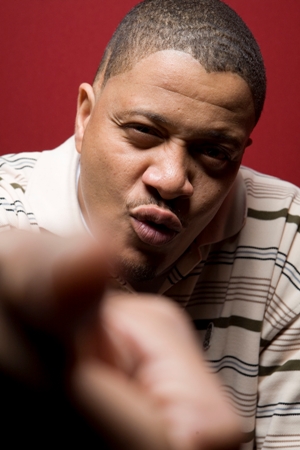
CHALI’S ANGLES: An interview with Chali 2na of Jurassic 5

Jurassic 5 founder and prolific rapper CHALI 2NA returns to Australia for the second time this month, ANDY HAZEL discovers a man keen to leave his mark in more ways than one.
“Uh…I’m just getting out of the shower,” says a chuckling Chali 2na down the line from his home in Los Angeles. “I do apologise.”
Literally fresh from reunion shows as part of legendary hip-hop collective Jurassic 5, the self-styled baritone MC is keen to get back to Australia after an ecstatically received concert at last year’s Coachella Festival. “I felt like we picked up where we left off,” he says keenly, “like we never broke up. The show was amazing. Coachella is one of the more professional festivals in America, and it’s an honour to be part of it. We were one of the first rap groups to ever perform there, at the very first Coachella, so it was cool to bring it back round again.”

Their reunion marked the 20th anniversary of Jurassic 5’s formation, and 2na is keen to “rekindle some fires”, as they tour. “We’re out there performing as heavy as possible,” he explains. “There’s new music, shit that you haven’t heard before, some stuff we might make into a live album, basically we’re just celebrating 20 years of J5.”

Since the band’s split in 2007, 2na notable collaborations with acts like Rizzle Kicks, K’naan, Rusko, Slightly Stoopid and Hilltop Hoods, and long-time friends Ozomatli only hint at his true workload. However, 2009’s Fish Outta Water album, and recent EPs Against the Current parts1 and 2 are what bring 2na the greatest pride. “I call this whole series Against the Current because I’m not trying to compete,” he qualifies. “I mean, big up to people like Kendrick Lamar - I’ve got mad respect for him - but I’ve got to challenge myself. I just want to be the best me I can be, be better than the last thing I did.”

This attitude only partially explains 2na is so in demand however. “Respect is key in the hip hop game and respect is everything in the streets,” 2na says plainly. “I get what I give. I ain’t out here trying to beef and battle rap. I am a regular human being and I move like a regular human being on this earth. When I put myself out, I get back for the rest of my life; you treat people how you want to be treated.”

When it comes to collaborating on his own projects, 2na likens the process to another of his passions, graffiti. “I look at every endeavour, every project, everything I’m part of, like a painting. I have to pay attention to the detail and the construction of the picture, find the right angles. I have to figure what I need to do to help that picture come about…man, I can’t help but get so deep with these questions!”

Drawing a signature tuna fish mural in Fitzroy last time he was in town, 2na is keen to brighten some new walls. “Please let me know if there are any graff writers out there,” he asks keenly. “I want to paint as much as possible when I’m down that way.” You heard the man. Get busy.

Tuesday, March 25, 2014

Live Review: ELIZABETH ROSE, SAFIA, FISHING

Elizabeth Rose. Photo by Rochelle Flack
Northcote Social Club, March 15 2014

The sold out sign is up long before the rainstorm outside eases and the tropicalia rhythms of Fishing's set begin. Their inventive Clams Casino-style sampledelica and cartoonish approach to electro hip-hop is instantly appealing. That the duo's clumsy approach to triggering and cutting - rather than sequencing their slippery beats, squelchy synths and airy chords - only adds to the party vibe.

Safia, a tighter and less charismatic act, have Muse-size ambition and get a passionate response from a near-capacity room. Initially, their sparkling and banging production doesn’t seem worthy of the often-formulaic songs it inhabits, but as the set progresses and singer Ben Woolner’s neo-soul voice limbers up, the gig takes off. The punchy swagger and mammoth beats of early track Stretched and Faded, Listen to Soul, Listen to Blues and their remix of the Aston Shuffle’s Tear it Down best showcase this production/voice combination. Safia are bound to be killing it at a festival before the year is out.  


The curtain parts, symphonic synth chords boom, clouds of purple dry ice billow and tonight’s star Elizabeth Rose arrives wearing a gold Lame top with an open blue eye. Blasting us skyward with her instantly addictive intelligent electro pop, opening track Is it Love? buzzes like a head full of nitrous oxide. Breezing through technical glitches like a seasoned pro, Rose works her way through a set heavy on R&B rhythms and spiralling melodies. Rose's songs Ready and Out of Step  showcase her fresh approach to sampling and her deft way with a chorus. In a genre that often feels limp and exhausted, to see so much energy and a complete lack of cynicism fills the heart with joy. Again (Rose's 2012 single produced by UK star Sinden) still sounds futuristic, which is amazing in such a fast-moving field. Songs such as Sensibility strike that rare balance of a 9.1 from Pitchfork and MMM high rotation, the sort of quality that makes her cover of Corona's Rhythm of the Night feel infantile and silly, even while it sends hands in the air and gets the room jumping. The Good Life - her closing anthem of defiance and the opening track of tonight's launched EP is final proof that we've all witnessed a monumental talent on the way up.

Live Review: YO LA TENGO, DICK DIVER

Corner Hotel, 09/03/2014

“We noticed Yo La Tengo were doing two sets tonight, a quiet one and a louder one.” observes Dick Diver guitarist and singer Al Montfort. “We've stolen enough from them in the past so we thought we steal that idea too.”

In acoustic mode, the four-piece open with one of their earliest songs Walk For Room, the 12-string acoustic guitar and jar of pistachios as percussion lends their songs an even humbler sound. “I'm even more Tracey Chapman than Tracey Chapman!” laughs Steph Hughes, who, despite her fears, sounds like no one but Steph Hughes. Plugging in and switching instruments, the band move from such crackers as Water Damage, Lime Green Shirt, the prophetic Gap Life (‘Today Tonight will be gone tomorrow’) and New Start Again, before closing with Calendar Days. Responding to recent online labeling by describing their sound as “jobwave” or “zumba-wave”, whatever it is, it’s worth catching.

Opening with Ohm, the first of many songs from last year's career high point, Fade, Yo La Tengo ease comfortably into a rhythmic and spacious set. Acoustic guitar, brushed drums and throbbing bass underpin their sparse, floating melodies. From Black to Blur and Is That Enough follow and the propulsive rhythms cast their spell. Locking in and zoning out, Yo La Tengo’s songs occupy strange real estate. Sublime and bewitching takes on Fog Over Frisco, Cornelia and Jane, and Tom Courtney they seem to enter the brain by a sixth sense. With a near total lack of dynamic shifts, songs drift past with distant lyrics and stumbling lead guitar parts, odd for a band celebrating their 30th year in the game.

Most of Fade that wasn’t reinterpreted in the first set is thoroughly ripped apart in the second. The odd magic continues with opener Stupid Things. A gorgeous version of Autumn Sweater and hypnotic take on Ohm aside, this set comprises ‘songs’ that are merely suggestions for the opening minute or two before they’re reduced to a metronomic beat, three bass notes and guitarist (and cross between Ben Lee and Geoffrey Rush) Ira Kaplan’s effects-heavy free-forming. In the hands of a more sensitive (Neil Young), smarter (Robert Fripp) or bolder (Tom Verlaine) guitarist, substituting in-album subtlety for extended jams can be mesmerizing. Kaplan’s lack of imagination ages fast.

Decora, Before We Run, and new single Super Kiwi are all deconstructed in this ultimately disappointing way that only highlights the importance of production and editing in their recordings. Instrumental parts, vocal melodies, and lyrics – the pieces are wonderful, that they are sacrificed over and over for Kaplan’s aimless rambling is frustrating. Closing with a mammoth take of I Heard You Looking, its phenomenally evocative riff highlights the strongest and laziest traits of this most obdurate of bands.

MANIC TRIXIE DREAM GIRL: An interview with TRIXIE WHITLEY

Daughter of renowned singer-songwriter Chris Whitley and a woman with “a low tolerance for bullshit”, soul icon-in-the-making TRIXIE WHITLEY teaches ANDY HAZEL about her ‘career in reverse’.

If you were raised in Ghent, Belgium, one of the most beautiful cities in the world, recorded at Electric Lady Studios in New York aged 10, danced with a French ballet ensemble and were crowned Europe’s youngest ever resident DJ by 11, would you ditch it for a job as a dishpig in Queens dear reader? Un-bloody-likely. Not unless you had a truckload of faith and a very good plan.

Trixie Whitley, daughter of awards-laden blues icon Chris Whitley however, did just this. “I guess I just wanted to be normal for a while,” she says humbly. “I was born in Belgium, and my Mom is from there, but I’ve spent most of my time in New York since I was a child. My dad is from the States, and my mom and I followed him to New York when I was barely a year old, so it has always felt more like my home. This is where I learned to walk and talk and read and write, but still, I’m a total nomad. Honestly, I’ve had a life journey that trained me to live like this.”

Constantly travelling with her father as a child, and moving between Europe and the United States, her transience lends a thematic tone of connecting and disconnecting from people and places to her gritty, bluesy neo-soul. “Travelling is a big part of my songs. Up until now, they’ve been carried more by introspective metaphors than a specific line of storytelling or narrative, and not just from my background and my childhood, but from travelling so much as an adult,” she says in a tired, brittle voice. The current Arctic climate in New York and the occasional sniff lends a frailty to her words, which sound like they’re coming from somewhere warm and cosy. “In a way, I’ve had a career in reverse. I started touring so early– long before I released any records - and I’ve been in travelling with music for as long as I can recall. In all the time I’ve been writing, before my first record came out, a lot of my songs had this nomadic spirit about them.”

The death of her father from lung cancer in 2005 marked a turning point in Whitley’s life. From expressing herself in a multitude of mediums, she focused instead on songwriting and singing with openness, similar to that of her father’s near genre-less range of styles. Since the release of her debut album Fourth Corner last year, the talking point has shifted from being “Chris’s girl” to “my God, her voice!” Whitley’s raw expressive instrument attracted the attention of a disparate bunch of musicians before she switched to singer as a full time occupation.

“I’ve never really thought of myself as a singer,” she says, to the disbelief of anyone who has ever heard her sing. “Well,” she laughs, “I always sang, but I didn’t perceive it as a dream I wanted to fulfil, as in ‘I want to become a singer’. In the society we live in we’re all asked ‘what do you want to be when you grow up?’ And I never thought of singing as a job I would have. I’m so grateful that I‘ve turned my life and entire being into a profession.”
When her first EP, 2008’s Strong Blood, produced by influential bassist, singer and songwriter Meshell Ndegeocello, found its way into the hands of super-producer Daniel Lanois (U2, Bob Dylan, Neil Young, Martha and the Muffins), a phone call resulted in the two forming a band, Black Dub. This became the outlet for much of Whitley’s work, though in the background she released three EPs and recorded what would become Fourth Corner. “I feel like making Fourth Corner was such a turbulent journey,” she explains with a sigh. “It came from years of not only music industry stuff, but being in the shadow of more famous people and years of working with Black Dub and Lanois. We were recording a lot of my own stuff, and I was so thankful for that opportunity, but I’d been working on my own stuff for years before Black Dub. Making Fourth Corner seemed like a process that dragged out for such a long time; some of those songs had been around for years and I’d never put them out. I’m making a new album now,” she says, audibly perking up, “and it’s very exciting for me. Recording new songs and taking a different journey in the writing process, it feels like a big step, and I feel very free in a lot of ways. I can’t tell you who I’m working with, because…” she trails off enticingly before changing tack. “I think definitely for Australia I’ll let the first record have a chance, because it’s all new for you guys.” Bringing a four-piece band with her, Whitley promises a mix of Fourth Corner as well as some of her newest material, songs she is midway through recording when we speak. If the live footage of her concerts online is anything to go by, it will be a galvanising show.

One quality that threads through all her work is a sparseness of her arrangements, a move that foregrounds her voice and makes listening to her music an uncommonly direct and affecting experience. Having so many talented friends who would doubtless lend a hand, that Whitley chooses such minimal instrumentation turns out to be an ethical as well as a musical choice. “I can definitely say that I’ve been a strong advocate for trimming the fat wherever you can,” she says audibly warming to the subject. “I have a low tolerance for – and excuse the language - bullshit. Especially for the world that we live where there is SO much excess in everything. For me, I think ‘don’t fuck with our natural instincts and our intelligence as a species. I don’t want to be numbed and dumbed down by a massive amount of stuff’, and that really resonates in everything I do,” she says brightening. “I’m very philosophical and I tend to bring this sort of language into my work, which is largely an outcome of what my values in life are. I like things to feel honest and pure in a way, and touching. Anything that doesn’t or can’t allow those things to flourish I am very willing to lose.”

Thankfully, one of the things she did lose along the way was her job in Queens. After failing to be ‘normal’, Whitley puts her subsequent step from kitchen to stage down to factors she says are beyond her control, and part of a basic human need for freedom. “There has always been a force inside me,” she explains keenly. “A force that is untameable in many ways. I don’t want to be confined to anything when it comes to this language of expression. I feel like that’s all I can identify myself with.”

With the release of her first three EPs and now debut album, one place that has taken her to their heart is her home country of Belgium, proving it by recently awarding her a Music Industry Award for Best Female performer. “It was very weird,” she says laughing. “Belgium is a very small country and I haven’t lived there in years. It’s a little strange, my relationship with there, because I’m half-Belgian but I don’t really have a lot of ties left. It was a little awkward, but to win was a great honour because it’s voted for by the public and it’s wonderful to see that even being there so little and being so inactive in the scene, I still got recognition. It was like when Gotye won some of these awards, because he has a Belgian mom or something!”


TRIXIE WHITLEY: LEARNING TO UNLEARN
Learning to write music is hard. Unlearning to write music is harder. To help you unlearn here are some tips from Trixie Whitley to cut out and keep:

  • -      ‘We’re all influenced by life in general, but to stay true to your essential core you have to unlearn every influence you’ve had to develop a language that is truly your own’
  • -       ‘Everyone I’ve ever worked with has had some impact on me, but it’s dangerous to look up to someone or something so much that their influence designs your sound’
  • -       ‘I think it’s inevitable that people are influenced by everything that has touched them in life. I can name a few people who have been important to me on my journey. Meshell Ndegeocello; I grew up listening to her records, and then I worked with her early on. She had a big impact on me for sure. The same as Brian Blade and Daniel Lanois, Daryl Johnson, they had an impact on me because I worked with them too. I actively…and respectfully…work to not let them influence what I do now.’
  • -       ‘It’s one thing to learn from every crossing path, and to make those experiences deeply inspiring in a positive way, but negative experiences are also essential and equally important. Learning how to do this is part of unlearning.’

Friday, March 14, 2014

CALLING THE SHOTS: An interview with Calling All Cars

On the verge of their first headline tour in two years, the release of their third album and moving to the UK, ANDY HAZEL finds Adam Montgomery and Haydn Ing of CALLING ALL CARS pretty damn excited.

After several years of solid touring and becoming regular features in both the Top 50 charts and on Triple J, rock trio Calling All Cars has been mysteriously quiet since 2011. Despite a 2012 tour with Kingswood, and several secret shows under the name Werewolves, the band explain their absence as both by design and accident. A year off to write and record soon turned into three.

“It was down to a lot of things,” explains singer and guitarist Haydn Ing, sitting in a cafe in Melbourne's inner north. “Record labels, who we were going to get to produce and record with. We had a lot of options and we wanted to try something different, but we’re always thinking about international as well.”

“That was the whole focus,” adds bassist Adam Montgomery. “We wanted a label where we were getting international support. We had to hang out for it a bit longer but it worked out for the best. We’re moving to the UK at the start of May, as soon as this tour finishes,” he says happily. “We don’t really know where yet, the label wants us to go to London, but we’re thinking maybe Manchester; it’s better for touring. We thought it’s stupid not to go, we’re a rock and roll band. We’re just going to pack up, take our guitars and see how we go.”

Signing to Cooking Vinyl, a label with a base in London and an office in Australia seems like an ideal move for a band with one of the best honed live shows in the country and who are keen to break new ground. With new album Raise the People about to be released, the timing couldn’t be better. Not named for political or zombie-related reasons, the album instead serves to remind audiences what the band does best; move people.

“Big Day Out this year was really interesting,” explains Ing. “Everyone was like this,” he frowns and crosses his arms.
“There was a lot of indifference,” adds Montgomery. “When high energy bands like Grouplove or The Hives came on, they got the place moving and it was so cool to see that.”
Renown for their blazing live shows and relentless touring schedule, Calling All Cars have not only played to tens of thousands of AC/DC, Foo Fighters and Queens Of The Stone Age fans, but bring the same energy to all-ages shows in country towns, as they’re planning to do on their typically thorough forthcoming national tour.
“Country towns don’t get bands through as much, so they tend to get more involved,” muses Montgomery.
“But it doesn’t matter where you are,” continues Ing, “it’s down to the band playing a good show. Big Day Out ten years ago, bands that got the opportunity to be on the main stage really went all out; they’d spend money on backdrops, looking good and play for their lives. Now…I don’t know…” he trails off. “A lot of the bands we saw were really lazy, there seems to be a theme going on,” he laughs.
“It’s a lot of lazy bedroom techno,” adds Montgomery adding to the laughter.

Though sonically different from previous releases, the Raise the People maintains focus on tempos and rhythms. “It’s always better not to think about the live thing, and just focus on making a good song,” explains Ing, a statement perhaps more attuned to a ‘lazy bedroom techno’ artist than a kicking three-piece.
Demos for the album, as for the band’s previous two, was recorded with friend Tom Larkin. Chasing further challenges, and resisting complacency, the band aimed high, with legendary producer Tchad Blake (The Black Keys, Phantom Planet) on the top of their list. Busy with recording a time-rich, better-financed major label band, the trio waited before choosing to go with local producer Steve Schram (San Cisco, Eagle And The Worm, Little Red). “I’ve always been a massive fan of big pop hooks,” says Ing, explaining the curious choice. “When his name came up we said ‘sweet’. We hit it off straight away, we wanted to push ourselves and he wanted to push us even further.”

“We wanted to do something weird,” agrees Montgomery. “He’s a bizarre guy to work with, doesn’t give a fuck about the process of recording as such, it’s all about vibing.” Schram, who turned out to be friends with Blake, passed the album on, the big man’s advice: ‘don’t rerecord’. “He dug it, he said it was an eclectic album,” says Ing. “So maybe 60% of the album is the original demos we recorded in Tom’s studio live.”
After we finished the demo we cut things up and moved things around and that’s more the production he [Schram] did. They came together a bit more as a cohesive thing after we spent time with him,” adds Montgomery.
The first taste of this collaboration, Werewolves (a song Ing describes as being about “a night of really intense sex”), and its suitably NSFW video has divided fans, a reaction that didn’t come as a surprise to the band. “We’re not surprised,” laughs Montgomery. “But there’s no pressure. We’re just excited to finally play it live.”

Monday, March 3, 2014

OLYMPIAN: An interview with Katie Stelmanis of AUSTRA

"I wanted my voice to sound like Adele’s," confesses AUSTRA singer Katie Stelmanis, talking about the recording of her band’s latest album Olympia. "I was obsessed," she tells ANDY HAZEL.

On the road promoting Austra’s second album Olympia, singer Katie Stelmanis is glad to return to the country that gave her ‘summer camp with bands’. “The Laneway Festival was a fun show,” she says of her 2012 visit. “There aren’t any festivals in the world like it, except in Australia. Usually you’re just in and out of a place really quickly so it was very cool to travel with other bands and make friends.”
That world tour saw Stelmanis begin the partly collaborative process of writing Olympia. “I don’t actually work that well with other people,” she laughs. “When it comes to actually coming up with ideas, I come up with them myself then I work with other people to shape them.”

While still putting her distinctive, operatic voice front and centre, Stelmanis is currently inspired by the unprocessed and raw sounds of 1980s house music. Putting her band through a bold reimagining of the sounds of that era, her sonic ideas dictate the album’s pallet. “I had just begun to get into dance music at that time and I was influenced by a lot of producers from the UK. I was really inspired by that sound; before they had the quantise button and a lot of it was performed live on drum machines, which doesn’t happen so much anymore. It’s so easy to sound perfect and perfect isn’t interesting. Electronic music is so easy and accessible, we have to find ways to factor in the human aspect.” Stelmanis and fellow member Maya Postepski both have classical training, a background that she believes hinders as much as it helps.

“So many innovative musicians have no background in music at all,” she continues freely. “I recall seeing a talk by Brian Eno where he said that the best musicians are often the ones out of art school who see music conceptually rather than a technical thing. They’re trying to find ways to do something different, seeing music as an art, and so many people with classical training get stuck in their habits and unlearning those was a very important process for me.”
Having earned critical praise and a sizable international fanbase with their first album Feel It Break, the band had their choice of potential collaborators with whom to explore this sound. “For me, it was just about the vocals. I was obsessed with getting a particular vocal sound,” Stelmanis explains. “With Olympia, we mixed with Tom Elmhirst [Adele and Amy Winehouse], which was a…contradiction with what we were going for,” she laughs. “I wanted my voice to sound like Adele’s. On previous recordings, it sounded strangled; he mixes the biggest female voices and they all sound amazing. I led that Idea,” she reflects thoughtfully. “I don’t know if Maya would have chosen him, but for me it was all about my voice.”
Translating this live has presented a series of challenges that Stelmanis has countered with imaginative programming and instrumentation, and a smaller band. “We tour so much that we constantly find new ways of playing live. It’s a weird process. Most times with bands you’ll write lots of songs in the studio then you’ll start to play them live and you think ‘oh man I wish I had a chance to put it down on record’,” she laughs. “That’s true for us.”

Live Review: OKKERVIL RIVER, ROLLER ONE, ERNEST ELLIS

Corner Hotel, 22/02/14

The spacious atmosphere concocted by Sydney-based Ernest Ellis, a five, (usually six)-piece is a strange place to find a wafting saxophone. It’s even stranger to have all aversions to said instrument happily vanish. Confident to the point of cocky – a quality rare in a young band – singer and songwriter Roland (Ernest) Ellis is a discomfiting, galvanising frontman with a rich expressive voice and swooping range. Nephew of Dirty Bad Seed Warren, Ellis sings and thrums his guitar with eyes closed, occasionally waking to stare transfixed and sing as if narrating events we can’t see. The gathering crowd approves of the two-chord swells, Ellis’s howling over near silence and the band’s emphatic refrains that make them sound a publicist away from Cloud Control-style adulation.

Scuppering any chance for a break in the front bar due to their instantly captivating tunes, Roller One settle into a comfortable bluegrass swagger and barely shift a gear for their set. Singer and guitarist Fergus McAlpin has a Bill Callahan-like oak-aged quality to his voice, and a gawky toothy grin like the Simpsons’ Cletus that he beams between songs. In partially unbuttoned shirts, the trio (all from the equally mesmeric Silver City Highway) satisfyingly close their set with the subtle urgings of Jasmine Breeze and the somnambulistic splendour of Pornography.

With the venue now full to bursting, red curtains part and Okkervil River explode to life, with a set full of emphatic and articulate rock. It Was My Season, On a Balcony, Pink Slips, Where the Spirit Left Us are the highlights of a breathless batch of opening salvos; no middle eights, no gaps, no banter, no letup. For twenty minutes it’s Okkervil River giving us the first side of their most recent album The Silver Gymnasium.

Sounding like a less pretentious Arcade Fire, singer Will Sheff explodes with the energy of a young Springsteen. The Valley and ‘a happy song about suicide with a portion of plagiarism’ John Allyn Smith Sails are mid-set high points, with the multi-instrumentalism of Lauren Gurgiolo a boon to both. 

Playing through a broken string to give us a searing take on Kansas City and a fist-pumping version of Our Life is not a Movie Or Maybe seem not to tire the band, but does end the set with the crowd grinning at each other. Sheff returns for a show-stopping solo A Girl in Port and A Stone, which seem to suck the breath of everyone in the room before sending us out into the White Night.