Sunday, July 4, 2010

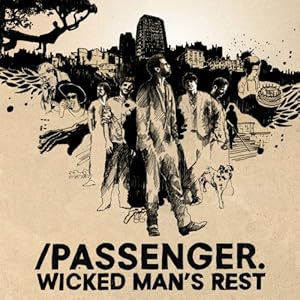
CD Review: /PASSENGER. - WICKED MAN’S REST (Chalkmark/Inertia)

Friday, February 27, 2009

Firstly, what sort of name is ‘slash passenger dot’? Extraneous grammatical flourishes typically betray a need for attention, a need that distracts from the music itself, and oh boy does this slickly produced soul-vacuum need some distractions.
Despite an influence list insulting Van Morrison, Neil Young and The Smiths, slash-passenger-dot (aka Mike Rosenberg) actually sounds far more like this year’s James Blunt or David Gray and will likely be maddeningly popular, at least in the UK where this band are based and Wicked Man’s Rest (besides the out-of-place Allan Ginsberg sample abused in the titular opening track) is set. If you’re a London commuter who wants a limp wristed tussle with repressed guilt and self-pity without going to the trouble of leaving the car, this is for you.

The dearth of ideas begins with first single Do What You Like, a song that blatantly rips-off Sigur Rós’ Gobbledigook to tell a depressingly pointless tale of self-debasement for an openly cheating girlfriend: ‘You treat me like dirt but your hands stay clean…so go on, do what you like to me’. Women, despite being the subject of most songs, are objectified in a manner that makes The Troggs seem like Germaine Greer. Never more so than the tale of a stalker’s obsession Night Vision Binoculars. Yes, it may be him writing in character (as he claims to be doing in all songs), but more time is spent in shady pursuit ‘with my thermal flask of tea’ (?) than engaging the gentle attack on consumerism his press release states is apparently at the heart of this record.

“The worst crime you can do in pop music is taking yourself too seriously,” said Rosenberg, with typical grammatical error, when promoting this album. Well lock him up officer. Exhibit A: Packaging with literary pretensions, B: Sub-Corbijn black and white band photos, C: Ceaseless dreary mewing about ex-girlfriends and D: Dynamic-free production made for poor-quality car speakers. Rosenberg’s statement also undermines any ‘connection’ a listener may make with a character’s story. Though choosing to team with TV soundtrack composer Andrew Phillips, it seems Phillips has little to work with besides flatly strummed major chords. Honestly, there is nothing to recommend this wholly unremarkable record; the cover is actually beige.

STARTING SOMETHING - An interview with END OF FASHION

Monday, March 02, 2009

He may inhabit the mind of serial killers and wield a flame-thrower but, as END OF FASHION’s JUSTIN BURFORD tells ANDY HAZEL, not everyone gets the joke.

It’s been several years since the catchy-as-hell O Yeah plastered airways from Cape York to Cockle Creek but it’s creators have been going through a subtle reinvention, something not all of us may be up to date with. Personnel changes and a realisation that with a sense of humour, you can pretty much get away with anything, even if it is challenging have left End Of Fashion stronger, yet more isolated. A place that singer Justin Burford feels is part of a longer trek.

“We don’t take ourselves too seriously and that’s risky business nowadays when people want a safe commodity,” he explains enthusiastically. “A song like Fussy [in which Burford inhabits the mind of a serial killer] isn’t meant to be taken literally. We actually had some TV promo shots pulled because they thought we were too dark and strange. Two years ago I was dancing with girls in bikinis, this year I’ve got a flame-thrower – it’s all fun y’know. It’s still End of Fashion.”

This change of tone that accompanies their latest album Book Of Lies hasn’t been greeted with the open arms that the band were hoping for. Without naming names, Burford, it’s safe to say, was surprised at the change of attitude from some areas of the Australian music industry. “As far as the success of the record is concerned, we’re really happy with the product we made. The first album, what that did for us, was amazing, but here’s a weird perception that we’re a hungry commercial pop band and that certainly affected this record. We had a lot of support for the singles of the first album from places that have shied away from this one. The stations that we thought we were going to be embraced by again, for whatever reason, didn’t. That has an effect on album sales and people’s awareness; the message hasn’t been delivered to them. This year we’ve swallowed that, dug our heels in and decided to get out there back to what we do best which is playing live and we seriously forgot how much fun we have at a show.”

While Burford is thrilled with how the gigs are going and the way the crowd is responding to the songs, there are some illusions he’d like people to be free from. “People have this perception that you have a song on the radio and this means that you have Ferraris and a cliff-top mansion. That may be true in America where you have to get half a percent of the population to like you, but bands here have to work really hard to maintain the audience, because of that some radio stations have to help this. If a band is perceived to cross over or go commercial - if anything that’s a reason to get more involved. We really want to focus getting our Australian audience back and at being part of the legacy of the Australian music industry, we feel a little guilty for having a mild success and then headed overseas. Even in Perth community stations stop playing you once you get on commercial radios: ‘what, when did we stop being a Perth band?’ This attitude absolutely influenced our decision to record in Perth with people who’d been there from the beginning. Some songs on the first album suffered for the production, others really stepped up. This album was a completely difference experience. The songs weren’t as familiar so we didn’t have as much time to get complacent with the songs so there was a real sense of ownership over the whole process that wasn’t there for the first one. We wanted to capture the quirk and edge that was ironed out on the first album. [Producer] Magoo was there on our first EP and he knew the band from early days so he understood that everything we do is injected with this sense of humour and cheekiness. Some people get it, some people still need to have it explained.”

Explaining seems to be something that Burford has had to do a lot of with Book Of Lies. The band’s decision to record a raw, up-tempo and gritty album with the odd intentional mistake after a slicker breakthrough album was always going to be a tough call. Burford, though, has his eyes set on the big picture. “Whether it sells well or not, this is a beginning of a career for us. I like to think about ‘what will people think of EoF in 10 years time? I’d like to be one of those bands where people say ‘EoF have a new album out, I wonder what the hell it’s going to sound like’. It’s a big positive that we’re not formulaic. You can put this up next to O Yeah and ask is it even the same band. It does sound that different. There’s a thread that runs through it that keeps things EoF, but we can do whatever we want and still be EoF. We wanted to make this huge departure, we’re not O Yeah, we’re this crazy strange act.

Does this mean minimalist electronic compositions are in the offing? “Well we’re a very live oriented band, that’s how we started that gives us a positive limitation. The next record will be really big and ambitious with over-the-top songs. We’re doing a lot of preproduction for it, just to see if it can be done. Dig!!! Lazarus Dig!!! was done in four days and that’s partly because Nick Cave and the Bad Seeds are a really tight band. Alternatively, anyone can make anything sound great with enough overdubbing, but on the next album - which we’ve sheepishly titled Ben Hur – we want to see if we can make something sound enormous without strings and without synth pads. It will be interesting to us, we may return with our tails between our legs, broken and saying ‘It can’t be done!’ either way it will be fun.

Something that seems to have improved since the O Yeah days is the predominance of facial hair in the band. “Yeah well...ahh...beards were born out of, wanting to show people there is another side to the band, I’ve since shaved and had a haircut, but it’s important to us as artists, because we are artists and I think that gets forgotten. We’re allowed to form, invent and reinvent at our own prerogative. It’s risky business nowadays; people want to understand bands in simple terms. We still like to fuck with peoples heads and that’s not gonna change.” Got it?

CD Reviews: Live CDs from Van Morrison, Ed Kuepper, The Waifs and The Moonee Valley Drifters

Monday, February 23, 2009

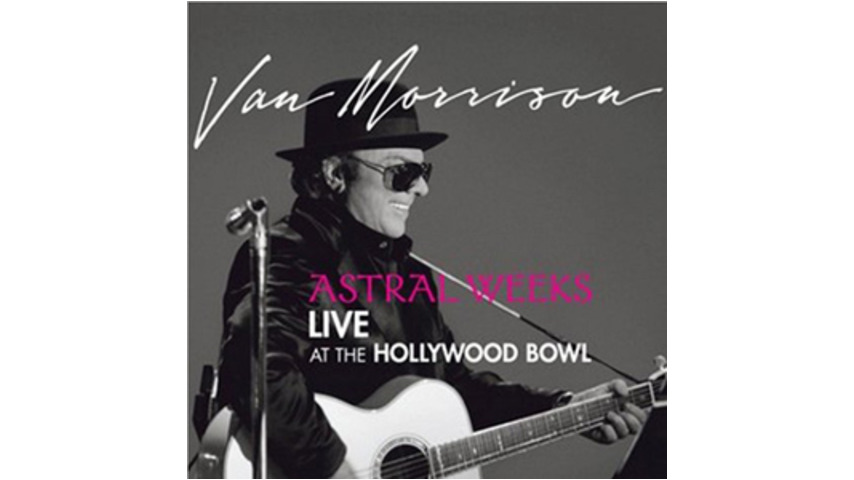
VAN MORRISON – ASTRAL WEEKS LIVE AT THE HOLLYWOOD BOWL (Listen To The Lion / EMI)

To commemorate his first solo album 32 years after it’s unheralded release, Morrison starts his own label and performs Astral Weeks live, and it’s a strange beast. The songs themselves survive the savaging his ravaged yet manfully expressive voice gives, Jay Berliner returns, the guitarist who worked so perfectly in 1967 and the prospect is undeniably exciting. Giving these songs fanfare and a clearly rapt audience initially seems ideal but these are intensely personal songs to so many people and grandstanding them in Hollywood is possibly the most alien home for them. ‘Live From a Pub in Belfast’ may have been doing them better service, but, romantic ideals aside, any fans of Astral Weeks (i.e.-most people) should listen to this curiosity, at least opening song Astral Weeks/I Believe I’ve Transcended. Bonus tracks Listen To The Lion and Common One are equally divine.


ED KUEPPER – ED KUEPPER LIVE (Prince Melon Records)

Also seeing the debut of an artist’s record label with a retrospective live album is Ed Kuepper. An Australian release of a CD sold on last year’s European tour; ‘Recorded sometime, somewhere in recent years’ (but sharing much of the setlist with 2005s Northcote Social Club recording), it’s a mix of classic Saints (Eternally Yours), with equally impressive Laughing Clowns (The Laughing Clowns and Collapse Board) and solo material (Honey Steels Gold and Little Fiddle) that translates well to disc. Ever-present drummer Jeffrey Wegener and bassist Paul Oxley are the only backing for what is a well-recorded and impressively textured sound. It’s easy to forget what a proficient guitarist Kuepper is and the better tracks – La Di Doh and Honey Steels Gold allow him to pull mechanical symphonies from barroom riffs in a way Creation Records must have regretted missing out on releasing.


THE WAIFS – LIVE FROM THE UNION OF THE SOUL (Jarrah / MGM)

There is a warmth and accessibility to this record that fans of the band will adore, and is unlikely to convert any newcomers. Recorded on a national tour a year ago, complete with audience banter, this is as honest a depiction of The Waifs live as there will ever be. Their label owner and general busybody John Butler guests on what is slowly becoming an alternative national anthem From Little Things, and Clare Bowditch joins for a crack at I Remember You (lovely, but not troubling Bjork for the definitive reading). The musicianship is faultless, the harmonies well worn and seamless, the performance sounds like a celebration of an unfaltering work ethic and an increasing passion for music their grandmothers would have approved of. They’re clearly having fun and the intimacy of their show sounds at odds with the stadium shots adorning the sleeve. Not leaving their roots anytime soon it seems.


THE MOONEE VALLEY DRIFTERS – LIVE AT THE NIGHTHAWK (Independent)

Fixtures of the Melbourne music scene for many years, The MVD have earned the right to release a live album as a document, not a cheap knock-off. Resolutely unconcerned with trends, these country classics and what these days qualifies as ‘roots’ seem perfectly timed. Just when authenticity is deemed more valuable than ever, here come guys who sound born to play these songs. The playing here is exemplary, the recording quality top-notch and the song selection and pacing spot-on. It’s hard to fault these guys at all in fact, Cash On The Barrelhead, Flash Crash and Thunder and the jive-worthy Who Shot Sam? are all high points from an album that could have been released anytime in the last 50 years but sounds perfect for today. Fun, impeccable, fresh and as old as the hills. Great stuff.

CD Review: THE VIEW - WHICH BITCH? (Sony)

Monday, February 23, 2009

Sometimes the value of an album can be summed up by the quality of its title. The View succeed in illustrating all that is wrong with the hype machine that seems to churn out similarly-influenced Brit-pop NME-approved bands whose egos find a foothold in an increased budget for a second album. In their case The View’s debut Hats Off To The Buskers was a number one and a breath of some sort of air to the Scottish indie scene. That so many people still seem willing to play along with this British circus of 1.Hype-to-death, 2.Exploit, 3.Slag off and 4.Refer to ironically, seems unfathomable. The View are most certainly part of this cycle and Which Bitch? puts them mid-way between ‘exploit’ and ‘slag off’.

With their appealing Scottish accents and evocative arrangements from Oliver Krauss, The View could be something interesting but instead sound like The Proclaimers fronting a late-period The Libertines. Singer and lyricist Kyle Falconer’s voice is really a matter of taste; sometimes forcing you to take a guided tour of hometown Dundee, other times hopelessly pretentious with his scope and while fleshing out and out his obsession with drink, drugs and girls, especially girls on drugs or drunk. Some will love this very British and very confident album; the shouty choruses of its obvious singles (5Rebeccas and Shock Horror), sea shanty-flavour other songs give and possibly the several minutes of pointless arsing around in the studio with a delay pedal that concludes the album.

You can almost feel the chip grease run down your arm when holding the CD it is an evocative album of the band’s hometown and lifestyle, it’s just not really an appealing lifestyle, evoked by people who have much to say, poor voices and musicianship to say it with and via rote production from Owen Morris (Oasis, The Verve) and Falconer himself. Most memorable points are those when Krauss is allowed to get creative with arrangements such as on Glass Smash and Distant Dubloon. There will be worse offenders of British lad-rock this year and points should be given for sticking to their roots, it’s just that the downside to sticking to your roots - the ego-massaging big-fish-small-pond conundrum - sounds like it’s behind some of the egotistic oversights that frequently crop up and drag this album back to mediocre forgettable lad rock. Better will come.

Live Review: THE HARPOONS, MINOR BYRD

Monday, February 23, 2009
THE BIRMINGHAM

The crowd tonight is a hair stylists dream. Average age 20, hip and neatly dressed; it’s clear we’re here to see a young and smart band that plays disciplined music. What they manage to fit into that disciplined music though, is something entirely unexpected, if wilfully retro.
Minor Byrd, a relatively new band is tonight ‘in acoustic mode’ says oddly-voiced and charming singer and guitarist Andrew Humphries, a songwriter in thrall to womankind. After his voice relaxes, a pointless Neil Young cover is dispatched and mightily impressive and fluid guitarist Jack McKeon joins him, it’s clear there are some great songs up Humphries’ sleeve. Singer and percussionist Mark Gretton is also a talent that helps brings the warmly melodic folk-pop songs up from memorable to excellent, particularly This Young Girl and the closing The Way She Walks.

By the time The Harpoons are ready to play, a never-busier Birmingham crowd crushes around the instantly forming dance floor. There is a lot of love in the room for The Harpoons and they don’t disappoint. Being as talented as they are, it’s the thrill of the occasional fumble or improvised lyric and ensuing pitch-perfect three-part harmonies that ensue that tell you they could polish this act up and get a much bigger audience if they wanted to. That they haven’t lost the smiles they sing through during the whole show is a bigger giveaway as to what motivates them. Soul-pop that sounds like the members stopped listening to music made after 1961 played for fun, with the occasional hint of 80s guitar-pop; when youth reclaimed it’s innocence and referenced the 1950s in style and economical delivery was valued. The Contours-like rawness of Be My Lover, Be My Girl and You’re The One I Love gets a rollicking mood going, one that rarely lets up except for the show-stopping Faith which allows singer Bec Harpoon a chance to quieten the cheering crowd and her quiet moments to thrill as much as the Bo Diddly-beat of set-closing Garden City. ‘This is a cover’ says handsome singer Jack of encore Shakin’ All Over reminding you once more that the preceding 45 minutes was all original and no one is over the age of 24 was involved. No egos, all demo CDs sold within minutes of the set ending, Seymour Stein would have his chequebook waving were he here tonight. Swell!

FREE? YEAH. An interview with Freya Hanly

Monday, February 16, 2009

Between being a mother, mentoring budding songwriters in a women’s prison and playing dozens of shows a year, FREYA HANLY has managed to release an album that’s rapidly gaining acclaim. ANDY HAZEL finds out how.

Mothering a 10-year-old daughter while choosing to be a professional singer-songwriter requires the sort of guts that a lot of musicians with louder voices and bigger egos seem to lack. As Hanly explains, it’s another manifestation of her guiding integrity and quest for deeper experiences. “It’s just what I’ve always known I wanted to do and I have a lot to offer at this point. Even though I’m 29 and have been writing songs since I was 15, I still feel at the beginning of it all. As you grow as person the more you can give your songwriting, I can’t wait to be 45 and writing songs that are hopefully a shitload better that the ones I’m writing now,” she says laughing. “I want to keep stretching myself musically and be inspired. Like going to Boronia [Pre-Release Centre For Women], it’s about the heightened communication you can have with people on stage or at a workshop in a women’s prison, getting people more in touch with those receptors that make them feel whatever they feel. Working at Boronia is an amazing experience. I love that it’s not about my music either, when you’re self-managing and independent your whole life revolves around yourself. I don’t want to do it for selfish reasons but I have to be self-focused and this gave me an opportunity to step right outside that. There are so many different ways to apply musical skills to bring self-esteem out in other people.”

Since it’s December release Hanly’s most recent album Quiver is being hailed as a diverse and revealing album, alternating between glowing spine-tingling ballads and lighter country-ish fare, it’s certainly unlike other singer-songwriters she may unfairly be lumped in with. “I’m happy with Quiver, but I’ll never be 100% happy with anything and I think that’s a good thing as well. It took so long to make that that it’s a little outdated now but I still love playing the songs,” she says of the album’s two year gestation period.

Winning recent plaudits from Clare Bowditch who, as well as describing her as ‘blindingly talented’, picked her as the artist she’d most like to see ‘break’ nationally. “I’d love the break to happen, of course,” she says, “but while I’m driven toward that I’m also wary. Musical integrity to me is everything, so if it doesn’t suit timing and luck then I’ve made peace with that as well; it’s not a burning ambition. Being nominated for Songwriter of the Year at the WAMIs was good, but competitions, breaking through and being successful is all just…the more I get to know the industry the less I invest in deciding that I’ll let it define my experience. Last night I played to 8000 people at a big amphitheatre. That was fun,” she laughs.

Feeling blessed for the opportunities that allow her to be able to pursue her creative spirit, Hanly also thinks that the timing is right for a musician who pushes humanity and simplicity in their music. “I think people are really hungry for acoustic honest music,” she explains enthusiastically. “It was more prominent in the 60s and 70s and as soon as people discovered Casio machines there was an onslaught of music which meant people and had to look pretty hard to music that is more direct in it’s communication. It’s a great time to be in this part of the music industry, there is definitely room for it now. A few years ago I got a lot more shit for playing acoustic music.” People heckled you for playing an acoustic guitar? “Maybe it’s more a WA thing,” Hanly explains, “but at pubs people want to rock out when they’re drunk, they want double kick and loud guitar and don’t expect to enjoy anything else. I’ve noticed playing live that people are becoming much more open to it.” It’s not hard to see why.

Two reviews of Camp A Low Hum

Monday, February 16, 2009

HAPPY CAMPERS

Andy Hazel uncovers a music festival that’s not actually a festival and not even really about the music. Welcome to Camp A Low Hum.

Festival? No. Party? Yes. Camp A Low Hum is based on the idea of a school camp with a brilliant line-up of underground bands and a vibe that embraces spontaneity and fun. No security team, no advertising, no sponsorship, no VIPs or plus-ones, no crowd barriers, no separation of band and punter, no line-up announcement until arrival, impromptu ‘renegade’ shows, a freshwater lagoon, box wars, acres of pristine forest and only 800 tickets.

2009’s camp happened in Camp Wainui, just outside of Wellington, New Zealand in a place accurately described by Guy Blackman as ‘the most beautiful location for a festival ever’. Here loud acts seem louder, quieter acts seem to have sprung from the forest itself and cicada-song accompanies everything.

There are six performance areas – Noisy Stage, Nice Stage, Neat Stage, Renegade Room, Dance Zone and Main Stage - and four camping areas: Quiet, Not So Quiet, Loud and Party.

“Basically I just wanted to throw a party and have some bands play,” Camp organiser Ian ‘Blink’ Jorgensen explains. “I’ve been obsessed with the idea of school camps for ages and I’d been touring bands around New Zealand for seven years. I lost money the first year but ‘what the hell, we had a great party’. The second year it sold out and this is the last year it will be in this form. I don’t know what next year will hold. We could sell more tickets and get bigger bands, but I wouldn’t want to come to a party like that,” says Blink shaking his head.

“It’s way more informal,” agrees Ruby Sun Ryan McPhun. “There’s no bullshit, it’s much more about the vibe. Most bands play twice during Camp, indoors and outdoors. There’s also a much younger crowd than most festivals so there’s way more energy.”

“After cricket let’s go for a dip and catch Bachelorette bro,” says one barefoot punter in a comment that neatly encapsulates the spirit of Camp. Later, a well-built Pacific Islander soberly describes Camp as ‘a semi-magical experience’ while cheers from the nearby crowd mingles with the screams of swimmers entering the icy lagoon.

So, now you get what it’s like, who played?

A Day One highlight is the dazzling collage of Afrobeat, indie-pop and electronica from The Ruby Suns; ‘it’s like ecstasy without the drugs!’ someone yells mid-leap. Kiwi rockers The Sneaks and Bonaparte rile the crowd with some furiously acerbic rock before Pikelet and her band deliver a sparkling show tailor-made for the Camp’s convivial atmosphere, as does the ever-erudite Darren Hanlon.

Love of Diagrams debut much of their hotly anticipated second album to a gradually growing audience who uniformly love it, a similar experience had by rhythmic perfectionists My Disco (excitedly described by Blink as “fully fucking sick brother!”). The Crayon Fields also debut insistently catchy pop songs from their forthcoming album, winning many new fans. Kiwi buzz bands So So Modern and Over the Atlantic both play big stylish sets that seem at odds with the Camp’s ramshackle nature, perfectly embodied by Family Cactus whose thrilling 1AM renegade show outside the mess hall sees them emerge victorious over power cuts, feedback, dodgy gear, extremely unsafe pyrotechnics, and audience invasions. Another discovery is young Christchurch band Mount Pleasant whose thrillingly concise garage rock/Animal Collective-style pop is combined with an exuberance only matched by Melbourne’s Aleks And The Ramps (who sell a lot of merch), and ‘outrageous’ American ego-behemoth Show Is The Rainbow.

All weekend there is talk of who this year’s mystery band will be. The closing night’s ‘Talent Show’ turns out to be the first ever gig for Neil, Liam and Elroy Finn, meaning we get Split Enz and Crowded House classics, Liam’s national hits and a dazzling cover of The Chills’ Pink Frost. Excitingly unsupervised crowd surfing and impassioned sing-a-longs ensue, bringing a raucous beginning to the last night. An Australian take on Camp A Low Hum anyone?


CAMP A LOW HUM
CAMP WAINUI, WELLINGTON, NEW ZEALAND

“Wow, this is the best gig ever,” intones Bachelorette quietly, part way through a tight and lovely acoustic set. “I’m looking at a wall of trees!” With only 800 tickets sold and the vibe much more like a private party (which it is) than a festival (which it isn’t) Camp A Low Hum, now in its third year, is remarkable for never managing to feel cliquey or exclusive. This may have much to do with the Kiwi ‘choice bro!’ attitude that is the surface of their deep respect for the land and other people meaning that when they throw a party in the bush, there are only good times to be had and everyone’s on board. 6 stages – Noisy Stage, Nice Stage, Dance Zone, Renegade Room, Main Stage and the lagoon-side Neat Stage ensures that there is a breadth of stuff happening that, due to smart programming, rarely overlaps.

With the focus as much on fun as music the gigs are uniformly good with only the slick bands suffering. Tasmania’s Paint Your Golden Face do a great job of bringing the noise to excited punters, as does Kiwi pop bizarre Stefanimal who goes down exceedingly well. Bigger names like My Disco and Love Of Diagrams fit in to the loose and friendly nature of the festival surprisingly well given the usual rigidity of their songs and gigs. Albums by both bands are due mid year and both bands seem to be pushing more song- Pikelet and her astonishingly talented and sensitive band play their humble psyche-folk to a rapturous reception. Thugquota plays possibly the most exciting and unexpected show of the Camp at 1AM in the remote Renegade Room, channelling Shamanic rhythms and clarinet and vocal improvisation in a way that is never less than thrilling. The big names this side of the Tasman are So So Modern and Over The Atlantic who both play big riffs, have miles of style and barely a memorable song between them. Unlike The Ruby Suns, who put in one of their most thrilling gigs ever and incite packs of writhing punters to demand encores. Christchurch bands Mount Pleasant and Bonaparte are definitely worth keeping an eye on, with their exuberance and originality.

The big surprise of the weekend is the Mystery Act who turns out to be Neil and Liam Finn, backed with Barnsey’s daughter EJ and Neil’s ‘other one’ Elroy on drums. Giving us a steady stream of Kiwi classics from I Got You via Four Seasons In One Day to a cover of The Chills’ Pink Frost that no one begrudges him. Liam’s songs seem to go down well but are lost on the Aussies present, unlike Nintendo Kiwii who wrap up Day Two of Camp aka Australia Day. This supergroup with guests gives you Cameron from Baseball bellowing Physical, Pikelet leading punters through Can’t Get You Out Of My Head, Ned Collette ravaging Great Southern Land and everyone singing You’re The Voice in an unrepeatable celebration of Trans-Tasman connections. Amazing.
Live Review: HOT CHIP

Tuesday, January 27, 2009
BILLBOARDS

By the time Britain’s most musical I.T. department gamble onstage to ply their wears (singer Alexis Taylor splendid in a fresh Gang Gang Dance t-shirt) the venue is choked with excited punter and expectations are clearly going to be met, such is the love for Hot Chip; possibly the least cool-looking band since Hot Chocolate and band most deserving of having their likenesses rendered in plasticine by Nick Park.

The show is, essentially, a perfectly sequenced 90-minute track (with occasional breaks to introduce members and reprogram synths). Every song is remixed and segued which reminds you how rare it is to see a band rework a song in a way that actually enhances it’s peaks and troughs and works with audience expectations. This sense of playfulness contrasts nicely with their appearance and, despite being the last gig on their (very long) Made In The Dark world tour, they’re clearly having a blast and seem a totally different band from the one that was a highlight of the 2006 Big Day Out. The opening guitar crunch of One Pure Thought marks not only the last time the guitar is audible for the set but the point at which the rollercoaster ride kicks in. Bendable Posable follows and debuts the essential Dalek-droll vocal contributions of keyboardist Joe Goddard, and, like most songs from Made In The Dark played tonight, sounds ten times better than on the home stereo. The strobe and percussion frenzy of Shake A Fist, the tender and propulsive Boy From School and breakneck Hold On all give cause for celebration that pushes the crowd even closer together.

Slipping in two new songs mid-set - the smouldering and slow-building organ-led groove of Alley Cats and moody EBTG-like Thieves In The Night both indicative of the slower, less dance-oriented feel of their forthcoming album – before the inevitable highpoint of a heavily reworked but no less thrilling Over And Over, Hot Chip are peerless in their mastery of rendering dance music soulful and entertaining to watch. Ready For The Floor closes the set in irresistible fashion that makes you beg for room to dance.

It’s doubtful many were expecting an encore of Nothing Compares 2 U but this allows Hot Chip to not only have the best reason to wave a lighter at a dance gig ever, but blast into a supercharged No Fit State and My Piano before leaving us with a medley of quieter songs - the stuttering beats of ballad Made In The Dark and seductive The Privacy Of Our Love which is all very “Why, but without your glasses…you’re beautiful” and earns our respect all over again. English geeks actually being boldly seductive? Only world domination could follow.

Live Review: SUMMER CATS, CAN YOU SAY NINCOMPOOP?, THE MOTIFS, THE AUDIOBOOKS

Monday, January 19, 2009
THE BIRMINGHAM

Within minutes it becomes apparent that the gig of the year this is coming early. The buzz amongst the dozen or so punters familiar with the work of UK indie-popsters The Deirdres (four sevenths of whom make up Can You Say Nincompoop?) is palpable and there are smiles aplenty; smiles that only get wider when The Audiobooks take to the small stage. This amiability becomes a hallmark of The Audiobooks, though musically they are very tight, particularly as this turns out to be their first gig. “None of these songs have names,” claims singer and master of the elliptical lyric Greg Long. “They’re just verses and choruses we stuck together for this gig.” Whether this is true or not, the songs are marvellous slices of Apartments-like clean guitar, nimble cello-like basslines from Madeline Cocolas and brisk staccato drumming from The Zebras’ Jeremy Cole. Though each song is introduced as “this is the one that goes…(insert riff here)”, there are songs that seem to be called Another Song About Smoking and Goodbye Purple Girls that are glorious. Bring on the first release.

Following this The Motifs do their level best to battle the bass-heavy PA with keyboards and glockenspiels aplenty. Alexis Hall, songwriter and ringleader of the instrument-swapping myopic gentleman who complete the line-up, is divine in a red ribbed cardigan and her voice is on fine form. Highlights of their recent Cross Paths album Dots, Backwards and a fantastic Old Faces close a charming set that leaves you in no doubt that when they tour Europe later this year they’ll have no trouble converting strangers into fans.

With accents that can’t help but bring to mind Alice from Vicar of Dibley, CYSN? are a beguiling indie-folk combo who once featured on Antiques Roadshow, no really! Their percussion-heavy tunes captivate the attentive punters, and again the PA plays up though this doesn’t seem to bother them much. Opening with Ball In A Cup (which includes the lyric – ‘I think he is Batman / I’d like to be his Robin / When I’m a sewing machine / I’d like to be his bobbin’), the few initial nerves disappear as the twee-pop triumphs sail by. Fun To Pretend, the exuberant Milk Is Politics and closing Clare, Are We Safe To Be On Our Own? are minutely majestic and woefully under-heard.

Playing possibly their best gig ever Summer Cats are on ebullient form. Though Scott S’s voice doesn’t reach its usual keening heights, his banter (heavy on ‘good times’ and ‘motherfucker’) gives away the sheer goodwill that the band cook up and deliver with gusto. From the opening Let’s Go via the eternal highlights of Lonely Planet and Hush Puppy to the closing new song Melbourne Town the Cats never let the ball drop. The forthcoming album is a thrilling prospect and no one is left disappointed. A gig both mystifyingly under-attended and incredibly exciting to have witnessed.

SHOWING BRUISES: An interview with Kristin Hersh of Throwing Muses

Monday, January 05, 2009

Self-described goofball and Throwing Muses front-woman KRISTIN HERSH explains how she is an involuntary disciple to the religion of songwriting and how songs are like syringes. ANDY HAZEL pulls up a pew and finds a vein.

With decades at the helm of one of America’s most consistently surprising and edgy indie-rock bands Throwing Muses, Kristin Hersh has had more twists and turns to her career than most. Now in Australia for the first time in over a decade the woman who in 1997 said her band couldn’t tour due to the costs involved has, amidst economic turmoil, travelled to our distant shores…“Because someone asked us to and paid for it,” says Hersh before a peal of infectious laughter chortles down the line from outside a New York venue, subway rattling in the distance. “We’re always willing to tour and since I extricated myself from my record companies I can take opportunities like this when they come, including the opportunity to give music away, which we’ve been doing via cashmusic.org. It’s very liberating, it’s actually embarrassing how different it feels to not have to talk to someone else in the company or wait for someone else to talk to someone else in the company or in radio and all that garbage that makes you so self-conscious as a musician and that really never belonged in the music industry. We’re not asking for the world, we’re just asking for enough, and so far we’ve gotten it. The music industry is only a few decades old and again music is just in the ether for the taking.”

Clearly a woman of no small drive, Hersh is still perhaps most famous for her 1994 Michael Stipe collaboration Your Ghost but there is much more to this lady. Much much more.

Besides her role as a mother of four and a Throwing Muse Hersh also fronts side project 50 Foot Wave who recorded and released five albums in two years, and continues to release solo albums at a rate that would sober Mark E Smith. When looking for a cause for this level of output that Hersh herself admits is unusually high, the answers are neither easy to come by nor digest.

“I feel wholly unresponsible for the music I play and am often very confused by it,” she says thoughtfully. “But that’s what makes it my religion; it’s mysterious and it’s horrible and it’s enchanting and it’s confusing. I have to get into this state to write and I think that’s why the songs are so complicated. I have to be fully engaged in order to lose myself and I think as a nice person I shouldn’t have to be doing this at all. Singing engages me, my hand and my gut and my throat are all busting their collective ass and they make me disappear and I have to disappear or the song isn’t there.” While admitting that ‘there’s no way to say that without sounding like a goofball,’ this does seem to be her only way of writing in order to lead a functional life, a battle few other musicians seem to have to face.

“I think this is how you write good songs – is it obnoxious to say that?” she laughs heartily. “I think you can write a bad song to get your feelings out as a catharsis with psycho-garbage or vitriol and then you feel better and that’s valid as an exercise, but that’s not going to create a song that people who aren’t like you can relate to. I might write songs for white women if I did that and that would be a crime. You have to go beyond your personality - beneath your personality. I should be writing songs that anyone of any gender, size, shape, race, age or persuasion can relate to. A basic human connection is a perfect way to bury your soul, because you can’t be embarrassed; it’s a soul, it’s what we all share.”

Commonly to be found on tour Hersh has amassed around her a family and entourage she admits is ‘one big love in’. At the core of her nomadic lifestyle are the songs that started it all – many older songs that will feature in the Melbourne concert, and some newer ones will be surfacing on a forthcoming album to be recorded early this year.
Is it hard being so creative and prolific then? “It’s not hard, it’s just disturbing,” Hersh quietly intones. “All I have to do is copy a song down, but it’s unsettling to say the least. It’s been happening for 20-odd years and I still think it’s the neighbours playing records. It’s heartbreaking when my husband says ‘no babe, you gotta get up.’ Because I’m so sure that this time I’m gonna be like everybody else; not hearing things that they don’t hear. It’s also my religion so I have no right to bitch about it actually; it’s magic that’s all. I just didn’t want any magic,” she says laughing.

Live Hersh balances these compulsions with her lightness of touch and ability to act as a conduit for the song, and it’s live that Hersh seems most at ease with her songs. “What a song does is it works as a hypodermic syringe,” she explains carefully. “It injects the chemistry of a certain point in your life and you have to bounce around with the song and all of its syringes and react as you did in that first moment. The song will make it’s point using that collage of experience and feeling so that you’re right there for every single moment, every sweaty action that the song sends you into, every thrall and tragedy until you are completely wrung out.”

“I feel like what I do is more like science than art,” she says brightening. “I’m in my lab experimenting. If you have a sponsor they are interested in the results turning out one way or another. If you have people who are interested in hearing the truth, they don’t even care about the costs involved, they just want to hear the work. I was always amazed that anybody would come to a show, and I’m still amazed. It’s hard – you gotta get out of work, come to the show, find a parking space, pay a lot of money for overpriced beer, it’s hot or it’s cold - I’m still impressed that even after all of that graft people will stand there and do their work. It’s easy for me, I know where the songs are and what need it’s doing, they have to trust me and take the ride or they’re not getting their money’s worth. You can feel it in the room when everyone is doing their work.” Who’s in?

KNOWN PLEASURES: An interview with Geoff O'Connor of The Crayon Fields

Monday, January 05, 2009

Crayon Fields’ GEOFF O’CONNOR explores social awkwardness, catching up with school friends and worldly pleasures while ANDY HAZEL admires his work ethic.

Crayon Field Geoff O’Connor may seem shy, quiet, genuinely polite, and physically fragile and write from such a perspective, but any sense of weakness is all a ruse. There is a lot more going on. With creative forces currently spread across a multitude of projects (recent creative collaborators include Angie Hart, Muscles, Jessica Says, Guy Blackman and Mark Monnone), O’Connor explains that his energies are not split equally. “The two main things I focus on are Crayon Fields and Sly Hats, I don’t have much of a life I guess. I work as a live mixer, which is a good job; well it’s a good way of getting free alcohol and I’m looking forward to getting back into that lifestyle, but I miss out on a lot of DVDs and books and things.” Despite a Trojan work ethic, O’Connor doesn’t feel other musicians are comparatively unproductive. “I figure most people put a lot of work into their music - you’ll never see how much they put into it - and there are a lot of people out there who work four times as hard as I do. It’s such a luxury to have that much time; we’re all so lucky here. The song Living So Well from Animal Bells is partly about that.”

“At the moment I’m really fascinated by growing old gracelessly,” he continues. “I’m interested in people who haven’t lost a lust for life in their fifties and sixties. There’s something beautiful about life in Melbourne and I can’t stand it when people are over being creative when they’re in their thirties and treat creativity as if it’s only something to do in adolescence. Sometimes, when I bump into some old school friends they’ll look at me like ‘oh...you’re still doing the band thing’, and I think ‘Oh my god, they’re probably breeding.”

Forthcoming Crayon Fields album All The Pleasures of the World sees O’Connor’s songs take on a fresh drive and move away from the sensual preoccupation of debut album Animal Bells. First single Mirror Ball details O’Connor’s dwindling confidence at the sight of beauty: “I look at you and suddenly I’m a virgin in a dance hall.” “There’s a lot of writing that comes from me feeling dwarfed by feelings, usually love. When I sing about love it’s always about people, though a lot of the songs are about being uneasy too. They are all songs of praise I suppose, lots of big compliments. I never make anything up, it’s all love songs I guess. I spend a lot of time on lyrics. I like to make them fairly simple within the limits of my fairly limited vocabulary; I know what ‘virgin’ means,” he jokes.

The album certainly sees the band move away from a small sound/small feeling mentality. Despite this there is an unmistakable confessional quality to many of O’Connors’ songs. “A song like Graceless is about the transition between 15 to 22 and being infatuated with all sorts of things. It’s about trying to ingratiate yourself to people and thinking you know everything. I’m still like that,” he deadpans. “I’m a walking social faux pas, but everyone is a social faux pas, everyone is a bit awkward. That’s the reason I hate most comedians because they go on and on about their own awkwardness. That time is a pleasurable and nice experience and I like that people can bond through faux pas.”

It seems that it’s personal experiences far more than musical influences determine a Crayon Fields song like Mirror Ball. “I’m not very musically aware,” O’Connor admits. “I listen to a lot of music but then I get obsessed with one album for a few weeks. There are so many bands that tour that I’d probably love but I never get around to hearing, which is a shame.”
Though debuting some songs from All The Pleasures of the World (such as the heavenly You Could Wind Up Anywhere) live in January, O’Connor explains that the band were in no hurry to record the album. “It was difficult having [drummer] Neil [Erenstrom] away and Chris [Hung, guitarist] go away and we kept changing bits, we’re perfectionists I guess, we were constantly rethinking things. We didn’t want there to be any songs that were less than quality. We’re not really keen on being a prolific band.” They are, however, quite keen on being a well-recorded band. “This album is definitely more hi-fidelity than Animal Bells. We took time to put a lot more work into it. I’m much more happy with it than Animal Bells - I still love that record of course, but this is more fun and ambitious.” A quality that the album title refers to it seems. “The album covers a lot of ground,” he agrees. “We tried to make it fairly varied but still very cohesive; the instrumentation is very consistent. I guess we wanted to do less overdubs but make the parts more thought out, we put more effort into string parts and arrangements.” Orchestration is something that those familiar with the Crayon Fields’ work will notice is a strong part of the album. “A friend of mine Esther Edquist has a really great operatic voice and she’s very slick, very professional. We used twenty overdubs of her beautiful voice to make a choir, which worked really well. With the hi-fi sound the instruments were brought out really well and that was really important. The songs are supposed to be fairly bright and cover everything that I find pleasurable.”

Though a record label is yet to take them on for an American release, there has been much love from online ‘institution’ Pitchfork. “Yeah, that was pretty funny,” muses O’Connor. “Someone bought our Animal Bells CD in Japan and sent it to someone there who reviewed it. Since then they mention us every now and then. I’d love to get a release there, we’re all really keen to tour. Recently we’ve been touring with a string section, some stage props and some projections for the seven-inch launch which I made using photographs from the album artwork.” Clearly people coming to their launches shouldn’t expect a band just running through the tracks.
With tour plans over summer and an appearance at the Laneway Festival, O’Connor’s characteristically hesitant optimism extends to the future of the album. “The launches are going to be fun,” he ventures. “For the album launch we’ll find something else to do again. We’re going to Europe in April, maybe we’ll hit Jens Lekman up for a show,” he says laughing, “we don’t really want to hassle him though.”

CD Review: THE MILLERS TALE: OVERLAND (Vitamin)

Tuesday, December 16, 2008

When it comes to overlooked gems from 2008 it's likely that this record by the relatively unknown Millers Tale duo will be considered, and so it should be. Though The Millers Tale have been making music for over a decade now this is only their third album and it seems, judging by the pace of the music, their absence of hunger for fame and the thoughtfulness with which it is crafted, they're in no hurry.
It's an odd, moody atmosphere that they make, thanks partly to the warmly intimate production of Wayne Connolly and the easy inter-band familiarity discernible in the songwriting and the way singer and bassist Rebecca Quade and guitarist, vocalist and husband John Maclean leave space for each other.

The instrumentation is wonderfully sparse and perfectly judged. Drummer Dave Kleynjans and J. Walker's pedal steel seem to accentuate the emptiness and overwhelming sense of geography in the songs. To be in a position this comfortable that allows songs this warm and enveloping to be made must be a glorious thing, and rather than flaunt their closeness Quade and Maclean offer tea and biscuits and give you a guided tour.

Constellation is a doleful ode to companionship while Within The Year is haunting in its plaintiveness and reminder of how easily we can fall into traps of our own making. Wasn't The One For You with it's opening lines of "You met her randomly / At the Canberra Leagues / She signed you in 'cause you weren't a member" could be from anytime in the last 20 years and still be as brilliant. It's a funny song about misguided relationships but as with the rest of the album, there is an inherent sadness lingering through its keening verses.

It's a deceptive simplicity The Millers Tale ply. Maclean's smoothly shifting chords (clearly a veteran of Underground Lovers records and quite possibly shoegaze in an earlier life), Quade's melodic bass and gorgeous voice all work to serve the songs with a deft touch and that not to mention the erudite lyrics. Stories are told and images evoked with a poet's flair. This really is a dynamite album, perfect for solo traveling, and one you're almost guaranteed not to hear unless you seek it. Overland is an album as Australian as Henry Lawson riding Phar Lap past the Dog on the Tuckerbox while eating a Vegemite Sandwich. Lowest of low keys but mightily inspired.

Live Review: ANGIE HART, FI CLAUS, SOPHIE KOH, MACHINE TRANSLATIONS, THE GUILD LEAGUE, THE MILLERS TALE

Friday, December 12, 2008
THE CORNER

Coming across more like the end-of-year performance of Songwriting Masterclass 101, The Corner's measly crowd bore witness to one of the greatest night's entertainment 2008 had to offer in all it's humble beauty, shy glory and Australian twang.

The Millers Tale's album Overland and tonight's rendering of many of its songs give a jaw-dropping 'where-have-I-been/how-did-I-miss-this?' sense of wonder. This is perfect travelling music. The songs feel extensions of the land; incredibly simple and direct, warm Harriet Wheeler-esque vocals from bassist Bec Quade with melodies as appealing as guitarist John Maclane's suggestion to 'buy everyone's CDs and bust this recession's arse.' Slices of folk-pop perfection follow hard on each other's heels with Constellation and Elbow Room jostling for highlight, but it's the miraculous Wasn't The One For You that reveals the brilliance of these songwriters. Amazing.

One band you could trust to follow such an opening set would be Machine Translations, tonight a trio. From the opening clangs of Love's Dangerous to the closing, Baterz-dedicated I'm Changed the wearied voice of J. Walker is on fine form. Machine Translations play a short and comparatively very energetic set, which naturally, incorporates She Wears A Mask and pleases all and sundry.

Bursting from the side stage comes the smart anti-Thatcherite bluster of a fired-up Guild League, a band who seem to shift and morph according to singer Tali White's preoccupations – travels in south-east Asia have long been replaced by Melbourne's weather and public transport, and now social justice, middle-class apathy and organ donation drive the man. It's a gloriously bracing burst of 'songs to smash windows by' as he calls it. Mouse vs. Mountain, If Not Now, Suit Fits and older songs The Storm and opener Animal are further faultless examples of White's ever-improving songwriting and the band's impeccable backing.

The opening track of Sophie Koh's set Objects In The Mirror is so breathtaking with its instrumentation and warm-yet-distant feel that the rest of the set almost feels like a letdown. Far from bad though, Koh seems more relaxed and comfortable than ever, her voice on fine form and songs like Silly Things and Somebody Come To End This are OK, if a little safe. When she takes risks, such as with the opening song and the closing Mandarin karaoke-learned ballad Gan Lan Shu she hints at what she is truly capable of.

Straight from the cover of today's MX (right next to but nothing to do with the Lawyer porn shock headline) and launching her Bijoux album tonight comes a radiant Fi Claus. Opening with Get Me Up she seems a little nervous but her voice and the songs themselves are so wonderful that the audience are with her. The phenomenal drumming of Pete Bosworth and the bass and backing vocals of Per Stenbeck give her the perfect setting while the songs Please, Please, Get It and a rousing rumbling dual-bass take of Come Home show just what a valuable songwriter she is; worth more than the album title on a triple word square even.

In black shorts and fishnets, a mile-wide smile and handbag on arm, comes Angie Hart. Surprisingly including several Frente! songs (The Book Song, Labour of Love and their take on Bizarre Love Triangle) Hart's set is almost too simplified. Her voice could render the Centrelink reporting line essential listening, but against chunky barre chords and sporadic violin it seems a little too unadorned. Still, the new songs are good enough to win over those who don't associate her voice with the heady days of high school, particularly Unbroken High, a brand new Geoff O'Connor collaboration Delicate, and her emotive cover of Pictures of You. Heavenly.

CD Review - AARON THOMAS: FOLLOW THE ELEPHANTS (Remote Control)

Monday, December 08, 2008

OK Computer and Grace seem to still be dictating a LOT of what passes for indie-rock these days. It’s bands that move beyond these touchstones that seem to come up with more interesting and exciting music; at least Vampire Weekend were doing something a little bit different while a band like The Ruby Suns actually developed and redeveloped their own sound. Aaron Thomas on the other hand, seems to feel that Thom Yorke, Jeff Buckley and Wilco are just y’know…too challenging. His uninspired musings have nevertheless lead to him winning a pair of music award in Spain where he is now based and seems to have developed a following. Songs like the single Any More the opening Descending and Thinking Is Unproductive are meanderings about living far from home in a foreign country. Rather than looking outward and engaging with the culture around him (which he may well have done but doesn’t spend too much time on) he looks inward and to his Ipod.

The album is entirely written from the first person, almost every line begins with ‘I…’ and words like nervous, tired, phrases like moving on recur and again and again Thomas looks his feelings and longings and it’s all…very…boring. Like a film being made in Venice that focuses entirely on the face of the actor there, Thomas asks us to empathise with his struggles shouldering the sun, and ending up like a fucking tourist (Any More), being full of anger and wondering maybe I need a holiday (Kill This City). Perhaps this will echo with kids travelling Europe on their gap year, but without investing any of the culture he is witnessing; not so much as a hint of flamenco, trumpet, electronica, foreign language or references to places that may ground the album or his thoughts. Instead we get only his Yorkeian whining and introspective musing about various ‘you’’s, downbeat instrumentation and arrangements and safe niceness where he refers to feeling angry but doesn’t flesh it out.

While he seems perfectly nice and a competent songwriter with probable better things to come, there is nothing at all new, interesting or exceptional – a risk free, thrill free holiday. Having said that fans of The Panics may find something here to love.

CD Review - LITTLE JOY: LITTLE JOY (Rough Trade/Remote Control)

Monday, December 08, 2008

2008 has been the year for side-projects of The Strokes to take precedence over the members’ day jobs and here comes drummer Fab Moretti’s turn, as part of a trio borne from impromptu jamming and modest ambitions.
Little Joy sound like a bunch of New Yorkers on a Caribbean holiday. Songs are loaded with breezy melodies, dislocated percussion, punching brass breaks and the inescapable Casablancian sneer of Rodrigo Amarante of now-defunct Brazilian indie-rockers Los Hermanos. Third member Binki Shapiro balances the trio nicely with her understated vocals and multi-instrumentalism – a quality that all members share – and her songs are sweet in a breathy-Isobel Campbell way that offers respite from the more rhythm-heavy songs that Amarante fronts.

Producer Noah Georgeson has captured the ramshackle collaborative nature of the album’s writing well and Little Joy sees a reuniting with Amarante who he worked with on Devandra Banhart’s Smokey Rolls Down Thunder Canyon album. Songwriting credits are weighted slightly toward Moretti which may explain the hardwired lazy-syllable-drag style he picked up from his pals in New York, who, incidentally, it sounds like Amarante learned to speak English from. Songs like Keep Me In Mind could be Moretti’s ‘Ringo’s song’ from the next Strokes album were he able to write for the band. As well as being a competent artist and a decent songwriter, Little Joy sees Moretti’s rhythms more often sparse bossa novas, calypsos than the perfunctory time-keeping role he so rarely stretches out from in his day job.

Songs sung by his girlfriend Shapiro are minor ditties that would garner little attention in their own context but here suit the mood swimmingly. Unattainable or Don’t Watch Me Dancing could easily be soundtracking a closing Gossip Girl scene within weeks and, while it’s not Getz writing Ipanema for Astrid Gilberto, there is a lilting quality to her tracks that make her voice and style seem warmly accommodated and the co-writing credits speak volumes.
Moretti always brought a bouncing beat to Strokes’ tunes and these songs are blessed with the sunshine of his birthplace of Rio de Janiero. That Amarante met Moretti in Lisbon is also prescient for resultant sound of Little Joy with their shared language swathing the closing track Evaporar. It’s a lovely trip and though it won’t tide a Strokes fan over until late next year when their next record is due, it will suffice for summer.

Live Review: LLOYD AND MICHAEL, WOELV, PIKELET

Thursday, December 04, 2008
RRR PERFORMANCE SPACE

The coldest and wettest day in months is an oddly successful way of tightening the sense of intimacy already evoked by tonight’s musicians and the small crowd, drawn to the stage like hikers around an evening’s campfire. Simultaneously, it was likely the weather kept away most of those whose Facebook events page listed them as going. “Hello!” Says Pikelet after setting up. “Maybe I should say hello individually. I think I know all your names. Second names too.” Tonight’s set features several new songs, all heavy on lyrics and showing variously a more traditional folk and lyric-oriented approach and a new level of complexity of arrangement most notably on Swooping Buzzards and Gamelan which are both beautiful and enticing harbingers for her forthcoming album. By the end of her set the place is busier and her closing A Bunch concludes a show accurately described by Woelv as “super insanely exciting” and possibly her finest ever. That new album is seeming pretty exciting.

Ambling to the microphone while keeping another in her back pocket, the barefoot Quebecer proceeds to cast a spell. “I’m from French Speaking Canada. My name is Genevievè,” says Woelv with a lilting, warm and strong voice that begs to be heard over and over. How fortunate it is then that it is also a fantastically effective instrument because you have little option – a guitar motif here and there - but it’s her voice that provides the looped backing and delivers her songs. Without being fluent in French the songs, initially, are simply gorgeous lullabies, and seem more personal vignettes than overly concerned with defining meaning.
Opening with Drapeau Blanc, which, like many songs from her Tout Seul Dans… album, is rendered all the more compelling for being unadorned. The loop station is used at times to soporific and hypnotic effect, drawing you in as she draws out and segues songs. Though sometimes overly long, it’s when she puts down the guitar and enacts a song it becomes more like an unsubtitled one-woman play. It’s galvanising to watch her gestures and expressions and hear that voice journeying.

The striking androgyny and almost telepathic relationship between both Lloyd and Michael is so odd and beautiful that they’re lucky their voices and songwriting is as great as they are. Their voices add another sense of genetic similarity, so familial and complementary are they. Soon enough gorgeous songs like Along The Freeway, A Real Time Here, The World Moved On and the Byron Bay inspired I Saw A Whale, backed with some minimal electric guitar chops and riffs and occasional shaker win over an already susceptible crowd. The songs keep things cosy, and, along with an impromptu Q&A session, and some easy and hilarious chat make it hard not to love them. With some big name fans, it’s onward and upward for these girls.

Live Review: BEACHES, CIRCLE PIT, LINDSEY LOW HAND

Wednesday, December 03, 2008
NORTHCOTE SOCIAL CLUB

Right from doors open-o'clock tonight, the merch desk is busy. Custom Beaches t-shirts find new homes and their new self-titled CD, that is tonight launched like a rocket flies off the table. Cyclical rhythms and repetitive basslines are this evening's order it seems, and their appeal lies at the heart of any success that Lindsey Low Hand may lay claim to. Quite why this band exist or what they're intending to get across are mysteries by the end of their mercifully short set, but the music - as trashy as the name - clearly holds some appeal, like the proverbial fascination with car crashes. Scott O'Hara's vocals are so abhorrently repulsive and whiny that it has obviously taken some effort to manufacture this particular timbre and lack of range that allows him to so effectively communicate whatever it is that's annoying him so much. Like Craig Dermody's basslines that never make it to a fourth note, repetition is part of their strength. Thankfully the band are aware of the appeal of the short song so it's bursts of post-grunge surf-pop that we get from LLH; yet another resolutely unmusical three-piece held together by a decent drummer.

A mess of lanky blonde heads amble on to the stage and whip up a maelstrom of lethargic howling, atonal dual vocals and scratchy riffs which is then rinse/repeat/regurgitated ten times. Here to launch a 7-inch entitled Total Waste Circle Pit are quite clearly familiar with stoner rock which they loose the appeal of by playing it like they're about to get busted. Devoid of dynamics and any sense of narrative songs plod along on Moe Tucker slamming and slack-stringed basslines until the band stop. A format that is totally fine if you're going for a groove or stoner rock bliss, but the vocals are too jarring and songs like Dead Meat and Hurricane make you briefly ponder the value of hearing their 7-inch on 33rpm before wishing Beaches would hurry up.

Though motorik rock is possibly the easiest type of music to play - no need to worry about lyrics or chord changes, rhythm shifts, drum fills or song structures - Beaches take this simplicity draw you in with it, allowing the subtleties of their personalities to become magnified. It's communal music. Like No Age, Beaches recognise the value of production. Their sounds are crystal clear, every guitar has it's place and equal value and also like No Age, who take drums and guitar and transform them into an array of sounds with scant regard for verse/chorus, Beaches transport you with simple yet perfectly phrased lead breaks from Antonia Sellbach, subtle use of wah-wah from Ali McCann and imaginatively simple basslines from Gill Tucker, but the whole band are a unit and it's intriguing to see their dynamics and how the songs are so organically generated. Horizon, The Rip and Eternal Sphere are all fine vehicles for their sound, and it's great to see vocals play a bigger part in their songs, but it's Free Way and Sandy that totally rule, as it seems this band will come end-of-year-poll time.

Live Review: THE ZILLIONS, THE RISE AND DEMISE

Saturday, November 22, 2008
THE BIRMINGHAM HOTEL

“I used to walk past this pub everyday,” says chief-Zillion and songwriter supreme Nick Craft. “And I never thought I’d end up in it. It’s like kismet or fate.”
The relatively newness of the Birmy is still enough to lend a little edge to tonight’s proceedings. The PA is in fine form and the Speak N Spell DJs do a great job in setting the mood. Though there is little to remind the punter that this is an evening presented by Speak N Spell (no merch, no cross promotion, just the odd heckle from the stage) the vibe is one of handsome dark-jacketed types checking out some thoughtful guitar-rock.

The Rise and Demise have, for a few years now, been plugging their atmospheric and progressive folk-rock against a scene that seems unlikely to view them as anything but an oddity. It’s hard to figure out whom their long, rambling and bombastic pieces are for besides themselves. You can’t dance, drive, drink, fuck, fight, empathise with, or be transported by their music so caught up is it with the lyrics. The musicianship is fine (particularly the vocal harmonies) but the songs seem to ramble by with little direction or tension/release. There also seems to be disunity amongst the band; NIN-branded guitar, post-rock drummer, a classical cellist, a tinkling rhodes piano and everyone in love with sustaining their sounds. Harmonies are tight and the song Silent Silver Seas is a respite with its shifting dynamics but overall it’s a bit near-enough-is-good enough. “Sorry for the late start, our curries took a long time to be delivered at the curry joint,” says singer Luke Benge of their 11pm beginning. “So it’s not really our fault.” Their black humoured banter though, is terrific.

The Zillions on the other hand are a tightly fused bundle of considered jangly rock. Driven by a coursing and surging rhythm section, the somewhat lackadaisical delivery of songwriter, singer, guitarist and a man clearly obsessed with the letter Z Nick Craft, counters the pace nicely. Launching their curiously titled Play! Zeuxis: Xight? Zeen… album it’s the arresting older track Step Into The Sun that gives you what you always hope for at a gig: a thrilling surprise and welcome reminder that smart people can rock too. It’s insistent rhythm and effortless returning melody sticks in the head for days after. Though most songs have a few too many chord changes to be considered catchy, the ‘American My Bloody Valentine’ feel of their guitar-twinned vocal lines and slacking strums give the lyrics a subliminal drive which is effective, especially in newer songs Back Into Your Arms, Shade and the older Raincoat Girls. This can’t stop the set sounding pretty samey, despite the charging drumming of Rohan Mason; their sound is great but it’s a little emotionless and doesn’t seek to engage. Still, Canberran ennui has never been rendered into such well judged escapist rock, and anyone who can take a Christian Vision advertisement and turn it into the sub two-minute blast of Who Is Me? deserves a PhD’s-worth of respect.

Live Review: ANDRÉ RIEU

Sunday, November 16, 2008
TELSTRADOME

Incongruousness aside (of Rieu’s name here, and of someone on the south side of 60 being at one of his shows), the cultural juggernaut of Rieu and his 200-strong ensemble are as much a product of the times as the next Arcade Fire album. Arguing with spectacles such as these witnessed tonight is like arguing with the Vatican; you may disagree with the redolent cultural imperialism, the sentimental formalities as empty as one of the thousand balloons that fall at the show’s end, but it’s hard not to be impressed by the grand gestures and the tenacity of those involved in it’s execution. Before you can construct another (entirely valid) ‘but it ain’t got no soul’-based argument, another stupendous artifice dazzles and the thousands of overjoyed seniors break into another clap-along rhythm. This is modern entertainment of the highest order and no one, it’s safe to say, leaves with any well-entrenched expectations unmet.

To begin with there is a castle; a recreation of the Habsburg’s summer palace, flanked by two ice rinks, before which ornate fountains stand, jets synchronised to swell and burst with the strains of The Blue Danube. The castle holds a verdured forecourt for the orchestra and a grand chandeliered ballroom for the Viennese Debutante dancers and the Imperial Ballet of Vienna to gesticulate and twirl within. 500 people were flown over from Maastricht and Vienna to put this production on and it shows. It’s a testament to the music then, that the magisterial pageantry doesn’t overshadow it. Yes it’s cheesy, predictable and pandering, a celebration of Caucasian culture in a time when then the white-middle class feels more threatened than ever and made so accessible even if you don’t like it there are distractions aplenty, but it succeeds wildly in what it sets out to do. ‘What would the world be without music?’ ponders Rieu before flattening haughty theories, severing the person from political persuasion and doubt, and bearing us away with Strauss’s Voice of Spring.

Rieu brings a succession of uber-talented guests so even if you don’t (heaven forbid) like Strauss’s waltzes you’ll soon have three tenors sing a Pavarotti-dedicated Nessun Dorma, an angelic soprano (naturally, dressed as an angel and flying over the gargantuan set) regaling us with Concerto pour une voix, slapstick comedy broader than Rieu’s forehead, a medley of Mozart motifs, and a version of Wishing You Were Somehow Here Again from Phantom of the Opera that sends a Mexican wave of poignancy through the crowd who, it’s safe to say, know this material pretty darn well.

After introducing Brisbane soprano Mirusa Louwerse (the aforementioned angel) to sing a version of Botany Bay that renders the Telstradome surprisingly dusty, the fearlessly patriotic Rieu (after many times telling us ‘Melbourne has the most joyful audience in the whole world’ to loud cheers) with a wave of his ‘magic bow’ has us stand and sing the national anthem. It’s a curious moment, one closely followed by Bananas in Pyjamas, the theme from Neighbours and a few rounds of Waltzing Mathilda. ‘Andre “Kanga” Rieu’ says a banner in the crowd.
‘Are you aware that we’re on sacred ground?’ he solemnly intones. ‘What is this?’ I wonder, ‘an acknowledgement of an indigenous culture?’ ‘I would like to thank the Kangaroos for allowing our castle on their holy grass,’ he continues. Ah, no. Sport.

Abruptly six white horses appear at the far end of the stadium drawing Princess Sissi in a golden carriage, here to sing the story of a teenage queen ‘imprisoned’ by the chains of tradition in a royal marriage. Then Bolero…all this and we haven’t even reached the 100-piece pipe band brought on for a dazzling Amazing Grace. Simply staggering - in the nicest way imaginable.

LIFE AFTER DEATH: An interview with Etienne Mamo of The New Black

Sunday, November 16, 2008

Style may never go out of fashion, but neither does faith or a strong work ethic, as ANDY HAZEL discovers chatting to ETIENNE MAMO of The New Black.

Listening to The New Black you could be forgiven for thinking the 80s never happened. Spending the last two years garnering hype and fans while working away at their debut album A Young Man’s Death, The New Black are not afraid to suffer for their art; the album’s title inspired by the second job lead singer Etienne Mamo took in order to pay for it’s completion. “Working at a call centre is a rite-of-passage I guess,” he confesses. “Being the good customer service person I was I’d read magazines while talking to people and I came across this series of pictures by a Swedish photographer. It was art about isolation…the death of identity and personality, death from TV and marketing. The photographer gave us the rights to use the pictures for the cover and the name came from that. There are silver linings everywhere I guess,” he laughs.

Though the band are already planning their second Australian tour for February, and Mamo is calling after what he describes as a ‘really great gig’ in Sydney, the band don’t see themselves as typically Australian. “Me and my brother Chris [Raphel, bass] are from Malta, [drummer] Paul [Gatt] is from New Zealand and Scott [McArthur, guitarist] is half-Maltese so I think of us as international. Starting out, we didn’t want to sound local – even the artwork – we didn’t want to make it look like it was from Melbourne, more like we could be from anywhere.”

Certainly the band’s music can be seen to draw from the Bowie’s sharp swagger, The Kinks’ brittle melodies and a hint of Creation Records’ finer moments, while Mamo admits to being inspired by Urge Overkill. “They got dressed up to the max!” he enthuses. “I love that. When you’re out there on stage for 45 minutes you do want to put on a show, it’s not just about the music. All the best shows have a strong visual side. All the bands I like look good too - people don’t want to see you in your tracksuit pants. Maybe people in Australia are afraid, you know, of being called a wanker for making an effort, but in other parts of the world it’s just not like that.”

Unsurprisingly, this attention to minutiae carries to the album, a creation that Mamo is particularly proud of. “We’ve been working on the album for the last year. It cost us shitloads to record it but we wanted good studios and to really explore sounds – we didn’t want to not do something just because we didn’t have the cash. We just worked on a few songs at a time and took months off to save up money. We worked with the same guy all the way through and were really aware of continuity. When we write, Scott and me work on each other’s songs so we have different styles, but they end up flowing really well. We put a lot of thought into the sequence – not just Track 1 and Track 2 – but our set list has been the album track-listing for a while now. We wanted to think of every song as a potential single.” Seeing this level of confidence so barefacedly expressed is odd for local bands, and why self-assurance sets a band apart in Melbourne isn’t something Mamo loses sleep over. Despite stating early on in their press release that they are ‘from inner Melbourne’ and naming their band as an ironic gesture toward the transience of city fashion, the band have bigger aspirations than simply setting themselves apart from contemporaries – many of whom, like The Skybombers, they respect. “We’ve been getting great support from people in the UK, LA and New York,” he says excitedly. “We’ve been offered a few festivals overseas too, so we’re saving money to do that.” That’ll be back to the grindstone for Etienne Mamo then, but not before a show or two.