Sunday, July 4, 2010

WALKING THE COW: An interview with ALEKS AND THE RAMPS

Monday, May 25, 2009


ANDY HAZEL is given a disorienting introductory tour of the bizarre world of ALEKS AND THE RAMPS and returns a converted believer, with a saucer of milk.


When entering into the company of Aleks and the Ramps, reality undergoes a sudden and very thorough makeover. Ideas are battered around like a five-way table tennis match, no one seems to be trying to be anything, there is just a comfortable contagious weirdness…and there is always music in the air.

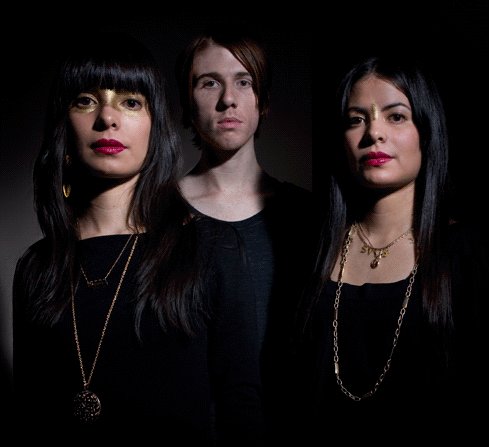
Beginning as a motley group of friends who formed four years ago with the sole aim of playing one gig, Melbourne has had a similar reaction to the band as Aleks does to their own second album Midnight Believer. “It’s grown on me,” says the banjo-player and lead singer after a moment’s reflection, to laughter from the other members. “It’s a lot to digest, I think some people might listen to it and get overwhelmed.” While some listeners may be put off by the schizophrenic nature of the songs shift between moods and catchy but unrepeated motifs with wilful abandon, songs like the infectious first single Antique Limb, Destroy The Universe With Jazz Hands and Circa 1992 Ideas let you know from the outset they’re not a standard band after a standard response. Aleks and the Ramps’ longstanding independence obviously requires some faith in their own abilities and in each other, but the album’s title Midnight Believer is no referral to this.

Aleks continues, “Lily [Coates], who was doing the cover art, said I can’t do the cover until you tell me what the title is and she was doing sketches and we said eventually ‘why don’t you do the cover and we’ll get our title from the cover.” “Believer is one of my nicknames,” adds bassist and keyboardist Janita Foley aka Denim Owl. “There’s so much rhyming slang for the name Janita…gazebo, granita, shaniqua…I decided Believer was my favourite nickname.”

This form of creativity and reactivity seems usual for the Ramps, a band who confess their own music is made by and for short-attention spans and as such has a lot of colour, the odd synchronised dance routine, costume themes and is overflowing with ideas in a way that, perhaps most amazingly of all, is never cloying or affected. “It’s actually the kind of music I’d listen to,” says Denim Owl, almost surprised, “there are a lot of different images and themes threaded together.” “It’s a pretty seamless record,” adds multi-instrumentalist Joe Foley, aka Extreme Wheeze, “it’s got some pretty nifty segues.”

Since their 2005 debut the band has evolved from an ‘anything goes…kind of smartarse’ band to one who is “more deliberate about shit,” as Aleks puts it. “When you do it for a while you eventually realise it’s such an effort rehearsing and lugging gear around, maybe we should think about exactly what we want to be doing when we write a song or play a show. A while ago, there were ideas that slipped through - ‘yeah, fine, that sounds good let’s do it,’ and afterwards, after it’s been played and recorded…it’s not quite as good. The filtration process is a bit more harsh now.” “There’s a tighter filter now,” adds Extreme Wheeze before Denim Owl takes over: “Before, it was like one of those plastic sieves that the spaghetti comes through…” “Now not even the starch makes it through…it’s like muslin.” finishes Aleks. “I have an idea that certain people liked us when we were a bit more…adolescent,” he says quietly. “We were quite wacky and wild, before the ideas were filtered.” “Now they just compare us to Architecture In Helsinki…I hate those guys,” says Extreme Wheeze [about his good friends] to raucous laughter.

With so many gigs under their belt, there must be some sort of modification of a show for different environments, right? A redeployment of resources or skills for maximum impact? “No, we never consider the crowd,” says Denim Owl with mirth-inducing offhandedness before Aleks interjects, “there was that one time in Tasmania that we thought someone might throw a beer bottle so I took off my glasses.” “One of the best shows we played was in Auckland,” pipes drummer Jon Tjhia, better known as Black Wasp, “we chose not to bring the party, we remained still a lot and concentrated on playing.” The band chorus in agreement. “That was great, I actually realised that we were making pretty music and I didn’t have to jump around and not mind if I didn’t hit the notes properly,” says Denim Owl.

While their strain of experimental pop is all their own, something else that sets the band apart is their personal names and identities (guitarist Flying Diamonds is absent today). “I don’t think we need fake names to give us self-confidence,” says Aleks explaining away a theory. “Black Wasp’s father said to him, ‘you’re not my son anymore’ so we had to change his name to Black Wasp so that he could live as Black Wasp and with his real name. His is the best reason. I think it’s maybe to escape from our own names.” “I’ve always liked pseudonyms,” agrees Denim Owl. “I felt that maybe I’ve had too many, so I decided to settle on Denim Owl. I was inspired by Wheeze because he’s always maintained his pseudonym.”

While not giving them super powers, the members of Aleks and the Ramps are transformed into entertainers par excellence complete with a seemingly bottomless well of energy. Aleks expands helpfully, “sometimes pre show we’ll be like [adopts a tired face] then five minutes in it will be like [makes excited bird-like noises].” “There’s always at least one person who’ll make up for it if you’re not feeling that great, like a safety net,” says Denim Owl before pausing. “It’s usually Wheeze,” she says laughing.

“I really needed to wee on Saturday [their most recent gig],” says Extreme Wheeze quickly, “and I didn’t have time to go before we went on. As soon as we started playing…maybe I sweated it out…and even half an hour after the show I remembered…but I still didn’t need to go!” “We’re actually pretty sedate people,” says Black Wasp thoughtfully, “compared to what people might expect of us.”

Given that Aleks does the bulk of the answering, would it be fair to assume he does the bulk of the writing and deserves to have his name at the front of the band? Extreme Wheeze fields this one. “Think of Aleks and an udder and us as four tiny teats which are trickling out sexy music milk…does that answer your question?”
“Actually, that’s the best analogy,” says Aleks.
“Can we use that one again today?” asks Extreme Wheeze.
“Yeah, we can milk that one,” snaps Aleks dryly.

YOUSEMOB ARE GAMMON - An interview with Leah Flanagan

Monday, May 25, 2009


Italian, Irish indigenous Darwinian LEAH FLANAGAN takes ANDY HAZEL on a trip through her upbringing and loving opera in a footy-obsessed family.


Interrupting her day job at an indigenous art gallery to have a chat, Leah Flanagan instantly comes across as exactly the sort of person you’d want to be showing you the results of creative processes; smart, animated, and wholly involved. The more you discover the more Flanagan seems a product of Darwin itself, rendering her both more typical and extraordinary at the same time.

“Everyone in Darwin is very mixed, “ she says, playing down her own Irish, Italian and Aboriginal ancestry. “My background does define who I am as a person, but Darwin is such a multicultural…everybody is Aboriginal or Greek or Indonesian, Timorese, Chinese or a mix…it’s such a broad range of people.” It also seems a great place to be raised to love music, provided you can stand Oz Rock. “The music scene in Darwin is predominantly Cold Chisel cover bands – it’s unusual for us [Leah Flanagan Band] not to be reggae or country or a cover band - but it is changing thanks to festivals and more bands coming up. I come from a really footy-orientated family, so growing up it was always: ‘No, I’m not going to go and play football.’ Music was always my thing and has been since I was a kid, but I never thought of it seriously. I had a lot of support playing music though it doesn’t mean I haven’t had to win people over.” One of those she won over at a local show was an organiser of last year’s Bluesfest, who put instantly added her to the bill, catapulting her to a giant stage where the winning over continued. “That was amazing. It was the biggest crowd we’d ever played to by far. A lot of good things came out of that experience.”

Flanagan has done so well in Darwin that what awards there are to give to musicians there she’s been given, resulting in a local fame that, in typical earthy style, she plays down. “I do alright I suppose,” she says laughing. “I’ve been playing in bands here for a long time and…I do alright”.

After studying opera at Adelaide University, further pursuing her musical heritage and roping in some of the finest musicians she could hope for, Flanagan produced her first album, the recently released Leah Flanagan Band, an entirely Darwinian creation though one that fuses Celtic lilt, Italian bombast and Australiana with ukulele and banjo. “Making the album was a huge learning experience, the only concept I knew was that I wanted a live album. We hadn’t thought about recording much, but after we applied for grants and got them, we got to work. It was all recorded in Darwin and I’m very happy with the outcome, but the next one will be much more studio-based, I’m keen to get more into that.”

Flanagan specialises in personal narratives that take flight with dry evocative imagery, vocal swoops and musical pyrotechnics. While this may differentiate her from other Authentically Australian™ singer songwriters, the inspiration for her songs is ordinary in the extreme. “A lot of the songs are about aspects of Darwin, my stories, stories of my grandmother,” she explains. “It wasn’t very easy for immigrants and indigenous people back in the day. So many people have stories here, and that’s what songwriting is all about I guess, telling stories. Darwin has a lot of history and everyone loves a yarn. People are so friendly and they’ll answer you honestly most the time so storytelling is second nature.” The feelings that Flanagan moves through when singing does seem almost spiritually guided in it’s free-flowing narrative. “I don’t intend to write with a spiritual feeling to my songs, I’m a spiritual person but I don’t think it’s anything that I intentionally do.”

IN MEMORIUM: An interview with KARL SMITH of LEE MEMORIAL

Monday, May 25, 2009


KARL SMITH, when not being mistaken for Tom Verlaine, is leading a very different band than the one that brought him international renown, as ANDY HAZEL learns of Lee Memorial.

“I was mistaken for Tom Verlaine in Sydney once by this guy who refused to believe I wasn’t him,” laughs Karl Smith in an uncharacteristically boisterous way. “So I gave an autograph as Tom Verlaine, I was like ‘well, why can’t I be from Television?’” Despite being a good 30 years younger than the revered punk icon, the wisdom and insight inherent in Smith’s lyrics and quietly confident delivery belie his age. The latest vehicle for these songs, following the fading of Sodastream’s hushed pop, is Lee Memorial.

“I was studying in the last year of Sodastream,” explains Smith of the intervening year between their 2007 demise and the birth of Lee Memorial. “I threw myself into study the year after that, I was pretty burned out and needed to figure out what to do next. I did a writing course, and since then writing prose is something that I’ve focused on a lot.” Storytelling is a tricky taskmaster and a strong feature of the new album The Lives of Lee Memorial, becoming as much a trademark as Smith’s elliptically suggestive haikus in Sodastream. “The prose and songwriting overlap. The songs on this record are a lot more stories than songs about my own life, I wanted to stop being so self-absorbed and look out into the world a bit more; your own POV is not the be all and end all. I’m working on a novel and a script so I was playing around with characters and found that quite freeing. I’ve incorporated situations and settings into my songs more than the atmosphere of the stories. I’ve never really been much of a storyteller in songs as it seemed telling a story would force the structure to be obvious - I crave something new. I’d rather play characters and not revisit the worst days and nights of my life every time I play a gig.”

With several thousand fans spread around the world, it’s fair to say a lot of people are going to be interested in Smith’s new incarnation, so much so that it’s easy to forget the stellar band of local luminaries roped in to make up the band. Ninetynine, The Nation Blue, and The Paradise Motel…you’re clearly busting some big songwriting chops. “I’d known Laura [McFarlane, drums] and Matt [Bailey, bass] for a long time and we’d enjoyed working together on Small Sips,” he explains. “Tom [Lyngcoln, guitar] I met working at the Shock warehouse, which is also where I met Matt. I was amazed and relieved when everyone said ‘yes’.”

“I’d never try to repeat what Pete and I did in Sodastream,” he says seriously. “We were working with such a limited palate and forced to come up with interesting ways to play. I’d feel it was inferior if I tried to do quiet acoustic music. I just wanted to play with other people and have more noise on stage. If I drop a chord or two it doesn’t matter because I’ve got this squalling guitar behind me,” he laughs.

Despite having some busy musicians in the band, Smith finds benefits in the lack of time his bandmates can give. Surely few bands assemble for the first time after they’ve made their record. “We didn’t play much last year - just the odd show as duo or trio - so it’s been really fun to get back into the songs and playing as a five piece. Our first full rehearsal on Monday…it was strange all being in the same room for a practice, which had never happened before. There was always someone couldn’t make it, and that kept the tension up so you have to step up to it and stay focused. If everyone was devoted to it, we’d burn ourselves out quickly. With everyone being in other bands there’s always people coming up with ideas,” something it seems like he’ll never be short of.

CD Review - JJ SYMON: NEW RIVER (Independent)

Wednesday, April 15, 2009

This low-budget debut album by singer, songwriter and erstwhile journalist JJ Symon is, in short, a cracking effort. With few illusions, great playing, invisibly raw production from an increasingly impressive Idge at Sound Park and an appealing directness to his brash 60s garage pop, this is a record that is unfortunately unlikely to find the audience it deserves.

Roping in his (remarkably talented) friends to play and funding the recording through birthday presents is a fittingly low-fi and honest way of making an album like New River and the man at the core himself sounds like a thoughtful and unpretentious guy who happens to write great tunes. Borne from time spent in London (a small park there inspired the title), there is a refreshingly creative approach to this duality, as the album sounds half Melbourne half London instead of referring to travel or locations in the lyrics with it’s British brightness and Melbourne conviviality.

New River also answers any unhappy subjects of Symon’s pen who have muttered a variation of ‘well you do it then you hack’ by showing he’s as adept as writing for press as he is for a listener. Songs like Drnk Hairkut, 106 and Winterland could be Easybeats’ outtakes while the Beck-ish folkier side of Symon’s work sounds like it’s been trained in front of small crowds. Acerbic closing track Cabin Fever rolls effortlessly with it’s dry narration: “trade in your regrets, replace them for secrets / place all your vices in the vanity room / say fuck forever / turn all your sermons into lessons of loss”. Tellingly, a Tom Waits cover (Temptation) doesn’t sound at all out of place or throw his own songs into relief.
Ultimately New River is a collection of songs that are bound to please a lot of people should they give the album a chance, balancing the familiar with the personal the way it does. The album sounds like it could have been made by someone a lot more famous going back to their roots as many are want to do of late. Nice work all round.

Live Review: JESSICA SAYS

Tuesday, April 14, 2009
THE TOFF IN TOWN

It’s a tightly packed, warm and noisy room that Jessica Says has assembled here tonight to help birth her album We Need To Talk, which in itself is no small achievement. Selling out the venue at 21 years old with an entirely self-penned debut album upon which you play almost every instrument and assembling the young talented band she has is the hallmark of someone who has ambitions and the wherewithal to achieve them. She needs to talk, and a lot of people are listening.

After dazzling and crowd-pleasing sets from rising stars Darren Sylvester and Dick Diver the sliver of a girl, Jessica Venebles, leads her four-piece band on stage. Dressed like a backing dancer from Rhythm Nation-era Janet Jackson, the music rapidly overtakes the impact of her prepossessing appearance. Opening with the We Don’t Falter the room has clearly heard these songs before and likes them a lot. The warm subtleties added by the band’s violin, cello and drums (played by Nick Venebles, Stella Gray and Jamie Power respectively) are seamless expansions that lend the feeling that the songs are growing on their own rather than by design.

“This is the first time we’ve ever played last,” says Jessica humbly, “I feel like Cinderella.” Despite the sound mix not being up to the usual impeccable standard the Toff delivers, and the chattering back quarter of the crowd preventing the spellbinding wonder these songs are capable of producing, it is a warmly received and brilliantly played concert. New song Oliver is a further great addition to her repertoire, the duet with her brother Be My Child stunning in it’s oddness and bravery and album tracks His Mother’s Ring and Set The Night Upon You are gorgeously rendered.

While this show proves her talent is in no doubt, and in noting the careful progress she has been making, it’s easy to imagine that once she steps outside of her influences and finds her natural voice she’ll be a major artist. For now, it’s hard not to be won over by the lyrical dexterity, musicianship, and graceful style; as the Toff is tonight.

Live Review: SEASICK STEVE

Tuesday, April 14, 2009
THE CORNER

May I be the first to call shenanigans? Probably not, but there is something amidst the hubris of a Seasick Steve performance that for this listener rings false. The story runs so: Steve leaves home at 13 to escape beatings from his stepfather and lives a hobo’s life until the late sixties when he moved to California and then Seattle as he became involved in music scenes, befriending Janis Joplin, Joni Mitchell and Kurt Cobain on the way. While all this may be true, it’s the how much he plays up to the tobacco-chewing, overall and trucker cap-wearing, stereotype of a southern American that rankles and throws doubt on his hazy claims. “Never met a rich man that I liked,” he sings on Last Po’ Man. Must hate himself right now. His use of broken down malfunctioning equipment as a sign of authenticity is odd for a man pushing a million record sales. Still, this is what he is, an ex-hobo showman of the highest order, and hot dang are a lot of people buying it.

This isn’t to say a Seasick Steve show isn’t good. It’s fan-fucking-tastic. He whoops and wails, stamps and curses, grumbles, swigs whiskey and wipes his mouth like you’d hope a living remnant from the American south would. ‘How many of you came here expectin’ a blues band?’ he grins to a rafter-packed Corner. He also doesn’t take to people talking during his show and picks on a few chatty members with a foul-mouthed sincerity matched only by his genuine gratefulness at the show’s end. ‘It sho’ has bin a pleasure playin’ fo yoo,’ he says before diving into the gently plucked ballad My Youth. It’s his youth that he’s trading on here, having not jumped a train for over 35 years or so, but his showmanship is brilliant, you’d feel he’d done it yesterday he way he explains references in his songs with crackling banter boozy charm.

The songs are entirely autobiographical, and tonight’s selection peaks with Boss, a song about the death of his dog that sees him put down the guitar, push away the microphone and walk amongst the whooping crowd as he sings the refrain. Chiggers let’s you know how to avoid bug bites in Tennessee while My Name Is Steve sees him serenade a bashful audience member as brilliantly intuitive drummer Dan Magnusson follows. Entertainment? Damn right. Informative too.

Live Review: LUCIE THORNE, TOBIAS HENGEVELD

Monday, April 06, 2009
THE TOFF IN TOWN

Tables and chairs cluster around the stage tonight, as Tobias Hengeveld intones gently into the microphone in his strong ocker accent. Stories of travelling highways, working on fishing boats and of rambling muses; ‘You’re a bend in this river baby / A sparkle in a jar’. A relatively new face on the singer/songwriter scene, despite Hengeveld’s joking insistence to remember him as ‘Tony Lagerfeld’ given the complexity of his name, he’s distinctive enough to make a mark on his own. His performance, as with Thorne’s, is helped immensely by the quality of the sound tonight.

‘Tonight I'm just a broken girl / I can barely trust even my own self / So I'm warning you, I'm telling you straight / I have gotten lost along the way’ so Lucie Thorne sings tellingly in Open Sky, the final track on Black Across The Field, the album launched tonight. Her gently suggestive delivery, each sentence trailing off, sells you rustic escapes and compelling stories and again and again, Thorne draws you in. Her voice is Renee Geyer-rich and throaty which adds to the intimacy though it seems she’s giving little of herself. ‘I’m too beside myself to talk tonight,’ she laughingly confesses. Indeed, it seems she slips between engaging the crowd and being back in her house in her little town in the NSW hinterland, in the space of a verse. The way her lyrics paint pictures then drift over the lulling vibrato guitar and soporific backing sees the songs often blending, getting lost along the way.

Those that stand out strongest are those rhythmically pushed, Over In Threes glows, Alice crunches beautifully against a wall of valve warmth, The Basic Rules sees a sliver of pop find it’s way into the set and sparkles beautifully. Slower songs are often beautiful glimpses into her world; a sublime Walking Late, the harrowing Before The Cold is made harsher by it’s lullaby melodies, and the gorgeous closing Winter/Sun almost steals the show. Her guitarist Heath Cullen is a notable asset; his wiry guitar lines and doleful pedal steel add rich and subtle layers. It seems Thorne is already into the next album and it’s going to be louder, more direct and possibly even better than Black Across The Field.

CD Review - YEAH YEAH YEAHS: IT’S BLITZ (Dress Ups / Modular)

Monday, April 06, 2009

Upon stepping out of the converted barn in upstate New York in which It’s Blitz was created, O and Co. must have known that a large section of fans, upon hearing it’s leaks and first single Zero, would let go an collective almighty ‘what?’ Initially it seems the only real difference is that instead of guitar parts, we have synthesizers treated to sound like guitars, but this is a record from a band very sure of themselves and at the peak of their songwriting powers. The production is summed up by the lyrics from Heads Will Roll: ‘dripping with alchemy…glitter over everything…you’re all chrome’. Producers Dave Sitek and Nick Launay let the synths breathe and stretch, and the resulting album is as tender and defiant as any the band has done.

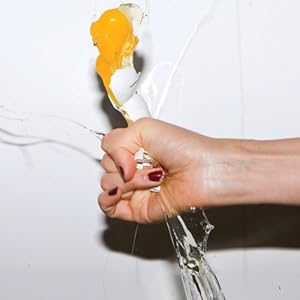
It may be too off-putting for those cursorily looking for another Maps or Y Control, but there is a depth here it’s unlikely they could have got any other way than by putting the guitars down and building songs around O’s oblique poetry. From the shell-splitting cover to the fading feedback waves on Sigur Ros-esque final track Little Shadows, this is a remarkable record, particularly from a band formed under inspiration from the avant-punk scene of Ohio. Skeletons takes a Scottish pipe-band hymnal and turns it into a soundtrack for a slow-motion Replicant rebellion, it’s beautiful, suffusive and would never be made by The Faint. Overt pop moments like Dragon Queen and Heads Will Roll’s empty pleas to ‘dance ‘til your dead’ are more forgettable, and when they do return to their live-honed roots as on Dull Life it’s almost an offhand gesture that doesn’t quite fit, so compelling is this newfound gleam and so effective are the slower songs. Also must be noted that Brian Chase’s phenomenal abilities behind the drum kit are more muted on It’s Blitz.

When hearing songs like the gentle pulses of the politely emotive Hysteric (‘flow sweetly / hang heavy / you suddenly / complete me’) and opening track and single Zero it seems logical that Zinner would move beyond the heavily treated guitar he is so good at squeezing sustain and grainy texture from. The calmness and assurance that should accompany a change of pace and sound of an album is here in spades, confidence seems something O lives and breathes. Listen and listen again.

CD Review - DAN DEACON: BROMST (Mistletone/Shock)

Monday, April 06, 2009

Far from being the singalong songfest that most communally minded albums are, Deacon works a whole ‘nother angle. Bonding happy dancers with DIY-style electronica (as happens effortlessly every time he plays) fleshed out with live drums, percussion and the odd horn section create a noisy and exuberant blast of an album, like a giant friendly hyper-intelligent car alarm, you can’t ignore it.

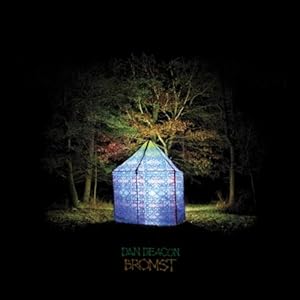
It’s been said before but Deacon’s greatest qualities, his openness and strident joviality, are rendered brilliantly incarnate on Bromst (the title referring to the tent you can see above, a miniature one comes free with the CD for miniature communal fun). Buzzing keys, frantic rhythms, pitch-shifted vocals, and percussion quantised beyond playability; it’s as exciting as it is dense. At first the lack of unfettered organic sounds or discernable lyrics is off-putting and makes you wonder why Dan gets all the props while our own Talkshow Boy languishes at the bottom of house-party bills, but then the scope and mission Deacon is on becomes apparent.

The cover and song titles evoke nature while the sounds are bursting with life and irrepressible movement despite sounding as if it could have been made in a basement on an iBook. As an effort to focus his manic energy and turn it into shared frivolity, Bromst is a blast, literally. Deacon uses tones like laser beams shooting you in the arse and making you get up get into it and get involved, and you can’t argue with that.

There are a number of atmospheric shifts though; Surprise Stefani and Run For Your Life sound the most fun minimalism has ever had, Snookered begins like a tinkly ballad from Vespertine before turning into a Kraftwerk album played on 45rpm, while Wet Wings sees an ancient vocal round looped and delayed and morph into a celestial cacophony. There is a recurring feel of The Wicker Man on amphetamines about this record, if the islanders were toasting marshmallows instead of incinerating a virginal policeman, which is no bad thing. Overall, it’s his blistering call to get out of your chair and start loving each other that drives Bromst, as it does his live shows. Tracks like the ridiculous, turbo-charged indiscernible rap of Woof Woof and the manic arpeggios of…pretty much everything else, are as likely to appeal to 5 year olds as much as to the discerning fan of the rest of Mistletone’s roster.

THE RIGHT ERRORS: An interview with THE NIGHT TERRORS' MILES BROWN

Friday, April 03, 2009

ANDY HAZEL discovers into a world of Theremin orchestras, rooms of analogue synths and plenty of nerd jokes, courtesy of The Night Terrors’ MILES BROWN.

Long relegated to sci-fi soundtracks and as an oddity from the chorus of Good Vibrations, the theremin is an instrument guaranteed to cause reactions ranging from appreciative interest to rabid fanaticism. Phenomenally hard to master yet incredibly easy to play badly there is but one player in Australia using one in a rock setting, and, in his hands, it is by no means a novelty.

Miles Brown, bassist and thereminist from Melbourne’s The Night Terrors is intent on putting the theremin centre-stage on their newest release Back To Zero, an album already pricking ears in both hemispheres, and for good reason. There is nothing like this. “The focus was to make a very theremin-centric album. It ended up being more rock and with a lot more pretty stuff than on our previous records.” Brown explains. “We’re treating it more as a vocalist than a toy. In Australia, I’m pretty much the only person playing [theremin] live, so it’s easy to get away with making mistakes because people think it’s hard and no one knows what it’s supposed to sound like,” he laughs. “After studying with Lydia Kavina ([inventor] Leon Theremin’s grand niece and the foremost thereminist in the world), there’s no question about having any leeway to get away with anything,” Brown says. “Before I went overseas I’d never met any theremin players or talked in depth about it. Once we made Back To Zero I’d made it pretty much as far as I could, so I thought I’d go overseas and to not just meet other people, but actually spend some intense time with the person who’s the best in the world. It was awesome and sort of scary.’

A recipient of an Australia Council grant to study in the UK, Brown was then invited by Kavina to join her at a Theremin Festival in Germany. A Theremin Festival, who knew? ”There are some interesting characters around this instrument,” Brown says with a sly, self-incriminating chuckle. “After the conference and the Theremin Orchestra performed we had this theremin party there where we were all having dinner and a Sam Hoffman song came on (Sam Hoffman did the soundtracks to all the sci-fi movies in the 50s and 60s), and this old guy started pretending he was swatting flies and everyone cracked up. It was like: ‘Wow…a theremin nerd joke!’ My nerd quotient was high when I went to study with Lydia, but now it’s just…insane,” Brown confesses, shaking his head. “Only one other person actually played their own music, which I wasn’t expecting at all. My approach was very different to everyone else’s because I come from a rock background. Everyone comes from either a classical background or is a hobbyist, whereas I’ve come from getting up on stage a lot and getting progressively less shit.”

Indeed, he has. The Night Terrors began as a bunch of ex-Tasmanians in 2000 as a band often described as ‘prog metal’. Brown now says the band is interested in making instrumental music that isn’t ‘Mogwai-esque’ or ‘your normal post rock thing’. “We’ve been put in the box of ‘John Carpenter-style’ because of what we do and how we love Goblin and that kind of stuff. Because we recorded the album really low-fi, we pushed the whole analogue angle; we didn’t have the money to do it differently. Also, we recorded it with Nao [Anzai] who writes for Keyboard Magazine in Japan and worked with a lot of synth bands there in the eighties and he loves the prog thing so he was really keen to work with us. Paul [Kearney] who’s the keyboard player now, is definitely more into the analogue-tweaking stuff. He’s a real synth nerd and collector; we had 15 keyboards set up when we were recording! At this point it is definitely a pre-requisite to be a nerd to be in Night Terrors,’ he says with another boisterous laugh.

CD Review: BOB EVANS: GOODNIGHT BULL CREEK! (Capitol)

Wednesday, April 01, 2009

Despite a cover and title better suited to a sleepy-eyed return to roots (Bull Creek being Bob Evans’ aka Kevin Mitchell’s home suburb of Perth), and a god-awful and thankfully misleading promotional picture in which he looks like an electrocuted Skyhook, this album is a revelation. Goodnight Bull Creek! feels as if it were built to document the final years of Evans’ Saturn Return so enmeshed in reflection is it, yet somehow the album finds him being the guy you’re glad pulled over when you’re hitchhiking; capable, friendly but not pushy and familiar with the land.

Mitchell’s songwriting is of the Tim Rogers / Neil Finn / Elliot Smith variety. While nothing new, it finds its authenticity in slack rhythms, homespun lyrics and a warm and easy production courtesy of Australian indie-country songwriters’ go-to guy in Tennessee, Brad Jones. Crack local session musicians have been used incredibly well (particularly singer Melissa Mathers) and sweet vocal and string arrangements accentuate the fragility of the album’s ballads Your Love and Wintersong, while the oddly beguiling twee bossa nova of Power Of Speech doesn’t sound out of place. Several songs sound readymade for radio (no bad thing when they’re this well-crafted) particularly the affecting pop of It’s A Beginning and album high point and final song, the springing, poignant Everything Goes.

That the album sounds very American is no bad thing. The songs are clearly still his and I’m sure Mitchell is thrilled with the result as he must have been with Suburban Songbook to come back to the same producer and musicians, but this record sounds inescapably more Nashville than Perth, though there isn’t the sense of treading water as often happens with these unexpected successes.

Intended to be the final chapter in a ‘suburban trilogy’, Mitchell balances the idea of turning your back on childhood while mining it for inspiration in the way only someone in their late twenties finally embracing adulthood can. Mellencamp-throwaway Hand Me Downs, the Creedence-lite Nuthin’s Gonna Tear Me Away From You and the inescapably Finn-esque rocker We’re A Mess are great examples. It’s a tight walk but he comes out smiling; good songwriting, top-notch playing and warm sounds equals happy punters. ‘We made it once we’ll make it twice / I’ll jump my car we’ll roll the dice / And who’s to say that we couldn’t start again?’
Goodnight Bull Creek, Good Mornin’ America?

Live Review: ROBYN HITCHCOCK AND THE VENUS 3

Saturday, March 28, 2009
THE CORNER

A silver-coifed Robyn Hitchcock begins tonight’s trip through his back catalogue with a transfixing solo take on the funny and touching I Often Dream Of Trains. Soon enough the shaggy trio of Peter Buck (REM), Scott McCaughey (The Minus 5) and Bill Rieflin (REM and Ministry) join for the scintillating Vibrating. Once Buck’s pedals are behaving (a malfunctioning jack causes a brief but noisy delay during which a perfectly timed heckle of ‘sack the REM dude!’ prompts Buck to instantly retort ‘I’m not getting paid for this’), a spellbinding melange of Barrett, Bob and Byrds fills the room. Over Clem Burke-style beats, Buck’s chiming chords mesh with Hitchcock’s jagged slashes and dazzling vocal prowess to create a satisfying whole. Despite a low turnout leading to the room-halving red curtain being drawn – always a little dampener – it’s exciting stuff.

“If this next song had a colour…it would be…invisible,” Hitchcock deadpans by way of an introduction to the brittle and bursting What You Is. “This next song has a silent introduction. No one knows who counts it in, but rest assured, it will appear,” precedes the excellent Saturday Groovers. There are no duds in this set. Hitchcock has over 30 years of critical smashes to draw from, his public profile seemingly at the mercy of Jonathan Demme and successful musicians. This sort of injustice barely registers tonight as he proves he is the master of the smart lyric, divine melody and surrealistic banter. “A lot of the songs we’ve played tonight are about Brian Epstein. This one is no acception…not exception…acception.”

Up To Our Nex (from Demme’s Rachel Getting Married) is gently incendiary and Kingdom of Love from the Hitchcock-penned Soft Boys’ classic Underwater Moonlight a glistening highlight. There is a lot of love in the room for Hitchcock and co tonight, but there is no need to rely on it. Many who’ve seen him on previous visits agree he seems tired (the band, all over 50, didn’t start till 11, perhaps a late night for them?) and the setlist varied little from the previous night’s show in Sydney, but there were no complaints. “People get what they deserve / Time is round, space is curved / Honey have you got the nerve / To be Queen Elvis,” he broods through a faultless encore. “This is music from a time before your mother was conceived, when men smoked pipes, before women had orgasms,” he says. “Nevertheless, it’s OK.” It is.

OPEN FIELDS - An interview with Lucie Thorne

Saturday, March 28, 2009


Working on your album with more people than live in your hometown is quite a daunting experience, even when its population is four, as LUCIE THORNE tells ANDY HAZEL.


“I moved to Bimbaya specifically to make Where Night Birds Call,” says an animated Lucie Thorne of her previous album and the township in New South Wales she calls home. “My friend [and guitarist] Heath Cohen is a native, and I thought I’d move here for six months then head back to Melbourne. That was three years ago and I’m still here,” she says laughing. “It’s still a surprise. There’s a real inner hermit to me, I love not having distractions and being able to set up half my house as a studio; I sleep in the corner and leave the mics and amps in place. I’m touring half the time which is a really social activity so I get good doses of the city and comrades, then I come back here and hide in my cottage.”


Richly detailed locales haunt the songs off Thorne’s latest album Black Across The Fields, many of which are about entering unfamiliar environments and suffusive states of mind, so it makes sense that solitude and the township seep into her alluring compositions. “I did that thing of living in inner city Melbourne with friends and neighbours,” she explains. “Not having anyone to hear you is such a liberating experience. Moving here really cracked a seal for me. Songs in the set are becoming bigger and crunchier; in my mind it’s a rock and roll show now.” In an irony she laughs at, it seems the more comfortable Thorne feels about making noise, the more hushed the songs become. ‘Having the physical space as well as the mental space that this kind of isolation provided meant I started writing and playing a lot more.”


As with many of Thorne’s creations, her album had a small and careful beginning. “I started recording a lot of the songs at home in a similar way to Night Birds, thinking ‘that’s how I’ll make this next record’; recording songs as they come along. I had a gig coming up at The Basement, and Glen from Vitamin [Records] had been telling me ‘broaden your horizons for this next record’. I was a bit dubious…‘I don’t need a bag of session dudes to make a record’, but I sent some demos to his friend [drummer] Hamish Stuart. We played a show together and it was just such a fun gig. Afterwards Hame straight up expressed an interest in working with me on the next record. He asked who I imagined working with if I could have a dream team, and straight off I said ‘Chris Abrahams’, not really thinking there’d be any chance. Hame said: ‘Well, let’s ask him,’ I said ‘what, really?’ Then we invited [bassist] Dave [Symes] and spent a week in Hamish’s back shed. Initially I was quite reserved. I sat back for a few days and got more and more excited, their ideas were on the same page as mine, and beyond that, they were just delightful human beings. It just felt really easy. We booked a few days at Megaphon [Studios] in Sydney, just the three of us playing live. I took the sessions home and started pottering around.”


Despite working in a professional studio for the first time and finding the luxury of time replaced by the tightness of professional musicianship, Thorne found a positive side to her initial intimidation. ”All the band tracks I’ve ever recorded before have been back to front; people playing along to my parts. I’ve always been amazed we’ve kind of pulled it off. I’ve always been able to do 17 million takes and delete them in the privacy of my own house,” she says laughing. “Knowing that Hamish and Dave were going to be right on it every time was scary, so it was a really good kick up the arse.” Whatever it’s taken, it’s clear that Black Across The Fields is finding Lucie Thorne new fans fast.

AT THE SOUND OF THE BELL, an interview with School Of Seven Bells' Claudia Deheza

Thursday, March 19, 2009


With the release of last year’s captivating Alpinisms SCHOOL OF SEVEN BELLS’ research and experiments paid off. ANDY HAZEL finds singer and identical twin CLAUDIA DEHEZA wouldn’t mind being involved in an experiment of her own.


Named after a fictitious South American school for thieves, School of Seven Bells (or SVIIB in what is surely one of the finest band acronyms of recent years) have, with one of the most acclaimed debut albums of 2008, created a niche of their own. Fusing intimate electronica with chasms of guitars, elegiac lyrics and swooping harmonies, this is music for headphones, bookstores and, it would seem, bigger and bigger venues.

In a car on her way to the band’s next show in Vienna, Claudia Deheza, responsible for precisely 50% of the band’s hypnotic harmonies, admits to being somewhat surprised that she’s there at all. “The shows in Germany went way better than I thought they were going to go. The crowds were very enthusiastic and excited and knew all the songs, which was a real surprise. I hope it’s like that when we play with Black Moth Super Rainbow,” she says of next month’s US tour. “Everything about the band felt like a natural progression up until recently. The last few months have been a little crazy as things have started to pick up really quickly. It’s been very strange but we were really happy with the album so it’s all good.”

Raised by artistic parents in a world of constant activity and creativity, Deheza and her identical twin sister Alejandra are very grateful for their upbringing. “Ever since we were little we were involved in music. We always had instruments, as young as I can remember. We were put amongst a choir when we were really little and in school we were put into bands, we were always learning instruments so being in a band together came very naturally.” This lead to forming the band On! Air! Library! with friend Phillip Wann in 1998. After a split album with The Album Leaf, and a 2004 tour with Interpol, the musical arrangement began to wear thin for the sisters. “I definitely felt creatively compromised before forming SVIIB,” Deheza reflects. “The whole idea behind SVIIB was the idea of being very free, without limits, without compromising ideas because of another person in the band. We weren’t going to limit ourselves and I guess that in other bands you’re supposed to be about not stepping on each other’s toes, in this band there’s none of that.”

Their tour with Interpol introduced them to fellow support act Secret Machines and the sisters found a friend in guitarist Benjamin Curtis and a way out of the pressure the three felt in their respective bands was born. “Ally and I actually left On! Air! Library! in 2004 and SVIIB didn’t start until early 2007 so there was quite a bit of time before Ben and us got together to form the band, to write and decide what we were going to do,” Deheza explains of the careful construction the album underwent. “Maybe fate brought us together,” she laughs. “We all happened to be on that tour together and it’s worked out pretty well since then.”

Sounding like they’re tighter than two coats of paint, the trio split responsibilities to the final 0.3 of 33.3%. “We’re all very involved in the presentation and everything involved with the band. It’s not like the label decides ‘we’re going get you to work with this designer’ or ‘that photographer’. It’s the three of us, we pick our own artist and work on everything together - the font, everything.”

The album clearly couldn’t have been born any other way. By leaving their respective bands, moving into a house/studio to work together, Alpinisms is a sweeping statement of independence where there was no real ‘time off’ and dinners would be interrupted if someone had an idea or was singing a harmony another liked. The bravery that came with the strength of this union allowed songwriters to venture into territory that was not as bright as some of the sparkling keyboard melodies may indicate. The song For Kalaja Mari, for example, is notably downbeat, particularly moving and a highlight of Alpinisms.

“Kalaja Mari was a close friend of Ally’s who unfortunately took her life and the song is basically about how Ally lost touch with her,” Deheza elaborates. “It’s a letter explaining everything she would have wanted to tell her. It’s a song we’re definitely we’re very happy with. It came out perfectly.” The lyrics, Curtis has said elsewhere, are the centrifugal force of all the music the band creates.

Other artists have noticed the sisters’ skills too. Claudia Deheza also worked with Prefuse 73 on the Class of 73 Bells single and with the underground supergroup Risil who also features John McEntire, members of Battles, Pivot, Savath Y Savalas and Prefuse 73 though, she insists, there is no looking back. “That was a one off. It was really fun to make and was basically done out of boredom and downtime. All the other things are friendly collaboration and the singles and guests on a song.” One side project that will be ongoing is Night Of The Gifts, a far more experimental and at times suffocatingly atmospheric project where tracks are more ‘pieces’. “That’s also the three of us,” Deheza explains. “It’s another side of our personality, our alter ego. I’d love to play those songs live but we haven’t had time to work it out. We’d love to do soundtracks as Night Of The Gifts, it’s something we’d be perfect for.”

Another obviously striking aspect about the band is the Deheza sisters and their phenomenally matched vocals. Having a twin sister in a band is, it turns out, a wholly positive arrangement. “I don’t know what it’s like to be any other way,” Deheza says guardedly. “Sure, I feel lucky, we’re very close, and we’re closer than most siblings normally are I guess. We can read each other very well. I think it does give us an advantage being in a band, there’s a familiarity that we have, and you don’t have to be polite with siblings, you can say: “no I don’t like that” and know that you’re still going to have that connection. It’s a lot easier to get to the point.” Switching from serious to hilarious in a few seconds when broached about being the subject of a scientific experiment Deheza cracks up, as does her sister in the background with an audible shriek. “No! I’ve never been asked to be in a scientific experiment, but I wish I had, man that’s a great idea. They sound like a lot of fun, that would be fascinating!”
Geneticists, listen up.

CD Review: LUCIE THORNE - BLACK ACROSS THE FIELD (Little Secret / Vitamin Records)

Wednesday, March 18, 2009

Opening with the gentle plucked swells of escapist ballad As You Find It Lucie Thorne’s understated guitar and vocal interplay rolls in like a fog. As with the whole album, Thorne sings from places she knows well. Following the Nick Drake theory of ‘no matter how loud you turn it up, it’s still quiet,’ Thorne cuts her own niche from the acoustic masses by specialising in gently percolating nocturnes that could be penned by PJ Harvey after waking in a Tasmanian poppy field.

Roping in an impressive ensemble including everyone’s pianist of choice Chris Abrahams (does that man sleep? Judging by his somnambulistic contributions herein it seems not, and that Thorne has benefited from it), the similarly ubiquitous David Symes and Hamish Stuart round out the rhythm section while Thorne’s able guitar playing is enhanced by Stephen Magnusson’s fluid contributions.

Thorne is quite clearly in no hurry to find her audience and this attitude comes through in the music, strong, wilful and as if beamed in from a remote corner of this island. That she was raised in Northern Tasmania and lives in a tiny town in the south of New South Wales fits the mood of the album perfectly. Occasionally her accent curls words in a way that almost detracts from the lush but simple world she creates, it’s a habit that clearly doesn’t bother Waifs fans and won’t bother most listeners, but it roots her in the here and now and probably sounds exotic to her overseas fans.

There is an appealing looseness to the songs in a way that keeps things from being too measured and a warm lulling quality should appeal to anyone looking for an escape from a cold clinical world. Northern Town, the gentle valve-crunch of Alice, the gossamer light Before The Cold and the upbeat and probable single The Basic Rules show that Thorne has a lot on her mind and poetic and original way of expressing it. A bright star rising, and one worth all the attention she receives.

CD Review: JUSTIN TOWNES EARLE - MIDNIGHT AT THE MOVIES (Bloodshot Records /Inertia)

Wednesday, March 18, 2009

Yes, he’s the son of Steve Earle, and yes, he has access to the top session players and studios east of the Mississippi so right off the bat the bar is set, perhaps a little unfairly, high. His recent tour to these shores left a wake of converts and many of those who saw him rouse and hush the Hepburn Springs Palais will be keen to get their hands on this follow-up album to The Good Life. That’s the great thing about country music, you always know what you’re going to get; a variation on a theme. The listening public don’t take too kindly to someone messing with the formula (see Garth Brookes’ brave but unsuccessful reinvention as Chris Gaines).

Smoothly played and produced Midnight At The Movies somehow never sounds too polished which is testament to his ability to ride country, rock, bluegrass and folk idioms with his strong Tennessean twang. Opening with the slackly paced Rhodes-driven swagger of the title track that flirts with Springsteen-mumble and evokes a dreamy feeling effectively. His cover of The Replacements’ Can’t Hardly Wait doesn’t mess with the original’s arrangement and it breezes by pleasantly, though it’s heavier rhythm stands out against the brushed beats of the other songs. Pleasant, is, in fact, the word you could use to describe the whole album. Though not without some grit (They Killed John Henry and Soon I’ll be Forgiven for This treat their grave subject matters gravely), a great arrangement on Halfway To Jackson and the opening title track, it’s burnished production and slick packaging keeps his eye fixed squarely on ‘crossover’ appeal.

Midnight At The Movies maintains Earle’s reputation as an impressive songwriter regardless of genre, and he covers a lot of popular touchstones that though no new ground is really broken. Having said that it would be perfect for the drive to Daylesford to catch him next time he plays there.

Live Review: RACHEL UNTHANK & THE WINTERSET

Monday, March 09, 2009
THE TOFF IN TOWN

“Unthank was the surname given to those who would move onto crown land and claim it as their own, much like squatters,” explains Rachel Unthank mid-way through her band’s set tonight. In the manner of her ancestors Rachel and her sister Becky take traditional songs of their local area (northeast England), and make them their own. Not content with this, their set tonight also features dazzling covers of Robert Wyatt’s Sea Song (one Wyatt himself admits is superior to his own) and the rarely covered (because his songs are so damn complex) Nick Drake with Becky’s achingly stark take on River Man. As becomes apparent early on, this is not music for everyone. If the idea of a young woman in a plain smock dress singing Olde English songs about Ma Bonny Lad, clog-dancing and resurrecting in dead languages like Norn and Ancient English doesn’t sound like a hyperlink worth clicking on then stick with the Pushover Festival and Golden Plains sideshows because these girls (seemingly the youngest people in the room) are bringing something entirely different.

Opening with the vertigo-inducing dissonance of the spiralling lament I Wish, the room is rendered as silent as an empty moor before Rachel then Becky take a verse of Blue Bleezing Blind Drunk, another song whose power is in simplicity, repetition and foregrounding their startling familial harmonies. An insight this far back into the roots of popular song is a rare gift, particularly when given by some of the very few people able to sing these songs with the authority they would once have commanded, accentuated by the lightness of their personalities between songs.

Taking most of the set from last year’s Mercury Music Prize nominated album The Bairns it’s the effortless authenticity and the joy that is evident every minute the girls are on stage (Beck and Rachel are joined by pianist Steph Conner and violinist and accordion player Niopha Keegan). Even when stellar four-part harmonies are delivered with a dour netballer’s sincerity, as on the gorgeous Blackbird and Whitehorn both written by recently departed pianist Belinda O’Hooley, the melodies are primal and spirited.

The synchronised rhythmic clog dancing of Blue’s Gaen Oot O’The Fashion (I’m not making these titles up) is at once hilarious and brilliant. It’s all such a peerless display of honesty and ancient melodies that to be invited to their hearth is an offer impossible to refuse. If only there were enough room to write about how amazing Laura Jean’s support set was. Brilliant.

CD Review: JESSICA SAYS - WE NEED TO TALK (Unstable Ape / Inertia / Remote Control)

Monday, March 09, 2009

The gradual rise of Jessica Venebles, from her accidental debut accompanying Belle And Sebastian in 2004, has been a fascinating thing to watch. To a stupendously enthusiastic sold-out Palais Theatre this slip of a thing belted out a phenomenal Lazy Line Painter Jane while surrounded by a gleefully surprised Belle and Sebastian. It was a moment of unadulterated joy and a harbinger no one could have suspected. Her evolution into a solo artist has been slow and very sure, now resulting in the supremely confident We Need To Talk.

With one of the best album titles in recent memory, a visage that can only be described as striking, talent and experience well beyond her years and rigorously high standards of songwriting and style, Jessica Says is a compelling figure. Her time as lead cello in the Melbourne Youth Orchestra and its abandonment to work amongst the upper echelons of the indie-pop world is in equal measure here. We Need To Talk has a timeless quality about it. Despite sounding like it could have been made any time in the last 40 years it never sounds less than current. Her songs, like her voice, have a sureness balanced by a sensitivity reflected in her elegiac lyrics, with their recurring themes of darkness, solitude and oblique references to separating lives. This is an album about growing carefully and evolving bravery jealousy inducing in its youth, beauty and lyrical accuracy. “So who is this child you are leaving with me? / Scared that I might have loved too quickly / But we’ll chew at apple cores and lemon rind / We’ll suck the life out of all we’ll find”.

Venebles clearly knows a thing or two about writing for cello and violin (ably played by her brother Nick), and her arrangements are something many bands could learn from. Keeping the songs personal and stripped back heightens their strengths; the direct lyrics, her breathy ‘in your ear’ voice, the humble piano parts. The gorgeously concise We Don’t Falter spirals inward and inward as Venebles talks of climbing mountains, intoning, “We don’t falter though we fall”. There is a constant suggestion of movement, progression and hope here, which, given the deeply personal nature of the music and nakedness of the delivery, hints at ensuing albums being quite different. I’m sure I’ll not be the only one paying close attention. A phenomenal debut.

CD Review: THE WHITEST BOY ALIVE - RULES (Pod / Inertia)

Monday, March 09, 2009

Playing possibly the most anaemic dance music in history, The Whitest Boy Alive are, for all their analogue authenticity and genuine grooviness, an exercise for the songwriting of Erlend Øye to get rhythmic. Most will know him from Kings of Convenience’s mellifluous library-quiet paeans to emotion and fortitude, but Øye has always been up for putting down the acoustic guitar and getting heavier on the backbeat. TWBA’s first album Dreams woke a lot of people up to the wonders of Scandinavian dance music played by a rock band, a band celebrating a tweeness dance music had hitherforto shied away from with a glass of Tanqueray and tonic. TWBA remind us that music can sound geographically specific, if not necessarily cultural.

Rules is no great departure from Dreams. The songs continue the Rhodes-heavy, skeletal drumming and brittle D.I-ed guitar with Øye’s warmly brooding voice the only ingredient stopping the soufflé from floating away. Courage elicits a sense of certainty that is almost uncharacteristically forceful while High On The Heels and Keep A Secret are perfect 8-9PM songs for any DJ to play before the drinks take effect. The production’s Teutonic sheen almost demands that you iron your shirt and polish your shoes before stepping out; “this dance ain’t for everybody”.

“Freedom is a possibility only if you’re able to say no / People in Northern Europe since medieval times / We find it hard to deal with when our dreams come true / As if happiness exists in the world at a fixed amount.” – 1517.

Øye is a masterful songwriter regardless of genre and arriving at “dance” music with such an atypical heritage he is bound to deliver something interesting and Rules is absolutely that; head-nodding more than roller-disco. What Øye does wonderfully, as the preceding excerpt indicates, is inject some humanity and pathos into the beats. While LCD Soundsystem may rail elegantly against ageing on All My Friends, Øye, against fragile beats, clipped chords and B12-deficient bass sings of human frailty and the emotional vagaries, with music mirroring his flawed subjects. The beat becomes the ceaseless propulsion of time and the melodies and sentiments clinging onto it just the delicate, transient humanity that found its way here. Deep yeah, but perfect for hairdressing salons.

CD Review: LEE MEMORIAL - THE LIVES OF LEE MEMORIAL (Dot Dash / Inertia)

Monday, March 09, 2009

Rounded up by Karl Smith to bring to life a new group of songs written since the sad demise of Sodastream, Lee Memorial is essentially a country-ish indie band with a damn impressive pedigree. The wonderfully (and unusually) subdued guitar of Tom Lyngcoln (Nation Blue), able drumming of Laura McFarlane (Ninety Nine), Matt Bailey (Paradise Motel)’s dour bass and the refreshingly band-free Madeline Spawnton on subtly potent cello and clarinet augment Smith’s songs smartly.

Though the band is tight, it’s Smith’s songs that are the focus here, and his raw keen of a voice that is such a welcome return to any ears lucky enough to be familiar with Sodastream. The album artwork indicates Smith hasn’t lost his love of writing for the alienated individual, and as such, it’s a familiar world depicted with incisive lyrics and music that reinforces the sense of solitude and movement.

Kicking off with the garage-stomp of All These Things and the gentle sparkling Mayflower via the quiet exuberance of Drifting, the album then takes a turn southward, inward, and thematically back to Smith’s West Australian home. The high country jangle and approach to raw recording lends a production-less quality that suits perfectly. Smith was raised in Bangladesh and India (the band’s name is taken from an Indian guesthouse) and the album feels shot through with a traveller’s take on passing towns, such is the way that Smith wholly experiences but is never consumed by his subjects. It’s an absolutely Australian album without an ocker twang in sight but infused with an sense of freedom observed but never known, as if Smith is imagining his subjects from his room in the apartment block that adorns the cover or recalling past states.

That the album was recorded in 11 days no doubt contributes to its raw rambling feel, but what elevates Lee Memorial above other drifting indie bands is the skill in Smith’s writing and the conviction in his reedy versatile voice, so good to hear again.