Sunday, July 4, 2010

Live Review - ‘SWAN VS RAPTOR’ ALBUM LAUNCH

Monday, April 19, 2010
EMPRESS HOTEL

Dan Lewis, the man behind Special Award records, has thrown together a glorious collection of bands for his Swan Vs Raptor compilation CD, most of who gather to celebrate its arrival. The main stage is lit by strings of red and amber flower-lights, while the second stage is set in the adjacent dining room. Some highlights include:....

Lehmann B Smith who is joined by six singer/percussionists to deliver a set of broken Christmas carols as sung by the Flying Nun stable. Twisted lyrics, a reedy voice and sorrowful demeanour clash wonderfully over the stark sixties pop stylings and the mid-afternoon crowd respond warmly.

Monica Sonand, now known as Mononoke, is a transfixing performer. Facing us, synth on either side, she sways to the rhythms and infuses her warm sample-driven songs with a subtle drama that never strays into stridency. Songs like Turpentine (sample lyrics: ‘I punch myself in the face to remind me of your taste’) indicate a Goth sensibility that never gets in the way of the songs.

Melodie Nelson, aka Lia from Sydney group Moonmilk is a fascinating mix of echoing girl-group pop with a steely laziness; as if Jesus and Mary Chain produced an album for Julee Cruise. It’s a bewitching and wonderful set that makes you wish she’d make the trip down more often.

Owl + Moth (actually one Oliver Hunter, an autoharp and a loop pedal), looks like Patrick Wolf, sounds like Antony, invents a language like Jonsi, plucks like Joanna and has a small legion of adoring fans. His take on Ace of Base’s All That She Wants is overshadowed by his own compositional skills and deft use of a loop pedal, something few acts seem to lack today.

Raquel Solier aka Fatti Frances plays a life-affirming set of warm, intimate and muscular electro-pop before returning as drummer of The Ancients to anchor their winding indie rock; has there ever been a more talented group of musicians who put so little effort into vocalisations? Pavement-esque guitars underpin distracted murmurs and it sounds fantastic.

The Motifs showcase new material that is as beautiful as anything they’ve ever played, Frightening Lights and The Enclosures deservedly garner many new fans while Darren Sylvester continues to deeply impress, now with added guitar solos and that beautiful clash of his strangulated voice over warm sustained chords.

Closing the evening are Denim Owl whose clattering percussion, rich synth chords and bubbling melodies brighten the twilit Dining Room. Reclaiming their titular song, Swan Vs Raptor is a highlight. The band that covered it for the compilation, Woollen Kits, meanwhile provide a perfectly judged ending to the evening. In the several years since their inception, their musicianship has, if anything, become more limited while their songs get shorter, their lyrics more bizarre and their show more and more enjoyable. Possibly the only way the word refinement could be used in relationship to this band and their dynamite set. A glorious day, and, as every artist says, ‘thanks to Dan!’.

Live Review: PIKELET, LOVE CONNECTION, WORLD’S END PRESS

Monday, April 12, 2010
NORTHCOTE SOCIAL CLUB

Playing the second of two nights at the Northcote Social Club, Pikelet has no problem in packing the place out and assembling another stellar pair of support acts (previous night featuring The Twerps and Parking Lot Experiments). Opening the night is the revelation of a revitalised World’s End Press, who have transformed their sound and now pack one almighty punch. Free from overly dense synth chords, crowded beats and busy basslines, the Pressers (as Triple J will likely refer to them in the near future, along with Presets, Juggers and Cutters) are like some (holy) blend of a tight undrugged Shaun Ryder on top form as remixed by DFA. Bar a brave cover of West End Girls, the set is a faultless exercise in enthusiastic dance pop, gloriously free of irony or any fear that dancing like a marionette on E is something to be ashamed of. It’s all one big suggestion that 2010 will be their year.

Another contender for owning 2010, Love Connection, have been garnering praise from all corners for their rambling synth-laden rainbow-orgy of an album and it’s clear that live, they are an even more intense and dynamic prospect. Guitarist and singer Michael Caterer slashes into Kobi Simpson’s buzzing synth melodies and Dean Noble’s rolling beats, lurching from indiscernible static stutter to a raw Kobain howl. From psych-splattered opened M.L via the high points of Trilogy, Lost City of Gold and All Over the band are like an aural equivalent of a never-ending first mouthful of ultra-fizzy lemonade, and you ARE thirsty.

Curtains soon part and before us, amidst a dozen or so potplants, are the quartet known as Pikelet. Shags Chamberlain at front and centre both literally and sonically behind his Realistic synth, pushes and drags the songs’ ‘scapes from spatial and glacial (Toby Light and Swooping Buzzards) to the midst of an Amazonian rainforest (Smithereens). The sheer talent involved in the band is formidable, each member an irreplaceably unique asset. Tarquin’s vocal interjections and intricate basslines, Matt Cox’s perfectly complementary percussion, and ringleader Evelyn Morris’s subtle use of loops, dry sense of humour, brilliant compositions and pitch perfect singing. Weakest Link .. along, Allergies and Gameland are heavenly. Several new songs possibly even outshine those from Stem, the album she is launching, indicating the well isn’t running dry anytime soon.

Live Review: HOULETTE, THE UKELADIES, NICK HUGGINS

THE TOFF IN TOWN

For a band that seems to have existed with minimal publicity – yet about to depart on their second European tour - Houlette do a fantastic job of packing out a venue. The mood tonight is one of celebration yet it doesn’t seem like 300 friends have shown up, rather a mix of Melbourne’s hip and curious and a lot of people who’ve heard Bless Bless, the CD being launched tonight.

Producer of aforementioned CD Nick Huggins begins the show with his trademark sparse poetry, spoken over warm rolling threads of guitar. Huggins reducing the potential of his songs to their most skeletal, nothing more than two or three plucked notes and a picture to describe. Though he performs with no accentuation of rhythm, he’s a Buddy Holly of the inner Melbourne nighttime. Closer Choose What You Love is particularly affecting.

The Ukeladies show they need no Dan Kelly or anyone else’s hand on their tiller as they attire themselves in complementary dresses, flowers in their hair, immaculate harmonies and a nice line in Pacific-themed balladry. One ukulele and a huge accordion is all they need to silence the room. Having more in common with C.W Stoneking than any indie band, The Ukeladies show what little it takes to make an impression when your ideas are this successfully rendered. When Captain Manas joins them for Eat All Night the crowd are ecstatic.

Curtains part to a projection of an Icelandic mountain range, keening violins and ethereal harmonies. The breathy vocals of singer Felicity Cripps are a thing of wonder. Though bound to alienate some listeners with her initial Teutonic po-faced earnest efforts (later dispelled wonderfully by some beatboxing and banter), the audience are captivated. Part Kate Bush confidence and physicality, part Ute Lemper boldness and often tempered by a fragility and tenderness reminiscent of Vashti Bunyan, Cripps is a hypnotic presence. New song Japanese Tattoos, Longttime, current radio single Tee Vee and beautiful encore Corduroy suggest that when the band (featuring ex-Underground Lovers drummer Derek Yuen) are firing and Cripps gets to cut loose, the band are unbeatable. Vocal interjections from guitarist Liam Linley are welcome additions and violinist Cecelia Dowling is a great asset. A band bound to appeal to any Europhile and whose début album heralds great things.

LOSING THE KNACK - DOUG FIEGER (August 21, 1952 - February 14, 2010)

Friday, February 19, 2010

The death of Doug Fieger, singer with The Knack and co-composer of one of the biggest pop songs of all time, My Sharona is a loss greater than the singular success of that song suggests.

Around the turn of the 80s no one could better signify the ebullience of youth and capture the effusive energy of lust better than Fieger. Moulded in the classic clean rock of the 1950s and blessed with brilliant musical ability and a timeless sense of melody and hook, Fieger was a leading light in the Detroit rock scene in 1970s, playing in the bands The Sunset Bombers and Sky. Eight years after moving to Los Angeles Fieger formed The Knack who would be regarded as ‘overnight sensations’ and ‘the new fab four’ by an adoring press, with Capitol Records’ promotional department sending the band into a stratosphere few artists would ever know.

At that time, late 1979, the band seemed unstoppable, blasting through the dying days of disco and spent energy of punk, revitalising rock and appealing in a way few bands had managed all decade. Their simple monochrome look perfectly matched their clean sound, a simplicity audiences loved, helped send Get The Knack, their multi million-selling début album, double platinum within months of its release. Subsequent albums revealed a rare combination of intensity and maturity but the rise of synth-pop left their more primal distillations high and dry. Kurt Cobain was not alone in recognising Fieger’s talents in the 1990s and his voice again rang out via the film Reality Bites in 1994. Unusually for a song released 15 years ago, My Sharona won new fans without a trace of irony.

Though music was his main talent, Fieger spent much time assisting others through substance abuse and addiction, devoting increasing amounts of time to this endeavour even while his own health was deteriorating. His penchant for cigarettes would later manifest as lung cancer in 2005, a diagnosis he thought he’d overcome until brain cancer was discovered in 2006.

His lust for life was bright and clear when we met before one of his last live performances in Melbourne having been clean, smoke free and sober for 25 years. He mentioned that his six-year spar with cancer hadn’t made him look at life differently but had given him ‘greater compassion for people who suffer’. Continuing to perform and tour right up until his recent decision to desist with chemotherapy, his undeniable yearning for the new thrills life offers was something he committed to music better than most.

His total belief in his own opinions and faith in his experiences were a tonic that helped a great many people in his time post-heyday. Rolling Stone once stated that Fieger’s lyrics had ‘appallingly bald opinions’ something he’d be unlikely to deny. His transplant to sunny LA only accentuated his Detroit-born intensity, a force he used for good. As he said of My Sharona: ‘Hey, it is what it is. I'm happy that I've had the success I've had because of it…it does what we wanted it to do and that is make people happy.’ Job done, and thank you.

THE YEAR OF THE FLOOR TOM: CAMPUS A LOW HUM 2010, Bulls, New Zealand

Photograph by Rachel Brandon
Tuesday, January 26, 2010

During a talk on the first day at Campus A Low Hum, Flying Nun founder Roger Shepherd is asked why he started the label. ‘Ignorance and blind enthusiasm’ he replies. The same response could be the motto of CALH 2010. Ignorance of the limitations that many bands embrace, and a blind enthusiasm for the overall intention of the festival; don’t be a douche bag. The love organiser and ‘Campus Principal’ Blink engenders amongst the Campers is no small wonder. At Campus, intention is everything and the freedom felt there is a rare pleasure which begs the question, why does this only happen in New Zealand?

From the outset, this was always going to be a different festival from previous years. Though there is a 60% increase in tickets made available, it doesn’t feel noticeably bigger. A move away from indie rock and pop bands to a harsher, more experimental and electro edge, goes down nicely with the punters. Acts such as Golden Axe, The Ruby Suns, Dan Deacon, Signer, Monster Mash and Shocking Pinks all push buttons for sounds and get crowd-amping results while crowd-faves DZ are a hard rock duo who sound as electro as pedals allow. Deacon proves himself one of the most appropriate acts possible for Campus; his constant focus on personal happiness and physical involvement with his music feels less like rays of sonic sunshine, and more like being hurled bodily into a sun. His Phys Ed. class is, predictably, a hilarious and raging success.

Blink went for a change not only in musical angle and venue but in format as well. Three days of great bands is still the priority but the school theme is pushed to the max with life drawing classes, ‘study break’, art rooms, a room set aside for book defacing, lectures from musical stalwarts and class photos as well as a roller disco and a Leavers Formal with King of the Prom proving to be Jens Lekman.

The Australian contingent is as large as last year but is not celebrated in the same way. Australian bands bring the belligerent piercing rock (the rain-battling brain-rattling Witch Hats and winners of most popular band t-shirts Ouch My Face), the experimentalism (the room-clearing blasts and wails of Bum Creek and Thugquota and the audience-charming success of Parking Lot Experiments all of whom use the venues in inspired ways).

Kiwi indie rockers Cut Off Your Hands and Surf City provoke the biggest moshing of the fest but barely turn an Australian head, while a three-piece Batrider prove leaner is meaner with loping sleazy rhythms and brutal howls from guitar and throats. Gaywyre are a relentless speed-metal revelation with pant-wettingly hilarious-yet-fearsome vocal acrobatics and Connan Mockasin is some sort of Kiwi Bowie with chorus and reverb as prominent as the catchy melodies. Unsurprisingly The Dodos and Jens Lekman deliver pitch-perfect sets, so tight they almost seem out of place amongst the Antipodean blitheness.

Successes of the fest include the wayward hoedowns of John The Baptist and Orchestra of Spheres who are possibly the only band to boast Theremin, gamelan, organ bass pedals, a biscuit-tin-bodied banjo and actually overcome the novelty of their instruments to deliver cracking tunes. Americans Polka Dot Dot Dot had the crowd won over before they handed out free ice cream, and Melbourne’s Love Connection, East Brunswick All Girls Choir and Denim Owl arrive barely known and leave with hundreds of new fans. The Ruby Suns continue to stay 10 steps ahead of the competition with intricate tribal drumming, dense synths, a bold fluro colour scheme, and a hundred-odd balloons the audience keep aloft during their crowd-rousing set (as pictured above).

What becomes apparent at Campus, besides 2010 being the year of the floor tom, is the safety the campers feel and what they do with that freedom. Obvious examples (drinking vast quantities of alcohol and taking more drugs than anyone would realise) aside, there are constant acts of creativity. The Renegade Room (where bands can book times to play gigs) is always busy, people relocate PAs to begin new venues, and others make outfits for the Leavers Formal or design band posters for Renegade gigs. Witch Hats invent stupid names for the canteen ladies to call out when collecting meals, and every musician jumps up with at least one other band at some point. Mistakes don’t exist.

This isn’t to say that it’s paradise. The venue (a long-disused school) is borderline condemned (no hot water, no beds, few toilets and sporadic electricity), rain mars early gigs and the nights are damn cold, but potential hazards (an empty swimming pool) are turned into winning ideas (a kick-arse venue!). Ignorance, blind enthusiasm and the unsullied spirit of unsupervised 20-somethings all the way.

CD Review: SURFER BLOOD - ASTRO COAST (Spunk)

Tuesday, January 19, 2010

In the space of six months Florida’s Surfer Blood have gone from totally obscure half-assed uni students having a bash to being the darlings of Pitchfork, Drowned in Sound and any other music website dedicated to busting the next hip thing. And it’s not without some justification that their star should be rising so quickly.

Astro Coast sounds like a début; not much musical variation, a few (very) key influences, a clutch of short songs and more ideas than a Twilight Zone box set. Unfortunately, almost without exception, these ideas are not their own.

From the arresting cover art inward, this band are about making an impact and their surf-toned 50s-style melodic rock filtered through mid-90s indie record collection and a attitude toward songwriting that suggests once they find their own voice, they’ll make exciting music. Astro Coast is simply more button pushing from a smart, hyped US rock group.

First single and second track here Swim (to reach the end) has irresistible hook after catchy melody and is a highlight, though many of the songs are slower and happy to let the sunshine glint off their metallic sheen. Apparently, the album was recorded in their dorm room and there is a lo-fi edge to these tunes, which perfectly showcases their roughness, sorely needed to keep the band from being sued by Rivers Cuomo or Dean Mercer.

Local band The Harpoons mine a similar vein though with a stronger 50s influence, more original songs and less interest in being cool. The riffs come thick and fast here and the strong influence of The Shins and Arcade Fire looms large, especially Anchorage which rips off the melody from Arcade Fire’s Crown of Love wholesale. Though plagiarising the past has been the moniker of bands from the previous decade it seems we can’t expect the New Year to bring new ideas. It would be nice to be able to celebrate a fresh album with some guitar-heavy optimism that wasn’t generated by cut and pasting some of the previous decades best bands. Despite this, it’s hard to resist the bright if exhaustible appeal of opener Floating Vibes, or a song about sitting on a couch with a girl who loves David Lynch, called Twin Peaks.

RESPECTED CLIENTELE: An interview with Mel Draisey of The Clientele

From a wintry apartment in London, MEL DRAISEY of THE CLIENTELE battles a cramping foot and frostbite to tell ANDY HAZEL that magic can come in many forms.

British group The Clientele have been chasing down their obsessions both musical and spiritual for nigh on 15 years now to what many would say, is great success. Albums such as Strange Geometry, God Save The Clientele and their most recent Bonfires on the Heath have found fans whenever they’ve played. That most of their fans are American is of no concern to violin and keyboard player Mel Draisey, huddling against her heater, wrapped in a blanket with a cat on her feet and still freezing. “For some reason there is a backwards way of judging bands here in the UK, which is more by looks than by sound; if they’re in the papers, they’ll be the Next Big Thing. In America, the music scene isn’t driven by a couple of music papers, so I think it’s because we’re not 18-year old indie kids with skinny jeans that we’re not huge in the UK. On the other hand, this means that people who do listen to us are more likely to listen closely. Like Camera Obscura; they’re gentle, kind souls rather than in-your-face like a lot of UK bands.”

Soon to be touring the Land of Opportunity again, including an appearance on Late Night with Conan O’Brien (“I can’t wait to see the boys in foundation!” she laughs), Draisey is the first to admit her luck when falling in with songwriter Alasdair MacLean. “I was playing in a band that I didn’t really want to play with and a friend brought Brian O’Shannessy who produced Bonfires On The Heath to a gig of mine. He put me onto The Clientele and I emailed them on Myspace, they all love Myspace, especially Alasdair. We met up the next week, had a jam and went on tour a couple of weeks later.”

Draisey has played in several other bands including The Ladybug Transistor and, more recently, Primal Scream. “With Primal Scream and most of the other bands I play with, I improvise. The Clientele are the only band where I work out my parts. I have the basis for each song, but I change it around at each gig,” she explains before suddenly crying out in pain. “I’m so sorry, I’ve got cramp from the cold. I’m going to run around the room now, please excuse me…” she says, disappearing to be temporarily replaced by the sound of someone hobbling around a room before a breathless return to the receiver. “Right, where were we? Working with The Clientele is very different to working with Primal Scream. I like being in a band with all boys, I find communication a lot easier, but Primal Scream a different type of band and I was playing a different part,” she says calming down. ““I just played violin on Beautiful Summer. I was flavour of the week,” she says slightly distastefully.

With other projects such as the experimental shoegaze group Le Volume Corbe, the similarly-themed Freelovebabies as well as working with popsters Peter Bjorn and John and her own project With Mel and I, Draisey is, it can’t be avoided, a busy woman. “I think it would be the same anywhere you live, but in London, if you make the effort to go out and play with a band, you meet people so easily,and nice people really easily, just from going out and seeing friends’ bands play. I haven’t said yes to everything!” she laughs. “The music I do outside the band is very different, I’m not lyrical like Alasdair is. With Alasdair, a lot of what happens in his life happens in his songs. All the Clientele are big walkers, and Alasdair goes for a lot of walks in Dulwich Wood. He writes all of the lyrics, we write our parts.”....

The role of the environment on The Clientele’s music cannot be overstated. Living in ‘a nice leafy suburb outside of London’, Draisey agrees that Alasdair MacLean lyrics and songs keep the talented members from straying too far. “It’s definitely Alasdair’s songs that keep us excited, no one writes like him. James [Hornsey] is amazing and can turn his bass to any music. The songs are just so great and Alasdair is not picky about what you do. He gives you free reign, which is what it is about, as opposed to being a session musician. One of the great things is we have an equal say in the studio, no one is shot down, I don’t think we’ve ever had any arguments about recording, well maybe James and Mark have had a few.”

With the release of Bonfires on the Heath last October, the band have received what are possibly their most glowing reviews yet, though Draisey says people’s reactions were never considered during the making of the album. “We felt good about it when we finished it,’ she says shyly. “It was the first album - since I joined the band anyway - that features just the four of us with all the parts are written by us, and no one else writing arrangements. It’s the most coherent and together album yet. We try not to read reviews as there are always lots of nasty things in them, but we have forwarded a few to each other that make us smile, in particular we had a review from the BBC that was full of praise for us. It’s encouraging to carry on, it’s harder to keep going when you feel no one notices, but when we were making it we have no way how people are going to receive it.”

From the title and cover art of a portrait made up of flowers to the closing track Walking In The Park, the album contains many stories, concisely depicted locations and, if you let your imagination run away a little, an underpinning rhythm of jogging. MacLean has explained in interviews that the album was birthed by a ‘fairly epic acid trip’ during which the landscape ‘looked into me’ and songwriting was the most readily available catharsis. Draisey turned down the chance to join him at the point of inspiration. “My imagination is too vivid already, there was a chance where I could have taken acid and I didn’t. To be honest I don’t think about that sort of thing much,” she says expanding on MacLean’s quote that the adrenaline he receives from running is more euphoric than any drug he’s taken. “We’ve all had magic moments. The simplest thing like having a shower and letting your hair dry on your skin or coming off stage, they’re like pure magic too.”

CD Review: LOS CAMPESINOS! - ROMANCE IS BORING (Wichita / Co-Op)

Tuesday, January 19, 2010

The periphrastic rambling of singer and lyricist Gareth Campesinos, LC’s hallmark, shows absolutely no sign of abating on this, the band’s third album. Gareth’s trademark tragic romantic persona is still intact too, but from the opening lyric ‘Let’s talk about you for a minute’ to the emotive arrangements and closing refrain of ‘I can’t believe I chose the mountains every time you chose the sea’ over swelling amp explosions, this is a colossal step up on every level.

Hyperkinetic indie pop is still the order of the day but Romance explores fringes of it few have the bravery to; seven-part harmonies, strings, brass bands, Pavement guitar swirls and more attention to detail than ever. Producer John Goodmanson has probably never been pushed so hard and does a sterling job of keeping it all together.

Kicking off with the stop-start thrills of In Media Res and lead off single There Are Listed Buildings (recently voted number one on Dandelion Radio’s 2009 Festive Fifty) Romance is a thrilling ride. Once, the song would have all but disappeared into a maelstrom of slashing guitars, stinging riffs, stabbing horns, buzzing hi-hats and keening vocals of the others, but Romance shows more musical, lyrical and dynamic depth than any LC release so far. Energy now seems sourced less from sugary adolescent passions to a more bitter approach to philosophical and personal concerns or, in Gareth’s own words: ‘it’s an album about shagging and death’.

Every listen reveals another pearler of a lyric ('I think of you as more post-coital and less post rock /Feels like the build-up takes forever but you never get me off' – Straight in at 101) and increasingly impresses with musical shifts and arrangements; all credit to Harriet and Tom Campesinos.

Which isn’t to say that everything works, the switch to deathly serious songs about a friend’s anorexia (The Sea Is A Good Place To Think of the Future) is heartfelt but its sparse intensity feels at odds in the setting. This Is A Flag. There Is No Wind kicks off with the bellowed lyric ‘Can we all please just calm the fuck down?” Whether you literally or figuratively echo this statement is personal but to these ears, this party and morning-after-assessment can kick on all year long.

CD Review: THE UNTHANKS - HERE’S THE TENDER COMING (Rabble Rouser / Shock)

Tuesday, January 19, 2010

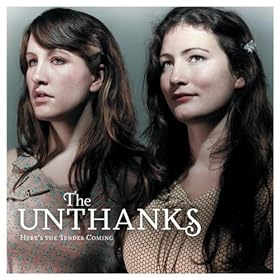
Unlike almost any other group on the planet, The Unthanks (formerly Rachel Unthank and the Winterset) look deep into their genetic past for inspiration, tracking down and reinterpreting long-forgotten paeans for a modern audience. At least, that’s what made them semi-famous and earned them a Mercury Music Prize nomination for 2007’s The Bairns.

Following the (apparently acrimonious) departure of pianist and writer of their finest originals (that sat beautifully alongside ancient laments for lost sailors and drunken lovers) what their next step would be was one they wouldn’t answer when last they were in town playing one of their blindingly brilliant shows to 20 bearded folkies. It turns out their solution is to step up their songwriting, interpreting more modern songwriters such as Ewan McCall, Anne Briggs and Graeme Miles all as un-cool as their names suggest. Earlier interpretations of Robert Wyatt’s Sea Song and Nick Drakes River Man have skilfully managed to offend no one yet, and Here’s the Tender Coming is unlikely to do anything but win more fans to their unforced harmonies and genuine love for their craft.

Songs such as Living By The Water, The Testimony of Patience Kershaw and Annachie Gordon are gorgeous high points on an album that sees the (now five-piece) band achieve their intentions affectingly. The thumb-in-britches cheesiness of hidden track Betsy Bell and hackneyed lyrics of Lucky Gilchrist and may bother some but it is more than balanced out by the gentle shifts of the arrangements featuring tuned percussion, autoharp, cello quartets, Brassed Off-style horns and, for the first time, bass and drums.

The Tender was the name of a boat that bore the men of Northeast England away to war, and though there are no tear-stained hankies clutched to faces there are many masterfully-told tales of characters. The pains and idylls of their homeland are seductively sold through the voices, the minimalist piano-led arrangements and the connection between the singers and the songs, which is where the magic really is. This is an album to grow into, especially if you have English roots; there is something weirdly comforting about hearing songs your ancestors could have sung.

Musings on the passing of Rowland S Howard

Sunday, January 10, 2010

I recall the first time I came to Melbourne aged 17 and being astonished to find I could see Rowland playing on a Monday night at the Public Bar in North Melbourne to 20 people, and next week opening for The Paradise Motel at The Continental. In a world where a man like Rowland was treated like an installation at a pub, what hope had anyone who was brave, gifted and humble? Why sacrifice a 'normal' existence to make incendiary music? Every gig I saw felt like a privilege. To simply watch him was to be privy to a harsher yet far cooler world, one that was galvanizing by virtue of the unaffectedness with which he did everything, so rare to see someone so real amidst so much dross and clamour.

The spirits Howard divined seemed to have hollowed out his bones and left his voice cracked and fragile with the weight of his experiences, it was a strange discomforting experience, humbling and at once relegated other acts as full of pretense. His shows at Ding Dong and the Toff in Town in recent years were two of the finest concerts either venue has ever seen. Every moment felt charged and his presence was so strong and renditions of new and older songs so powerful that it didn't seem crazy that people had flown from Tokyo to see him play. Melbourne Arts Centre's recent Nick Cave exhibition showed video of him commanding the recording process in Berlin as The Birthday Party crumbled around him, pulling an amazing performance out of Cave and appearing the ringleader, in stark contrast to the meek figure he lately cut.

Recently, his humbleness, firmly clasping handshake and easy charm had never seemed more pronounced. The shell of a man who lived our dreams and nightmares and dodged more bullets than most of us will ever see, enabling us to call Melbourne one of the world's finest cities for rock. St Kilda in all it's early 80s messy glory seems deeper in the past now. A sexy gaunt black slashing figure, a haggard white Fender Jaguar; the elf who lived to tell the tale. He will be sadly missed.

CD Review: CONTRA - VAMPIRE WEEKEND

Sunday, January 10, 2010

Continuing to wander musically among the verdant (Grace)lands of African pop whilst naming their album after a neo-colonialist American military offensive indicates that, while their album might be the most anticipated release this summer, VW have still not grasped the basic tenets of giving back as much as you take.

Essentially the band has made the most predictable second album they could and since they had a lot of distinctive appeal and a way with melody, it’s not entirely a bad thing, just not very interesting. Like so many hip new bands, there is little sense of excitement or unpredictability, everything necessary to meet fans and label’s carefully determined expectations.

A lot of bands after a successful first album have a bigger budget and go to another, more exotic location to record; Vampire Weekend went to Mexico City. Bands often cease writing about experiences and become more contemplative as their point of view alters and they look inward for inspiration. Ezra Koenig’s lyrics concern…well…bugger all really. He continues to throw words together with little care for comprehension and a lot of thought about juxtaposition (You found a sweater on the ocean floor / They're gonna find it if you didn't close the door – Cousins), though the subjects seem to concern travelling and judgements about other people. Koenig’s lyrics are more repetitive and lack the imaginative turns of phrase and dictionary-swallowing pretentiousness that made Oxford Comma and Mansard Roof stand out from the first listen. Contra is a less immediate listen and is unlikely to win people who weren’t won the first time round. The album suggests stories rather than telling them while the band have clearly ignored charges of elitism thrown at them by many critics, though this will matter little to most youth radio listeners who are already accommodating songs like Cousins and opening track Horchata on summer playlists.

While no band wants to repeat their first album, the most predictable move is to take what makes you distinctive and slightly build on it. Here VW prominently feature synths, drum machines and auto-tune and use them like you imagine they would; carefully. While Contra lack the sparseness of VW’s better-known efforts it is a smart, considered and, despite occasional bursts and peals of hyperkinetic African-pop as on White Sky and Cousins, fairly dull album, one that through all this careful consideration, lacks the excitement and contrasts of the début. Now, when is that new Ruby Suns record due?

Live Review: YEAH YEAH YEAHS

Sunday, January 03, 2010
FESTIVAL HALL

Suicide's Frankie Teardrop blasts from the PA, setting the mood to 'evil' before drummer Brian Chase and guitarist Nick Zinner stride out and begin a spindly riff and sparse percussion that lets Karen O’s voice slip in from offstage: ‘Well the floor girl / Is yours girl / To alight / And the score girl / Will be settled / On the floor tonight’. Beneath a giant floating eye surrounded by blue glittering rings comes opener Shake It, climaxing with a ‘Yeah Melbourne!’ from a grinning and sparkling O, who bounds on all animal prowls and baying howls. A YYYs show would be little without near maniacal levels of energy and though O is enthralling as ever, a lack of spontaneity lingers. The songs are good enough to suffice and the band are clearly brilliant musicians - all the better for their restraint they often play with - Chase never breaking a sweat and Zinner eliciting gorgeous textures and sharp riffs from his field of pedals and synth, but they never seem to stretch themselves or try. Perhaps they don’t have to any more.

Giant synth squalls peel out over the crowd with the roving purple spotlights, introducing a storming Heads Will Roll. Shame and Fortune and Dull Life follow and with it the vanishing of any fears that It's Blitz will pale live compared to earlier recordings; it's peaks and troughs, moods and sheer drive (something they've never been short on) are writ large with the songs’ textures allowing the band a calmness and confidence that O conveys wonderfully.

O dresses to accentuate her constant movement; red stockings, floral poncho and patterned dress with dangling knee-length beads, she changes her headwear several times; a PVC balaclava, a fluro Avatar headpiece and a dress that looks like a Navaho tent for Skeletons, a song that doesn’t quite pack the punch it does on record though Soft Shock and Zero blast velvet holes in the back wall while giant inflatable eyeballs bounce over the audience’s heads and confetti cannons burst signalling the set’s end. The predictable three-song encore opens with a blinding Y Control before O intones ‘I guess it's time for a summer love song…we'd like to dedicate this song Rowland S Howard, to Circle Pit and to all you lovers in Melbourne tonight,' and an acoustic take on Maps is nearly drowned by the reaction. Closing with a blistering Date With The Night gives the cause for much high-fiving and air punching from the crowd, soon blinded by a dying blaze of stage lights, squalls of feedback and more Suicide on the PA; quite an end to quite a show.

CD Review: DAVID RAWLINGS MACHINE - A FRIEND OF A FRIEND (Acony / Shock)

Saturday, December 19, 2009

Most of you reading this opening paragraph will be keen Gillian Welch fans and regard her erstwhile denim-clad offsider with no small degree of affection. Rawlings is a gifted guitarist and producer, notable for being almost ego-less with his keen attention to creating space and empowering simple melodies. A Friend of A Friend, his début album boasts a creation, Rawlings states, ‘was as much of a surprise to me as it was to anybody’. This easygoing nature gives the album an appealing quality, though anyone expecting a reprise of Time The Revelator may be disappointed; Welch appears in very much a supporting role, co-writing and faintly supporting his delivery. It is a long shadow that album casts and only rarely does A Friend of A Friend reach its spectacular heights.

Rawlings co-writes seven of the album’s nine songs and it’s commendable that these tracks sit happily alongside contributions from Jesse Fuller and an inspired segue of Conor Oberst’s Method Acting and Neil Young’s Cortez The Killer. The opening pair of Ruby and his Ryan Adams’ co-write To Be Young (is to be sad, is to be high) allows the quality of his backing band (Welch, Bright Eyes’ Karl Himmel and Nate Walcott and Benmont Tench of Tom Petty’s Heartbreakers) to shine. You can expect Rawlings’ songs to be the unpretentious Americana that he is known for playing and they mine the rich seam with a reverence for its formalities while injecting it with his own straight-down-the-line integrity.

A recent interview with American Songwriter highlighted the tight-knit writing methods of Rawlings and Welch with their co-creations not being given a particular voice until well after completion. It’s been six years since a Welch album has been released so for a professional songwriter it’s understandable that some songs would have been written in that period, and, being Rawlings and Welch, damn good ones, which may lead to expectations being a little too high. There is none of Welch’s lingering darkness here, in fact, the Jesse Fuller cover The Monkey and the Engineer goes out of its way to show ‘hey, we can crack a smile too’. There is also soul influence to some of Rawlings’ songs Bells of Harlem and opener Ruby, but it’s still a very much ‘what you see is what you get’ package, and I doubt fans would want it any other way.

WILD AND FREE: Interview with Hayden Thorpe from Wild Beasts

Saturday, December 19, 2009

Upon their imminent arrival to these shores, Wild Beasts’ singer HAYDEN THORPE tells ANDY HAZEL about gleaning inspiration from suppressed violence and sex in English country towns.

With their second album Two Dancers still clogging up Best of 2009 lists, Wild Beasts have enjoyed an warm critical and commercial reception since the release of 2008’s Limbo Panto. The first album announced the idiosyncratic nature of the band and, most notably, the piercing falsetto of singer Hayden Thorpe, an instrument that Two Dancers sees somewhat restrained, allowing for a richer and more sonically diverse album. “With the first album we put limits on ourselves because at that early stage in any artist’s career it’s easier to say what you don’t want to be than what you do. Once we’d done that, we didn’t have to repeat it. We enjoyed our freedom from that point onward. Making the first album was a huge learning curve, was a crash course in a way, and it informed the second album in a big way.”

With Limbo Panto noted for it’s imaginative musical clarity, and lyrical and vocal drama, Wild Beasts immediately set themselves apart from any other currently popular British group, polarising audiences with many still disliking the band for its ‘pretentiousness’ and ‘the singer’s voice’, both views Thorpe is willing to leave uncontested.

Deciding to record the album in their adopted hometown of Leeds instead of Malmo, Sweden was a very conscious decision to expand their sonic palette and challenge themselves again. “In Malmo we were young guys, eager for adventure, and very much open to learning,” Thorpe intones carefully. “We wanted to inherit Swedish pop tricks and by the end of making Limbo Panto I did feel I’d done a five-year degree in six weeks. That experience meant we had new knowledge that we wanted to put into place straight away. [Two Dancers producer] Richard Formby did our first two singles on a local label and while he’s not quite our mentor he has always had a wise word for us, always suggested and implied rather than instructed or restricted us; in the studio he’d never say no. Making Limbo Panto felt like making a new age recording, we had used a lot of computers and very cutting edge Swedish methods because that’s what they’re like. Richard is very much in alliance with the old methods of tape recording. Two Dancers was a collision of two worlds and it worked; our new knowledge and his standards met beautifully. We recorded straight to tape which gives you discipline as you only have five or six goes at each song, and much of the time was spent just getting the sounds right, then picking through takes which gives an energy and enjoyment in the playing.”

The idea of duality and pairing is clearly forefront in Thorpe’s mind, inspiring the album’s title, as he animatedly explains: “Two Dancers…it’s as if it was always there. The dancing theme is quite big for us, the rhythms and things, what we were trying to get at was uncovering behaviours that people suppress to do with violence and sex. A year spent touring watching people in the front of us losing themselves night after night, as figureheads you feel king, you recognise it as a beautiful and rare thing. A lot of people have to work very hard for a small percentage of time in enjoyment. We wanted to capture the essence of that small part of people’s lives. Dancing is letting the body rule the mind and letting go. Two Dancers was a reference to the fact that we fell into the classic boy/girl template of songwriting, which was very freeing; we know where we’re starting form so we can go somewhere new and interesting.”

Going ‘somewhere new and interesting’ could almost be a band motto. Likened to 80s legends Kate Bush, Orange Juice and The Associates, the band have a sense of constantly challenging themselves and are gradually amassing a like-minded fanbase. Though not sounding especially ‘80s’, there is a sense of freedom about the band that could be associated with the early 80s vitality of pop music. A time when genuine characters and genuinely new ideas and amalgamations of styles existed in the public eye; when an 8-minute minimalist ode to a long-dead French composer recorded on a home 4-track could crack the UK Top 5.

“I think a lot of people ‘got it’ it,” explains Thorpe keenly. “The album was a very much designed as a user-friendly streamlined thing. In retrospect, Limbo Panto was a very dense and complicated thing, you needed rules to understand it and enjoy it, people can move more quickly into the second album. Before, we were breaking down the door with a sledgehammer and busting into the room and now we can walk through the door in a more composed manner.”

As you can see, Thorpe thinks carefully about his words and, judging by his lyrics, has a vocabulary rarely seen this side of Morrissey’s heyday. Raised in the British village of Kendal, Thorpe puts this approach to lyric writing down to his love of reading (with Australian author Tim Winton being a firm favourite, discovered after Thorpe spent formative years living in Fremantle) and the supportive nature of his hometown. “I think ultimately the grape tastes like where it’s grown and it’s very much like that with music too; you can’t dig up your roots because the tree dies. I have a strong bond with the place, a strong connection with the atmosphere and the landscape. It’s very grounding and humbling, vast and beautiful, you see yourself as a small thing rather than another face in the city. I couldn’t go back to Kendal to live though. Leaving, I felt slightly like a creature of the deep getting pulled above the water and seeing things for the first time, having said that people there have been very supportive of us. A few weeks ago we were on [British TV show] Later, with Jools Holland, I went out to the pub after and people were shaking my hand and acknowledging me so I think there is a sense of pride. When we did last show of the year us in Kendal it sold out and that was a good indicator. I’ve got a younger sister who is studying at the school I went to. When the 16 year olds are given a lecture on their choice of career after leaving school, they used us as an example of working and making a living in the entertainment industry. I wouldn’t want any child following in our footsteps!” he says laughing.

CD Review - SUB-POP REISSUES REVIEWS

Saturday, December 19, 2009

NIRVANA – “BLEACH” (Sub Pop / Warners)

With more riffs than personality making it through the cheap production, Bleach is cleaned up and given the royal treatment, this was where the trail of 90s rock can be said to begin. With the Melvins influence still strong and before Cobain and co. allowed the love for pop songwriting to shine, Bleach is a orgy of primal chunking riffs and Cobain’s impassioned guttural wail still in its infancy and without the depth it would later possess. It’s a fascinating listen, an album never meant to be held in the regard this re-release gives it, yet the packaged with a fan’s sensitivity which never divests the album from it’s roots. Complete with exhaustive photographic documentation booklet the album is more interesting than essential though it does contain some blinders such as School, Love Buzz and opener Blew. The band are clearly tight and other songs so well-executed (particularly on the impressive accompanying Live in Portland CD which reinforces just how lucky audiences were to see the band live) that they counter any accusations of unnecessary polishing this 20 year reissue might engender.

SUNNY DAY REAL ESTATE – DIARY (Sub Pop / Stomp)

SUNNY DAY REAL ESTATE – LP2 (Sub Pop / Stomp)

At the other end of 90s Seattle hype lie Sunny Day Real Estate, one of the most overlooked bands of the decade, a band who got a profile boost by inadvertently becoming a pioneering band claimed by a nascent emo culture, a genre whose musical, lyrical and style motifs they bare scant resemblance to. Diary shows them far closer in ilk to Fugazi, Rites of Spring and Shudder To Think and makes a perfect flipside to the grunge hurricane that coalesced around but apart from them. Diary may yet prove to have an even longer-lasting and subtler legacy than these more famous mainstays; beautifully melodic yet furiously hardcore. Either way it is a brilliantly conceived album of fragmented poetry with an inspired use of dynamics and a rhythm section so good Dave Grohl nicked them for Foo Fighters within weeks of the band splitting, half way through the subsequent album LP2. With singer Jeremy Enigk not yet 20 by the time the Diary was released, LP2 shows the band sounding less convincing in their fury yet more concise in their songwriting. An album made as the band crumbled under the weight of expectation and internal divisions, a band so good a generation of disaffected youth used them as a pillar for a new movement.

CD Review: JONA BYRON - EXTINCT HEARTS (Popboomerang)

Sunday, November 29, 2009

Byron’s has been a common name on the billboards of venues specialising in acoustic nights, but here he dispenses with sole reliance on his Maton and employs his more than competent band The Boats and friends to flesh out the seven songs contained on Extinct Hearts, a prelude to his full album début planned for next year.

Byron’s lyricism is his key talent and songs are built around his acute observations and abstruse depictions, perfectly reiterated by the dark and saturated artwork, bringing to mind Neil Young’s Tonight’s The Night. With gorgeous backing vocals from Vicuna Coat’s Kat Winduss the opening title track is a highlight: “Talk about things that matter the most / Everything matters to me / Every single creature on earth / Every dwarf star and every blue birth / Every microscopic strain of life / Changes right before our eyes”. With a worldview like this, and its totally honest expression, you can expect Byron to be a reliable, sensitive and honest narrator. This sensitivity has clearly taken a beating and risen stronger and more perceptive because of it. Joan of Arc and Arm Yourself especially present him as a man ready to take on a world that he has sucked the marrow from.

Though his lyrics frame the music there is are moments of great musical beauty, the backing for Beautiful Bird set aloft through Pete Uhlenbruch’s flute and beautifully simple string arrangements, sweetening the sting of Byron’s lyrics. There is an uncomfortable intimacy at times that some may find off-putting, but for those brave enough to take the ride, one that concludes with a brave and disorienting take on The Times They Are A Changin’, there is a fierce intelligence at work on Extinct Hearts, one that will likely be even bettered on his forthcoming album.

Live Review: SKIPPING GIRL VINEGAR, DRUGS IN VEGAS

Friday, November 27, 2009
THE NORTHCOTE SOCIAL CLUB

Leaving the more predictable but no less entertaining choices of John Safran’s Race Relations or Masterchef, enough people came to this show, the final of Skipping Girl Vinegar’s Wednesday night residency, to pack the place out and help it become an unquestioned success.

With some fans coming to all four of the weekly residency shows, it’s clear the level of fandom is becoming as huge as the effort the band clearly put into their songs, the show and the production. First up though, the No So sees an explosion of talent and potential in the form of the support band Drugs in Vegas, a band whose music is neither as desperate for good times nor as trashy as the name would suggest. Sounding more like a band trying to play dirty rock but too schooled on Death Cab For Cutie and Augie March to pull it off, there is a spontaneity and intensity balanced with a careful use of dynamics that brings to mind Art of Fighting at times. Closing songs Lines and Like Skin Folds in particular suggest that the best is yet to come from these guys (and girl).

Preceding their show with recordings of forest sounds and populating the floor with cushions and picnic blankets, and decorating mic stands with ivy and paper squirrels, SGV show again they are pushing the ordinary and functional into the special and personal. Showcasing several new songs in the two half hour sets they play, the opening Fly Little Bird draws in and gently disarms before the ever-splendid Wandered kicks off their energetic rollercoaster ride. Not satisfied by staggering sets with songs that feel like future classics and examples of a songwriter’s showcase, SGV build an evening that sets them is as appropriate an environment as could be conceived. Before the first set is through birthday cakes and (delicious) bird-shaped biscuits are handed round, a CD is given away, a Christmas stocking awarded to one of the several hardy 4-show fans and banter is consistently warm, natural and funny. New song Seasons is particularly fantastic while Nashville and Hell Out Of Town highlight singer/songwriter Mark Lang’s recent trip to the USA with their strong country flavours. While radio hits One Chance and Sift The Noise cause boisterous singalongs, the encore, Inconvenience, a rap written by Lang in Grade 8 is a surprising and hilarious highlight. SGV pulling out hip-hop, who knew?

ICE CREAM, THEY SCREAM: Interview with Ken Seeno from PONYTAIL

Tuesday, November 17, 2009

PONYTAIL guitarist Ken Seeno tells ANDY HAZEL that while being in a band of four artists is great for a having a surfeit of ideas, agreeing on an album cover can be ‘hideous as hell’.

Exploding onto the noise-rock scene last year with the critically lauded album Ice Cream Spiritual, effectively eight musical interpretations of a mouth crammed with hypercolour whizz-fizz, Baltimore’s Ponytail are the very epitome of the unkind yet accurate genre, spazz-rock. The words Deerhoof, sugar-high, Boredoms, child-like and ebullient have all been used to describe Ponytail, and they’re tags guitarist Ken Seeno is happy with. Caught midway to a pre-Australian tour rehearsal in a rare moment of downtime, he is tired but happy about their forthcoming shows. “We’ve been touring so much lately and just had to say no to some stuff,” he explains, sounding tired and distracted. “We had to get centred, take a little time to hang out and not play, we’re all excited about these Australian shows though.”

Seeno and co are no slouches when it comes to taking their message to the people, with around 300 shows in the year after the release of Ice Cream Spiritual there is a primal drive at work that, upon listening to their music, is written in everything they do. “Touring was definitely exhausting,” he says with a sigh. “It was a lot of work because a lot happened in a short period of time. For most of that time I didn’t even have an apartment; I was never home. I just had a storage unit, and it took a long time to get used to living like that, I don’t know if I am used to it really. We’re at the level of success here now where we sleep on floors when we’re on tour. A lot. We’ve been doing this thing for a long time now, five years, so we have a mode we go into even though touring is still an unpredictable thing.”

While back home, the band spent time in the local scene that spawned them, also home to Dan Deacon, Beach House, Aussie expats The Death Set and Animal Collective, another band who formed in school. Ponytail came together after being assigned to form a band and play a show by a particularly prescient art professor as part of a class experiment at Maryland Institute of Art. Their first album Kamehameha largely came from the set they performed.

“I think the next record will be more expansive, it will definitely use a bigger range of sounds, we can get more into that now,” Seeno explains. “The way we work is pretty organic, so there will be no drastic change, it won’t be a different genre or anything but there will be more electronic stuff. It’s like the band is being pulled in four different directions, I think that’s a good thing and that will definitely show through on the new record, I’m hoping in more stronger and more radiant ways, there is definitely an 80s influence going on. I love that a new song could go in any direction.”

That direction typically sounds sound simultaneously very tightly controlled but also immensely chaotic, a formulation that could only come from hard work, long jams and a successful capture of moments of inspiration. “Someone may come in with one idea and it might turn into a jam, or someone might play something that will make someone else laugh and we know we’re onto something. We kind of just work on our own and trust each other when we’re figuring stuff out,” says the guitarist of the bass-less four-piece.

With so much energy invested in rehearsal and recording, the act of realising songs live is where the songs come into their own, especially in smaller venues, Seeno confirms. “All of us love playing club shows, [singer...well, more wordless high-pitched yelper] Molly [Siegel] especially. We’ve been so floored by the reception we’ve got at some gigs. One of our advantages is that we’re a very ‘live’ band; our music is recorded as it is performed so the live show turns out pretty strong, especially when the crowd is fired up. Gigs both energise us and take a lot of energy,” which is just as well, as most readers would be exhausted after one Ponytail show let alone 300. “When we’re on tour we’re actually pretty conservative with our energy. We’re focussed; we don’t drink a lot before we play to make sure we can deliver. I’m a little nervous about the Australian shows because man, it’s a really long flight to Australia,” he says laughing.

A touring regime that heavy could only lead to particularly strong bonding with other band members and the band do get along particularly well, however Seeno mentions one point that brings out the ugly side in each other, a subject close to all of their hearts; art. “We are SO opinionated it takes us forever to decide on anything,” says Seeno, impassioned. “We’re often too busy to do some things so if we need to do a video we ask a friend and it turns out great, but for something like cover art…man, it is hideous as hell. There are so many different versions of the Ice Cream Spiritual cover art, each so drastically different...it is taxing. It ends up being really good but it’s a very argumentative process and it sucks, but everyone has different jobs. I trust [drummer] Jeremy [Hyman] to do awesome t-shirt designs. I think one of the cool thing about us is we have a lot of different aesthetics going on and whatever we do is a combination of the strongest ones at any given time.”

The subject of attaching a Ponytail’s music to a TV show brings a raucous bout of laughter. “Man, we always joked that we should be in a Huggies diaper commercial with babies running around to wild music,” he says, cracking up again. “That would be like a good hook up for us because we have NO need for diapers. For a while I fantasised about our stuff being in a skate video and then it happened and I was like, yeah, that is cool, but if David Lynch were to make Twin Peaks in Baltimore and get us to do the music, that would be really cool.”

When offered the chance to describe the band as an ice cream flavour, you can bet vanilla is furthest from his mind. “It would have to have a strange aftertaste or something, a disturbing consistency, a flavour with a very different aroma. Jeremy used to work in an ice cream store and there was this one kind of ice cream flavour called Cake Batter. It had the colour and consistency of cake batter but it was ice cream. That was cool.”

Live Review: SUMMER CATS, THE ZEBRAS, THE MOTIFS

Saturday, November 14, 2009
THE ORDER OF MELBOURNE

The cavernous art deco ceiling of this rarely used venue might be airy but it can’t keep even the most stationary of punters from sweating tonight, while its acoustics make the mixer’s job hard and renders most lyrics and stage banter unintelligible. These problems aside, tonight was a triumphant, if messy, success, with competition from simultaneous gigs not denting the crowd size at all.

The Motifs ply their brand of gentle melody well and the songs are fine (Backwards is still gloriously perfect pop) if tonight’s rendering is marred by anything it’s the distracted audience, poor sound and an increasing reliance on keyboards and handclaps that cut through the mix brightly. When joined by Summer Cat Scott Brewer on miniature Power Tool™ toy guitar for a wonderful Night City the idea of the Motifs thickening their sound becomes appealing, something they’re already pursuing with an increasing use of keyboards and harmonies.

The Zebras are a band that doesn’t need to add anything however, with three guitars, keys and a tight rhythm section their set overcomes the sound problems and manages to stay feather light. From the opening salvo of the arresting I Have Decided via the gently stinging riffs of Science Competition and You Look Ready to the shimmering close of Push Our Way the band are on form and it’s great to hear them back with their 5-piece lineup.

Launching their début album Songs For Tuesdays, one that’s surely going to feature on some end of year polls next month, Summer Cats support the oft-muttered theory that the bigger the crowd the more shambolic the Summer Cats show. Heat plays havoc with intonation, leads get tangled, fingers nervous, lyrics and banter are almost inaudible but the feedback flows and the guitars sound huge (lead Zebra Jeremy Cole helps out on Rickenbacker). A welcome addition to several songs is the multi-instrumentalism of Nick Hadgelias who backs up blog hit Lonely Planet with accordion and brings tuneful harmonica squawks to Wild Rice. Highlights of the set include the glorious In June, here given teeth by Scott Brewer’s barely contained guitar squalls, Cole’s ringing arpeggios and the barely discernible harmonies of Scott Stevens and Irene Drossinos. It’s a messy, heavenly mix, and one that goes down exceedingly well with the crowd. The band tells me this is crash pop, not twee pop. It sounds like it.

CD Review: NICOLA WATSON – CLEAR IS THE COAST (Independent)

Friday, November 13, 2009

What is it with phenomenally talented musicians undervaluing themselves to their own detriment in this country? Perhaps it’s pre-empting the tall poppy clipping that will come their way were they to act in the full knowledge of their remarkable abilities, or maybe there is a genuine ignorance of the extent of their skills. Whatever it is, Nicola Watson is guilty as charged. A voice like hers is rare thing indeed, able to calmly meander through jazz-tinged low-fi folk, soothe with a close-mic’ed Tracey Thorn-like balm, or build to pin-drop crescendos. Watson moves with a gentle confidence and minimal backing. The violin of Xani Kolac of locals The Twoks and the brass-heavy arrangements make an inspired accompaniment and are clearly results of extensive musical and personal exploration.

Watson honed her skills as leader of the six-piece Cinema She, though Clear Is The Coast sees her move further toward 40s-inspired clean jazz and folk-influenced torch songs on tracks such as Windmills and Apple of my Cheek. Other songs such as closing track It’s Not Over Yet and the more upbeat Alice allow the band to stretch out a little and during those moments, it’s fine and they’re clearly very competent players., but it’s only when Watson sings that the record moves from intimately beautiful to being a thing of profound depth and expression and that musical backing all but disappears.

Though you could find some influences if you looked hard enough, Watson’s voice sounds as if she’s been trained to sing beautifully, learned to sing all over again from experience, then discarded everything and sung the first thing that comes into her head. Hopefully the first of many solo releases for this local wonder, a woman who perhaps just likes to keep things small and unassuming and feels no need to grandstand.