Tuesday, August 23, 2011

Live Review: LOVE CONNECTION, MILK TEDDY, THE HARPOONS, FULL UGLY

THE TOTE

With stiff competition elsewhere in town, it’s a respectable crowd that gather to the warmth of the sounds of Full Ugly as they plough through another impressive and shambolic set. Hardly a band whose name is dropped frequently, there is a slow-expanding fondness through their frequent support slots, and it’s a safe bet that the album for sale ‘(‘let me know if you want one’ says their Myspace) will sell out eventually, that is if their members other bands (who include most of tonight’s bill) don’t sap their energies.

The Harpoons seemed to sneak onto the scene in 2009, vanish for a year then burst back a few months ago to ever increasing hyperbole. Few bands can be in possession of such a talent as singer Bec Rigby, who sings like a somnambulist possessed by Fontella Bass, nor songs as proficient and simple as theirs. Though beginning nervously, their 50s chop, casually deployed 3-part harmonies and bright, simple riffs (on instruments surely twice as old as their players) seem to embolden the band as they progress, matching the increasing volume of punters with each song. Tracks like I Want You Around, All of My Days and Be My Lover betray their full surf-rock/French pop base and at the same time leave enough space for Rigby’s voice to soar. This space in the songs belies their true gift, that of restraint, and a million bands trying to be the next DapTones could watch and learn - and then have their minds blown by Faith, the show-stopping, set-closer. It’s almost inconceivable that these songs aren’t covers.

After that slate-cleaning pop tightness, it’s nice to have Milk Teddy get everything messy and spread reverb and delay all over their sloppy rock. Fronted by Tom Mendelovits (who is filling in on bass for Love Connection’s forthcoming US tour and could seemingly start a career in stand-up comedy should he want to), the band is excitement in a can. It’s hard to predict which turns songs will take, and not be caught up in the fact that the band seem to see the gig as hilarious fun. Mendelovits has a rare talent for missing notes yet providing exactly the atmosphere-capping ululations needed to give the songs greater connection, as well as dropping comments like ‘structurally, that last song was alright, post-structurally however…’. The nimble bass of Rachel Stanyon and guitar of Bronny Potts drives them to places you most definitely want to go. Final song Dreambone is a highlight, as is Mendelovits’s introduction: ‘this next song is going to be released on a forthcoming split seven-inch with The Ancients,’ he announces to the visible and audible shock of the rest of the band, ‘nah, see that was a joke.’

Love Connection have undergone a reinvention since last year’s adulated and thrilling debut album. Despite this love and their imminent tour of the US, the band have written and nearly completed their new album, most of which gets an airing tonight. Gone is the superfluous floor tom, the keyboard chords and guitar slashing have beginnings and ends  now, and though the overwhelming feeling of songs as sonic explorations is still there, hand-drawn maps have been replaced by GPS. Songs like You Don’t Need Muscles to Get Love (signed off with a ‘take that Meredith!’ from singer Michael Caterer), The Sun is in Saturn and the dance-inducing Lost City of Gold are thrilling in their force and textures, getting the audience clearly on side from the outset. However, it’s the closing duo of Omni and Sex in the Cinema that blast away fears of difficulty following up that debut album and plant this band firmly in the small pool of ‘justifiably hyped’ Australian bands.

Live Review: LIAM FINN, TEETH & TONGUE, MULHOLLAND

THE WORKERS CLUB

With the Kiwi contingent high, there was little question tonight’s show was going to be a big one. Quite how big, was something of a surprise.

Opening act Mulholland, is a Kiwi with a Lennon-esque bite to his voice. As at ease singing as chatting, comments like 'I'm serious when I say you guys are awesome,” to cheers and claps, before deadpanning 'but we're better' make him instantly likeable. It’s a conclusion you could draw from hearing his songs. Existence is Futile is a heartfelt ballad about resurrecting Elvis to celebrate the opening of a sandwich ("There are days you look up to see / A talking vagina with a 50 foot wingspan"), and Let’s Go Fishing a blinding power-pop salvo featuring Elroy Finn on bass. Bizarre humour is a welcome change from the typically deathly serious troubadour, even if songs like the staggeringly beautiful Meet Me In The Hallway are anything but funny.

As soon as Teeth & Tongue take to the stage, the three very stylish Melbournians making some very stylish music are at risk of seeming pretentious; no easy-going Kiwi-accented banter here. But their vocal-heavy, keyboard-driven urbane swagger disarms the room of Liam Finn fans with an unexpected charm. Singer Jess Cornelius seems born to perform and the band generates an interesting take on atmospheric pop. At times T&T linger on Kate Bush-via-Fitzroy quirkiness but as the set builds and the room reaches capacity, it’s safe to say many new fans are won.

With no aplomb and loud cheers Liam Finn and Eliza-Jane Barnes amble on stage and launch into a set which lives up to Finn’s opening pledge: “We will play songs we find fun, we hope you do too. In fact we fucking promise you!” Tonight, there is a prominent use of electronics. Songs are reborn through a Line 6 delay pedal, allowing Finn to smash a drum kit while niftily triggering loops with his left foot. It’s not until mid-set and Fire In Your Belly that a folkie side emerges. To The Chapel follows and things get decidedly mellow for a few minutes before Finn is back looping heavy fuzz-saturated riffs and beating the kit.

Mulholland and Elroy then join for a mesmerising and blistering take on Cold Feet and we’re given the caveat: “We’re doing things differently tonight. We’re playing tomorrow and don’t want to double up.” More than a reinterpretation of songs, tonight is an example of loudly and lovingly articulated charisma, and it’s very hard not to be caught up.

Monday, August 1, 2011

Live Review: DJ SHADOW

PALACE THEATRE

With talk leading up to this gig focusing exclusively about the visual aspect of the show, there was little sense of impact when walking into the Palace and seeing a massive white orb on the stage. This is the Shadowsphere? Regardless of this, as soon as it stops being a weird Dr Who prop and begins functioning as a spherical screen, minds are blown. The crowd, mostly comprised of a lot of guys with short hair who don't look like they get out much, lose their minds when Shadow walks out. Dressed in baggy jeans and an orange t-shirt he waves, then ambles into the orb-capsule as seismic rumbles fill the venue and the opening beats of This Time (I’m Gonna Dub It My Way) ring out.

Within a few minutes the crowd explodes all over again with the instantly identifiable introduction to Endtroducing whose songs are pillaged for samples before being deftly dropped then burying amidst a blur of hard beats and fading cheers of recognition.

As great as the music is, and as many songs as the man can taunt us with, it’s the spectacle of the show that impresses, and that stays with you after the show.
Clearly Shadow has raised the bar for DJs and any musician who doesn’t act in a visually interesting way, and, just as unusual are the moments he steps out of the capsule to talk directly to us, thanking us for spending money on his art and for loving music. It’s all pretty unusual for a man rarely photographed not loitering behind towers of vinyl and a cap yanked over his face, and seems particularly powerful given the sonic overload of his show.
There’s no hiding or turning up and pressing play going on here, it’s as much a gig as whatever was happening at the Tote tonight.

The visuals do not always follow the music, often venturing into kaleidoscopic flights with the capsule becoming a multi-purpose sphere against the back-screen. The orb becomes a bowling ball making a strike, the Death Star, it flies down a microscope, through flash-lit forests, drifting over anonymous suburbia, through encyclopedias, by animated statues and courses its way through city streets filled with zombie-faced pedestrians, while Shadow within plays fast and loose with his back catalogue. Most commonly, though, we’re fittingly treated to cut-up shots of equipment, computer chips and geometric patterns, matching the sounds impeccably, every shot and edit in synch with the theme and every-shifting beats.

Shadow’s new take on Six Days, What Does Your Soul Look Like?, Stem, The Number Song, in fact, most tracks get very electro, almost into drill and bass at times with hip-hop samples sliding in and out and live electronic drumming keeping things fresh though still sounding incredibly 90s.

Midway through the show, the capsule spins around to allow Shadow to be seen and banter with us. We learn that he’s been coming to Melbourne for the last 16 years and that it’s 'definitely my favourite city to play’; which, of course, we love. He suggests we pay respect to Mike Durrie, and for those unfamiliar with his music (?) he reminds us that he’s ‘not the sort of DJ who plays weddings’ before dropping his new track, the bangin’ I Gotta Rokk. However, it’s his brief messing with Organ Donor that sends us truly mental.

After some more heartfelt thanks we’re treated to an encore of Blood on the Motorway, You Can Never Go Home Again (in which the orb becomes a snow globe rolling through what seems like Citizen Kane’s Xanadu), and the ever-glorious High Noon in which we’re sent reeling back through galaxies and left to ponder the universe. More than you could ask for from a gig really.

Friday, July 8, 2011

Live Review: TESSA AND THE TYPECAST

THE TOFF IN TOWN

Within seconds of the red curtain parting the band everyone is here to see boldly kick off their set with previous single and Triple J fave Painter. Tessa and the Typecast (TTT, an acronym that is wholly theirs since Tic Toc Tokyo split) hammer out their jazz-infused indie pop with an authority rare for a band still in its infancy.

Having recently lost cellist and vocalist Natalie Foster to the equally worthy Tully and the Thief, and replaced her with new cellist Lauren Meath, TTT are on better form than ever. Tessa (Pavilach) leads the band through writhing set that finds time to highlight the talent of each member without straying from the song. Dressed in a turquoise skirt with a crimson top and matching flower on her head, Pavilach’s bold fashion choices are mirrored in the front rows: dancing girls in long dresses, pashing couples and fixated beverage-clasping fans.

The venue is packed, testimony to the gigging schedule the band have put themselves through over the last 18 months, beating a path from their native Ballarat through most small and medium sized venues in Melbourne to tonight’s emphatic single launch. B-side From Here follows and sets the warmly expressive tone for many of their subsequent songs. Pavilach’s rich, rasping voice, dextrous yet minimal lead from guitarist Pat Morgan and entwining cello and bass parts fill the songs beautifully, driving them in unexpected directions before returning to deceptively simple hooks. Sections swell, dynamics change quickly and the playing is as tight as their 40-minute set. New songs Machines and the epic Shipwreck show that they’re taking the songwriting risks they need to. Capable of shutting the audience up with a drop in volume and causing raucous singalongs with the older tracks, this is a young band already in control.

Closing with the song they’re here to launch, the stunning Straight on ‘til Morning, TTT blaze through it with precision, passion, a killer chorus and a bubble cannon before inviting us back to their house for the after-party. It’s a hard set to fault. As with the career trajectory of most quirky singers in Australia, Pavilach is likely to turn a small but ardent following into an obsessive fanbase within an album or two. If this show is anything to go by she may not be able to offer that after-party invite for much longer.

Sunday, June 5, 2011

Live Review: BOY & BEAR, JINJA SAFARI, EMMA LOUISE

THE CORNER HOTEL

The temptation to greet the sight of a quirkily dressed girl strumming a Maton and shyly introducing a song with her head cocked to one side with a loud sigh of exasperation isn’t strong, it’s almost overwhelming. But then comes the music, and the voice, and the harmonies and the tight and humble rhythm section and the infallible sincerity, and easy catagorisation evaporates. Emma Louise can arrange and deliver a song with the authority of a veteran despite still being in her teens. The melding of her and keyboardist Hannah’s vocals are room-silencing, which is quite an achievement for a sold-out Corner who are all there to see someone else. Greatness awaits.

Silencing rooms is not on the agenda for Jinja Safari, whose floor-tom-heavy faux tropicalia is utterly devoid of meaning or substance yet will undoubtedly be scaling the heights of the Triple J playlist charts over the next few months. With cloying personalities, and (drummer aside) limited musical ability, Jinja Safari are all about the good vibes, which is fine. It just takes more than nicking some ideas from Vampire Weekend and Animal Collective and dressing them in a gormless smile to create something of consequence. And quite how triggering the sound of an electronic shaker while jumping around with an inaudible shaker improves a song is beyond me.

‘They came out of the sunshine, flowers nestled in their hair' croons singer Dave Hosking in a crystalline voice as he leads Boy & Bear through the opening Mexican Mavis to a rapt Corner. 'We've got a heap of new stuff tonight, I hope that’s OK with you' he says bashfully, and it seems we are. New songs Milk and Sticks and Part Time Believer show the band moving away from the comparisons they’ve been afforded in the past and, if their recent few weeks recording in Nashville are anything to go by, getting more AOR which, when you can write a song this well, is no bad thing. So, it’s somewhat a shame that the introduction ‘this song isn't ours,’ gets the biggest cheer of the night. Like everything else the band touch, their cover of Fall at your Feet is perfectly judged and very tasteful. Closing with the delicate and languid Beach and new single the arresting Feeding Line the lack of encore and ego is welcome in a band who are only playing the first of three sold out shows at The Corner.

Thursday, May 19, 2011

Live Review: THE GO! TEAM, NORTHEAST PARTY HOUSE

THE CORNER HOTEL

The cold night doesn’t stop the fans from crowding into a sweaty Corner Hotel tonight to witness The Go! Team tear through a show unlikely to be rivalled by any other in recent memory for sheer enthusiasm and blinding positivity. Though their legacy as low-fi party band supreme precedes them, it also sets the bar damn high. This reputation works in their favour as the audience, already warmed by a set from Northeast Party House, a band you’re likely to hear a lot more about before the year’s end, rejoice the moment they set foot on stage.

Before this though, NEPH play to a small, sparse audience who grow both in number and enthusiasm throughout the set. Though sounding like a mid-paced Bloc Party or shy Maximo Park, they can map out a song with class; dynamics and instrumentation is spot on. Despite a relatively weak vocalist (who nevertheless dons a Jigglypuff Pokemon head as a jumper for much of the set), they turn out to be an inspired choice of support.

Hitting like a veritable T.O.R.N.A.D.O when they arrive, The Go! Team battle sound problems and a stage that seems slightly smaller than what they’re used to, which, when combined with such unified energy, only makes the show more of a ball of condensed energy.
When they pull out a typewriter for Secretary Song, a steel drum for Back Like 8 Track and an elaborate melodica for Ready to Go Steady you realise that this is the first of their gigs in Melbourne in which any of those instruments could actually be heard over guitars' raucous thrill. As with Rolling Blackouts, there is no drop in energy but more drops in volume and less reliance on backing tracks, as those modern classics from Thunder, Lightning, Strike!.

Without the aerobics workout that singer Ninja incorporates into most songs, this would be merely an interesting and fun live band, but it is her limitless energy that transform Go! Team into one of the best live bands in the world. It’s hard to think of anyone half as good when they’re mid-The Power is On or pulling out the banjo licks and driving Yosemite Theme to higher and higher planes of ecstatic glee.

That this is likely their last Australian tour adds poignancy to the closing Keys to the City and Apollo Throwdown. Whatever form the members’ future efforts take they’d be hard-pressed to be this brilliantly ramshackle.

Monday, May 2, 2011

Live Review: SUGAR MOUNTAIN FESTIVAL

Over 11 hours, three artspaces and two stages, the inaugural Sugar Mountain Festival saw multimedia get equal billing with some fresh international acts and local bands on a stage they’d rarely get the chance to play.

With a relatively short time between announcement and event, a lineup and publicity which expounds ideas over big names and pulling power, the unusual characteristics of Sugar Mountain only begin there. Installations, galleries, rampant cross-pollination of media, copious and literally awesome projections, floating bubbles, hissing dry ice and a stunning locale, it initially runs like a well-funded Steiner school concert only with more floor toms. A LOT more.

Kicking off, fitting openers Oscar + Martin seem a little at sea on the massive stage in the sparsely populated room but this doesn't stop them getting a red hot reception from the mingling early-comers. Lazy floor tom breakdowns, the meek boyish yelping and favoring texture over structure seems not to matter as O+M move from cheesy white boy rapping to James Blake gentleness and a glitchy breakdown within a song. With all the embellishments mentioned above debuting for their set, they seem like distracting overkill for a band whose core still seems to be forming despite having seemingly mastered the studio on their debut LP.

With the crowd now numbering several hundred, Otouto take the school concert vibe up another level with carefully constructed show featuring the frankly bizarre No Lights No Lycra, precision percussion and pitch-perfect harmonies. Playing most of their album Pip, Otouto ‘s music is so fragile and detailed that it seems one missed beat or stray harmony could derail an entire song, so it’s a testament to their talents that even in the cavernous Forum their spell still works. A little dissonance in their new songs gives some extra depth to their almost impossibly clean signature sound, which goes down a treat with the crowd who seem to be already converts.

Upstairs, No Zu make every band who settle for a floor tom as rhythm enhancement seem like lightweights with their funky timbales and dynamite post punk party intensity. The venue’s seats don't stop punters dancing and the demonically pitch-shifted vocals keep everything rough and unpredictable. Clearly a lot of people are impressed with No Zu, who themselves mention that they’re far more used to house parties than on a stage in front of five meter high projections. Despite their consistent manic exuberance, most of the audience disappear for Collarbones mid-set which dampens their spirit not one iota.

With more hyperbolic blog posts gushing about their mp3s than gigs, Collarbones are, fortunately, a revelation live. Despite having the combined age of a typical M+N reader, they’re comfortable on stage and exude a cockiness that quickly becomes essential part of their show. Instead of taking the obvious tropes of hip-hop, they take the confidence and throw it over some glitchy beats. They’re easy and woozy with the BPM and imaginative with their sounds. A song introduced as ‘a hate anthem for microphone stands’ brings some welcome unpredictability and edge to the main room as well as eliciting some stellar dance moves both from the duo and the crowd, but then outdo themselves with a 90s hip-hop cover, or as one punter puts it ‘motherfuckers dropped some J-Lo!’ To close they press play on ‘some 90s dance shit’ before leaving their gear to dance and strike poses which the typically solemn security guards have to crack up at. Cult fandom or massive success awaits.

Back upstairs, the film program kicks in with The Creative Lives, a documentary in which American artists talk about the creative process, only the sound is off and Talking Heads 77 is playing. Everyone is happy to chill and chat, as they do around the art exhibition happening outside the upstairs bar and around the live painting from Thomas Campbell and by the front doors where people scull their cider before stepping outside.

On the main stage, Texans YellowFever’s technical problems delay the start of their show but can't stop a successful conversion of curious onlookers. Their ragged and spellbinding set of sparse, wiry songs is a welcome burst of unprocessed, unfiltered rawness and communicates more directly as a result. New songs Bermuda Triangle and Horse promise much beyond their EP-compiling sole album and Jennifer Moore’s voice is a remarkably effective tool.

Red curtains part, a lone figure strides out, and soon there is only one thing we’re conscious of. Static. Static on the screen, static in the air, static in our heads, Qua on the stage. Soon, seismic pulses of bass radiate and beats appear, so clipped they almost become tones as he builds his set toward the guest appearances The Ritmo Giallo Ensemble, featuring Gray Taylor (Flying Scribble) on a sparkling Lapsang Souchong and Mat Watson (Magic Silver White) for the surprise appearance of his My Disco remix, Young. A stellar set that no doubt wins him new fans.

Meanwhile, Kiwis Coolies are burning up the rulebook by which others are playing with a lack of musicianship that can only be described as spectacular for a band who began in the mid-90s (recently recruited drummer Stefan notwithstanding). Coolies near disregard for ‘songs’ and music as entertainment are compelling. Mumbled verses disappear under one-handed guitar thrashing, songs are seemingly composed on the fly, the apathy so authentic it becomes hilarious, but then a sneered catchphrase will burst forth and everything comes together in a blinding flash of punk brilliance. ‘I’m bored with this song,’ says singer Tina to bassist Sjolin, slouched against the back of the stage, before the song, possibly called Work in Progress, peters out.

Though Virgo Four, the American electro-house duo who have been around now since 1989, may be unknown to most of those in the room, the hallmarks of the Chicago house movement in which they were born are disarmingly familiar. 303 bass sounds, a breakdown from industrial, repetitive drum machine to clean piano chops and sparse vocals the elements are there, the creation something totally fresh. The songs segue smoothly, most of them featuring some fluid guitar from Merwyn Sandars, and their ‘classics’ In a Vision and Ride fill the room with clusters of dancers getting their hands in the air, making Oscar + Martin’s set seem like another gig altogether.

Back from their SXSW showcase and American tour and closing the upstairs room are Twerps. Bringing new songs and sound more coalesced and honed than ever, yet in a way that doesn’t detract from the shambling brilliance of their earlier work, the band put on a rousing show. It’s odd, hearing confidence sneak in to some of the new songs, but it’s not unwelcome, perhaps some of America rubbed off on them? Despite unusually annoying visuals (showing the ‘crazy dance scene’ from Beetlejuice on a loop in 4-screen is only ever going to detract from songs like You Give Me The Chills) the new songs are brilliant and the album can’t come soon enough.

Back downstairs and now half an hour after their scheduled time, Aa explode onstage with a set that would keep Battles and RATM fans happy and bring memories back for anyone who caught the Boredoms last year (in fact, Aa were part of Boadrum 77). Loud as all hell and with the effect of being repeatedly punched in the ear by an orc, Aa are clearly very into hitting drums hard and do it in a way that gets all of your attention. Once they’ve got it though, there is no real trajectory or purpose revealed, unlike Crass, the band they took their name from. On record there are shifts and subtleties, but they’re subsumed tonight. Bells and cymbals are used to give some dynamic depth and when the synth lines break through it’s a welcome reprieve.

Overall the mix of art and music makes for a unique festival, one that could only happen here and now. Punters seem upbeat, fashion contributes as much as the installations to the festival-as-art and the turnout leaves the Forum busy without being packed solid. With any luck more festivals that rely on ideas over big names will take note.

Friday, April 15, 2011

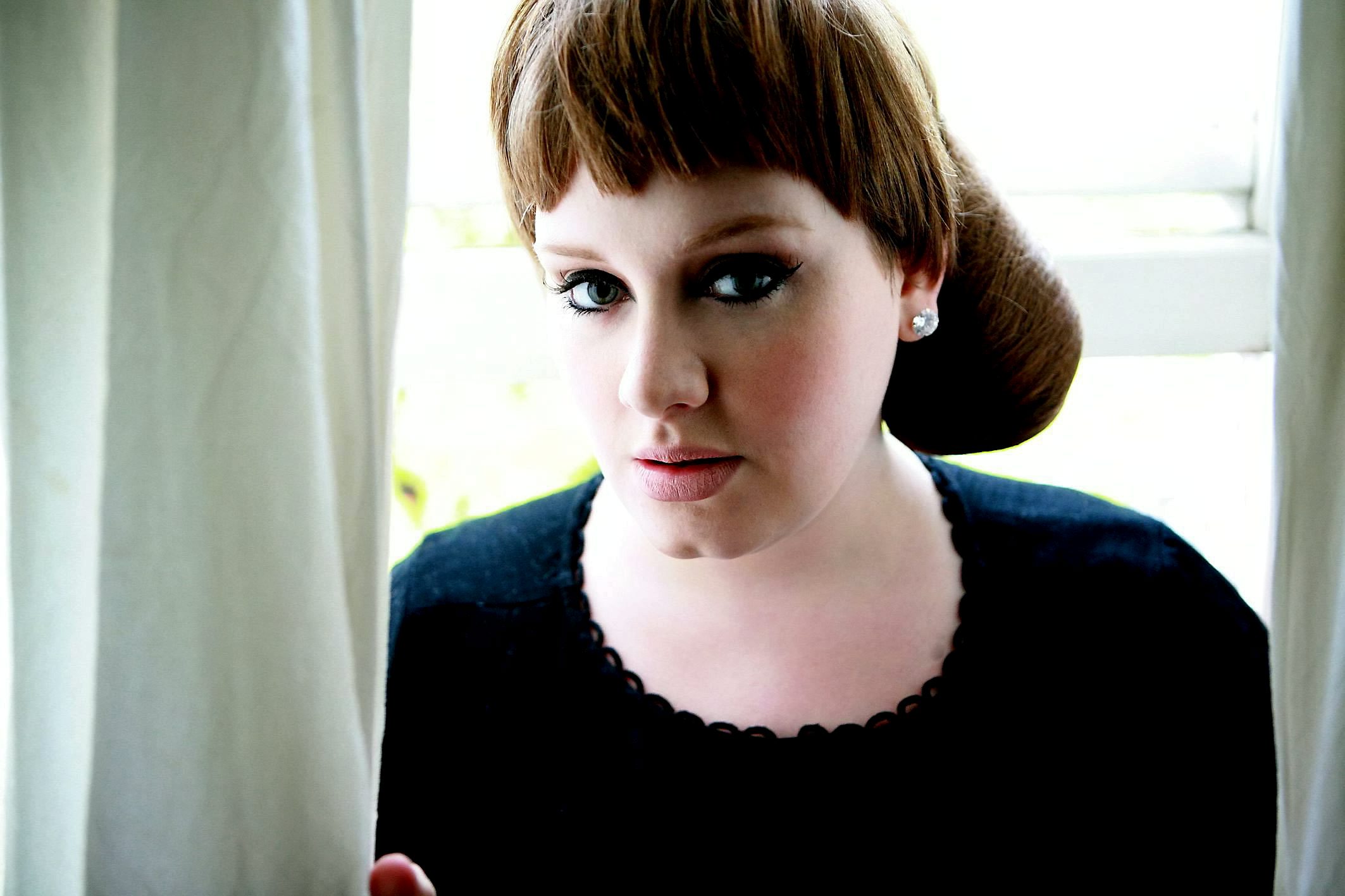
SOMEONE LIKE HER: An interview with ADELE

Experiencing the type of fame that comes only a few times a generation, Adele is a genuine, multi-million-selling diva in her native UK who has set several new chart records in recent weeks. Why it is has been a topic of some discussion, ANDY HAZEL looks for clues in a 2009 interview he did with her for Frankie Magazine.

It was meant to be a normal interview, but Adele is a hard one to track down. Three cancellations, a postponement and several phone cards later, her warm and broad South London accent crackles from her mobile as she relaxes between shows on her tour bus.

Still reveling in the first flush of fame, Chasing Pavements has recently hit it's 100 millionth YouTube view, her album 19 has just cracked the Top 10 and Adele is finding herself thrust from an anonymous yet promising BRIT School graduate living with her mum to internationally famous, tabloid-analysed, award winning BRIT School graduate living with her mum.

"I moved out for a bit," she says warmly, "but I moved back in 'cause I missed her," she laughs. "She comes to a lot of the gigs and the TV shows - but not the early morning ones. She doesn't travel with me anymore, she just checks up on me. She can tell if something isn't right or if I'm upset. I call and text her everyday if I don't see her." Adele agrees that this might be why she's handling the pressures and strains of life so well. "To be honest I'm quite oblivious to it, I know things have changed a lot and that it's all happened so fast," she pauses for thought. "But I like it better this way; not thinking about it." Surely that must be pretty challenging, ignoring fame while all around you life changed. "Well," she thinks carefully. "I never wanted to be famous. I only decided I that I wanted to do this when I was offered the record deal over lunch. I was there with my manager and my mum, we got taken out to lunch by this guy from XL and he just kind of popped the question. We looked at each other and I said, 'yeah, OK then'. It was really that simple."

This kind of poise and relaxation is hard to come by, and indicative of the way that Adele has courted fame, without any scandals, celebrity boyfriends or anything to distract from the music at all (despite some tabloid obsession with her physique). At the core of all of this attention and fame though, is her voice. "I always loved to sing," she says happily. "I have done since I knew you could make noise. With the kind of artists I grew up listening to it was never about having a talent, it was about looking pretty and having a gimmick; that's all they knew 'cause that was all I saw on TV y'know. So, it seemed impossible for me to consider it as something I could do for a living, it wasn't something I ever even thought about growing up."

A key aspect of Adele's rise to prominence is her graduating of the BRIT School of Performing Arts and Technologies, a school dedicated to training adolescents who want to make a career in the performing arts. Through focusing on dance, musical theatre, drama and technical theatre, graduates have collectively amassed dozens of awards and tens of millions of album sales which isn't bad for a school with less than 900 students that only began in 1991.

"I didn't know about The BRIT School before I went there," she says keenly. "I was just really bored at my secondary school. The BRIT School was free, it wasn't full of kids pushed by their parents like I thought it might be, there were kids who were there on a Saturday morning working because they loved it. I would literally jump out of bed in the morning knowing I was going there; I'd never felt like that before. I think it was well overdue when a lot of us [seven] all got big about the same time. There was me The Feeling, The Kooks, Leona Lewis, Katie Nash, Katie Melua and Amy Winehouse - all of us Brit School graduates, all of us debut albums at number 1," she laughs. "But, y'know. It's not like we planned it!"

Wednesday, April 6, 2011

NINJA TUNES: An interview with NINJA of THE GO! TEAM

Ninja, singer with The Go! Team opens up about ‘destroying bands who sell millions of records’, the making of Rolling Blackouts and the possible split of the band later this year.

It’s rare for a band to be so tightly wound to the picture painted by their name, but then The Go! Team were never going to do things by halves with a name like that. Rolling Blackouts, their current album and one likely to be featured prominently in their upcoming gigs, is a melange of the riotous hip-hop beats, cheerleader chants, slashing guitars and horn blasts with which they made their name, but also finds time to chill out a little, something lead singer Ninja has little time for. “Once I start I can’t really stop,” she says of her famously exuberant stage presence. “If you’re running the 100m you can’t slow down and say ‘whew I started way too fast, gotta take a break now’ you start off at one level and you can’t fall beneath that level, and that’s it really. I don’t plan to be 110% constantly, it’s just what I would do at home even if no one was there with me.” At the suggestion that there is a difference between the performer Ninja and the woman behind her, Ninja gets even more vocal. “I am Ninja! There is only Ninja, there used to be someone else but Ninja killed her. I’m not like Beyonce; she thinks she has her performer side and her shy lady side, that’s not me. There is just Ninja.”

With gigs renown for tight, thrilling reinterpretations of their sprawling recordings, Ninja is the prime force and pinnacle of the Go! Team as a live unit. However, when it comes to making the music, there are two versions of the band. “Yeah, and it’s always been like that,” she says changing pace. “Ian [Parton, songwriter and guitarist] locks himself away for a while, a few months maybe, with some sandwiches and bottles of water. He has to create the album on those scraps of food and people come over and put down bits and pieces; bass guitars, guitars…you never know what’s going to happen. He’ll get guests in to sing on parts, then he shakes a wand and the album is finished. We’re happy being involved in the live version, that’s the fun part where we get to mix it up and get involved. The album is made up of Ian’s influences and that’s his baby.”

The creation of Rolling Blackouts, saw Parton became even more hermetic than before and its creation is something Ninja describes as ‘shrouded in mystery. “I had emails and calls like ‘can you come down to the studio for this…’ or I’ll write raps or harmonies. We’re always recording stuff and not knowing what it’s going to sound like. I’ll record things and wouldn’t know what was going to happen with the song. The first time I heard the album was when the journalists heard it. But when we’re performing these songs on stage we’re singing and rapping a lot more.”

While fans are used to the low-fi rush of a Go! Team song, there has been more than one review which mentions the loss of Ninja’s lyrics to the horn blasts, booming drums and blasting guitars, likely due in part to Parton’s insistence on mastering to a C-60 cassette. “Ian puts it together and it’s a really clear vision he has; he would have liked to make it even more low-fi if he could. If I’m rapping something I want people to hear and understand the lyrics I write because you know, I spend a lot of time writing them, so I’d like it less low-fi but then he’d want it more low-fi. I think you need to see us live on stage as well as on record, because live I strive for clarity which I think is what the audience want as well as all the crazy stuff we do.”

This optimism and blithe sunshiny attitude is core to The Go! Team’s sound and energy and Ninja’s selection as the band’s focal point was a stroke of brilliance on the part of Parton when he was assembling the band. Last here in January 2009, their forthcoming tour sees them play smaller venues, which comes as a strange move given the massive airplay recent single Buy Nothing Day has received. “When we play a place that’s more intimate, that’s a challenge to us because we only have a tiny little area to jump around in and we love that, though it does usually result in injuries. We’re also doing festivals to thousands of people who may never have heard of us,” Ninja quantifies clearly relishing the opportunity. “Festivals are a challenge. We’re battling against weather and the lure of other bands so we have to get an audience and keep them there throughout the set - even if they don’t know who we are!” She says excitedly. “We’ve got nothing to lose - people don’t know us so they don’t expect much and we destroy it! We destroy those other bands who have sold millions of records and have a big following, you see they have a lot to live up to, whereas we get to surprise people.”

Something that came as a surprise to a lot of people was the offhand comment made by Parton during an interview with a small Irish newspaper in February “This may be our last year as a live band.” He also confirmed that the band “might split up” after this tour. Ninja is similarly uncertain, though doubtful. “I don’t know. I have loads of stuff I want to do, I’m working on a solo project with interesting producers, one of the producers is Starslinger another one is a guy called Rural. There’s a lot of stuff I want to do, who knows what’s going to happen really. I just don’t know, but I’ll put it on my blog when I do.”

Best catch them while they can still be caught.

Live Review: SANTANA

ROD LAVER ARENA

Seeing a legend like this is a strange experience, one almost crushed under safe expectations, stifling any chance to feel the transcendence the band built their legacy on. However, one glance around the arena says it's unlikely the crowd is looking for anything like that. With Carlos Santana you know exactly what you're going to get; a dude in a hat playing a lot of guitar, a large backing band of similarly proficient musicians, and a piñata full of Latino goodtimes.

With well over 100 previous members, the current 11-piece lineup fills the stage with 30-odd drums and copious percussion, none of which is wasted. Riding rugged over the top off the heavily swung rhythms, pulsing bass and stinging Hammond oozes Carlos's guitar tone, dripping with sustain and busy as a Spanish flea pulling one song into the next. "I'm very grateful, very blessed at this time, on this planet," says Carlos after shaking the place to the ground for the umpteenth time. "It's important for us to stay lightheaded and to live in wonderment, healing and love." The audience cheers. "I happen to know a lot about love right now," he smiles. "You see, I got married in December to this lady..." and in walks Cindy Blackman (you know, Lenny Kravitz's drummer from Are You Gonna Go My Way). Cue a stonkering five-minute drum solo, a sloppy kiss and a blistering intro to Jingo, which has the audience cheering louder than ever.

From the crowd, many of who would have helped Abraxas to number one in 1971, there is a palpable excitement and a lot of arrhythmic arm waving when Santana pulls out Oyo Come Va and Evil Ways before segueing into A Love Supreme (there is a lot of segueing tonight). All inspiration for another soliloquy, this time we're told about 'SOCC' aka 'the Sound of Collective Consciousness' a concept with enough references to 'a younger time' and 'bringing the love from Woodstock' to make Anthony Carew apoplectic with rage. "If you remember one thing from tonight, make it this...you are light and love," he solemnly intones before we all, gender by gender, chant it back arms aloft: "I am light and love!" So, it’s a relief for some when the band launch into Sunshine of Your Love and several of his recent Smooth(er) efforts, taking us back to the safety of the idea of Carlos, leaving us free to comfortably nestle in his warm spirit and copious baggage.

Tuesday, March 29, 2011

WITTERTAINMENT: an interview with THE BEDROOM PHILOSOPHER

At the outset of the Melbourne Comedy Festival, The Bedroom Philosopher proclaims there is nothing more boring that hipsters and moves on from Northcote with a new comedy show ‘Wit Bix’, which is all about wanting to kick start some conversations.

“I like a pun,” muses the Bedroom Philosopher aka Justin Heazlewood, a revelation which will surprise no one familiar with his work. “I think the name Wit Bix sums up the show because it’s a segmented show, a series of short witty bits. I’ve been self obsessed for 30 straight years so I know myself pretty well and I can say that I am witty.”

With several Triple J hits under his belt, an ARIA nomination and a plethora of TV appearances earned during his years of slogging it out as Australia’s sole representative of indie folk comedy, Heazlewood is more optimistic than ever, a state reflected in Wit Bix, though a proclivity for self-depreciation hasn’t entirely lost him.

“I’ve been the king of whimsy in the past, and there are expectations that I’ll do this awkward, indie shambolic style of comedy,” he says of the assumptions that he brings with him now. “Wit Bix has a lot of wordplay, but it’s more angry and political than I’ve been before. There’s a song about Australia and how much I hate it being conservative, xenophobic and dumb written as a jaunty John Williamson bush ballad. Good comedy has to be original and surprising, because essential comedy is a surprise and laughter is a tiny scream. You’re being attacked by a concept you didn’t see coming, and as times goes on it’s harder to be shocking and original. My usual criticism of things I don’t like is that the writing isn’t intelligent enough, I adore wordplays and juxtapositions.”

With a sideline in writing for Frankie, J-Mag and The Big Issue as well as several websites, Heazlewood gets a lot of room to experiment with language and wordplay which any subject he touches is rife with. However, 2011 sees him moving further into the realm of television with recent appearances on In Gordon Street Tonight and a forthcoming, if overdue, appearance on Spicks and Specks. “TV makes you relevant in Australian comedy and this is my TV year. I’m also doing the Channel 10 Comedy Gala, which I guess is a sign of some success,” he states with a blithe defiance before sighing despondently. “It’s such a confusing dynamic for someone as self-deprecating as me, so I’m handling it by being really cynical. I’m a musician and a comedian simultaneously, but music is more fashionable than comedy so I’m actually trying to turn into a massive rock star. Everyone in Aussie comedy is so polite and supportive of each other, I want to be like Liam Gallagher was in interviews because if I have to read one more interview with a polite indie band not really answering the questions they’re asked and dropping the right words I’m going to shoot myself.”

As a writer, musician, comedian and cultural commentator, multitasking is something Heazlewood clearly excels at. “I’m Gen Y so I’m naturally born with the ability to do four things at once,” he says breezily. “I play music and write so therefore I’m like every second person in Melbourne, plus, I’m a Gemini so I’m already split down the middle. I was born in a bogan town to down to earth country folk, so I’ve got this no bullshit perspective, but after 10 years in the big smoke wearing vintage clothes, I’d like to think I have the ability to be insider and outsider at the same time.”

With more multiple dualities than an episode of Twin Peaks, Heazlewood finds these roles an eternal font of frustration and inspiration, or, as he puts it: “with music, people only want to hear your old stuff and in comedy you have to have new material, so in musical comedy they cancel each other out.” The Bedroom Philosopher, occupying a niche no one else in Australia has attempted and predating the Flight of the Conchords by several years, depicts this state as “the clown and the balladeer punching the shit out of each other. I’m a frustrated musician turning tricks because audiences like it,” he confesses, “and because it really annoys the indie community. I’d argue the music scene has never taken itself so seriously and that my sort of music has its place in that. It’s just awesome how angry people get when they can’t put you in a box,” continues Heazlewood with glee. “I’m the King of Hipsters, I’m the biggest one there is. Northcote is the most hipster thing a hipster could ever do, it’s basically the last word in hipsterness. I’m also the first to admit that it’s old now, and you’d be struggling to find a more tedious conversation at a party than trying to define a hipster. You’d bore everyone stupid, get awkward silences and the only thing left to do would be to call a taxi.”

After the success of last year’s album Songs from the 86 Tram, its accompanying tour and ARIA nomination, Heazlewood was glad to return to subjects that used his improvisational skills and spontaneous wordplay.

86 Tram was a writing exercise to make myself disappear,” he says keenly. ”Before then I’d been banging on about my own neuroses and issues for about 10 years but for that, I didn’t even want to be in it. Wit Bix is back to me again only now I’m more confident. I hit 30 and got angry which was a great source of jokes. The show is me making fun of men, I talk about how much I hate going to stand up comedy nights, not being happy with Australia, and about how awkward we are about Aboriginal issues and how no Gen Y person will go there to the point of racism itself. This makes it one of the freshest sources for comedy, I acknowledge that too. I like to think there are jokes to be found in any topic and I think I’ve found quite a few as well as making valid statements about how we’re stuck in an awkward silence. All art is a conversation of some kind and I just want to kick start some new conversations.”

Saturday, March 26, 2011

Live Review: OMAR SOULEYMAN

NORTHCOTE SOCIAL CLUB

There has rarely been a more diverse and uniformly excited crowd than that squeezed into a very sold-out Northcote Social Club tonight. Anticipation is expressed through spontaneous cheering, near-constant clapping and the occasional honk of a Mega Blast (a vuvuzela-like hand horn), and it’s all very warrented. From the moment the red curtains part and the initial disappointment that we will not be treated to a band, but rather a dexterous synthesizer player/electronic percussionist Rizan Sa’id, subsides, it is a night like nothing else.

Dressed in his red and white checkered keffiyeh, dark circular glasses and light green, smartly trimmed thobe, Omar Souleyman looks as relaxed as a man with a 500 album back catalog would be, as he paces back and forth across the stage. With a long history as a wedding entertainer in his native Syria, Souleyman is clearly no longer adored only in the Middle East as his performance here elicits adoration most acts would happily retire on. Known by most for his three albums on the Sublime Frequencies label, it’s clear Souleyman hasn’t changed his shtick one iota. He tucks his mic in his armpit, claps and motions for the already excited crowd to get up and get involved, which he never needs to do because we already are. Still, when a man with his sense of authority gestures minimally, the effect is huge and appreciation is expressed even more ardently.

Simply hearing musicians use scales that don’t follow standard intervals is a welcome change. The combination of ceaselessly spiraling, slightly nasal-sounding Arabic scales, brittle steel-drum percussion and a rapid, pounding 4/4 bass drum interspersed with Souleyman’s echo-laden voice is a powerful one. ‘Eeeer-yah!’ he chants again and again in various songs after brief synth flourishes and pitch-bend heavy instrumental break from the po-faced Sa’id. We cheer back with cries of ‘Omar!’ and ‘Habibi!’, raised wrists twisting, feet stamping and copious blasts from plastic horns all of which melds into the song perfectly. The fluidity of the rhythms, the quavering of the notes and the space Souleyman’s voice generates is intoxicating. Over the course of the gig Souleyman smiles more and more, as stage invaders wielding filming iPhones circle dance, stuff money in his pocket and occasionally kiss his hand. This is not your standard show and it’s a glorious example of the power of charisma and the variety of ways in which positivity can be made and music can feel totally fresh again.

CD Review: UNIDENTIFIED FLYING COLLECTION OF SONGS – MY OWN PET RADIO

(INDEPENDENT)

Who exactly My Own Pet Radio is (Sam Cromack) and what he’s about should become apparent to anyone paying attention to the Australian independent music scene over the next 12 months. Singer and songwriter with current Triple J hypees Ball Park Music, Cromack is a prolific individual, with this first full-length release following on from his band’s two EPs and four singles, all released in 2010. With a proliferation of deftly played acoustic and electronic instruments, and responsible for all singing and production duties, the album, like its artwork, shows Cromack is fascinated by structure and assembly.

At times, Unidentified Flying Collection of Songs sounds like a learning process, though an eminently listenable one. When Cromack occasionally risks losing songs to production experiments it’s never in an egotistic way, and nothing here, no catchy hook or spiralling effect, outstays its welcome. Listening to the album puts you in the unusual situation of not knowing what the next song will do once one, usually abruptly, ends. Album highlight and closing track How Strange You Are evokes melancholy Kiwi pop, All Colours disappears into a gorgeously unhinged vocal arrangements, while The Banana Situation offers wry and catchy self-analysis.

Cromack’s inspired mix of low-fi production works in favour of the music. Opening track I Am Having Such a Good Time Here is a hilarious mix of acoustic guitar and harpsichord-driven verses, which explodes to a vocal-drenched hook of a chorus. Like other parts of the album, it’s reminiscent of Beck, when he was still driven by a sense of adventure.

Though it’s unlikely many other musicians could assemble an album with this sense of inventiveness and playful intelligence, the most notable achievement here is that Cromack drives the whole album with a quality that is sadly bereft from most new Australian music, personality.

Wednesday, March 16, 2011

Live Review: GOLDEN PLAINS

MEREDITH SUPERNATURAL AMPHITHEATRE

When there is such a high level of expectation around a band and a festival there is a lot of room to fall, but The Hold Steady entertain no such notions. Blasting a gapless, breathless rush of smart and verbose punk rock, the band pack so much energy into the music that frontman Craig Finn comes across like Woody Allen if Allen had dabbled in brilliant punk rock instead of respected jazz clarinet. Though most of the incredibly dense lyrics are lost, the sheer thrill of songs like Hot Soft Light, Sequestered in Memphis and the twin guitar attack of Rock n Roll Problems seal the deal that this will be one of the shows of the festival.

If watching Airbourne is like watching Jersey Shore (as one punter accurately notes), then watching Wavves is akin to watching a reality TV show. Will he lose it this week? Will he argue with the crowd, his band or both? As it turns out the recipients of Nathan Williams bitter ennui are an overly aggressive security guard, the sound guy and ‘fucking grasshoppers’. Opening with So Bored and King of the Beach before continuing to get mopey about California and being young, the brilliant low-fi haze of his recordings is lost live, and the songs become more mechanisms for eliciting a steady stream of bodies across the crowd barrier. Job done.

Possibly the band most people are most excited for Belle and Sebastian prove that plane fares for a twelve-strong band plus crew is not wasted with a complete blinder of a set. Though meek in voice, Stuart Murdoch is anything but on stage, careering along the front row, crowd-surfing, high-fiving and kinetically expressing his joy at playing. With a set that’s heavy on If You’re Feeling Sinister and The Life Pursuit plus a version of Kinks’ Victoria that gets everyone on side, they are a perfect match of venue, songs and audience, even if certain tough-looking musicians occasionally yelp and flinch at an unexpected insect landing on them.

Landing a pressure-heavy 9PM slot on the last day is Architecture in Helsinki who choose to return from a yearlong absence with a new look and new songs. Unsurprisingly, it all goes brilliantly and the new look; white suits and tails with blue sparkly bow ties matches their mid-80s lightweight electro-pop perfectly. Mixing in crowd-amping new versions of old favourites, it’s the new songs that really impress. Deep Down will be all over the radio and in charts before the year’s out, while the titles Escapee and Desert Island won’t mean much now but are songs that are sure signs the band are stronger than ever and their forthcoming album is something to hanker for.

While Hawkwind were fascinating from a ‘how will they do it?’ angle (the answer is they don't, with robotic dancing girls on stilts and overlooking your classic single), World’s End Press take that awkward 2AM-after-the-headliner-slot and run it into the ground. Earning deafening vocal love and several hundred elevated shoes partway through their blinding single Faithful, W.E.P are a bizarre beast. One misstep and their blend of 80s beats, flailing dance moves, sparkling lamé and rubbery basslines would come crashing down, but their sheer energy, sincerity and undeniable conviction means they become an unlikely high point of a festival whose success is largely based on familiar acts playing familiar songs in a familiar setting.

While that’s essential to a certain degree, this year’s Golden Plains was one full of surprises, the most welcome of which was the programming; eclectic, complimentary and almost impossibly, without a dud. From Graveyard Train’s piercing cry of ‘Wake the fuck up Golden Plains!’ as they redefine the role of opening Day Two, to the micro-second thought process written on hundreds of faces as ‘who’s Imelda May?’ turns to ‘holy shit this is awesome!’ the only sensible reaction is; ‘Golden Plains, you clearly know what you’re doing, please carry on.’

CD Review: GIMME SOME – PETER, BJORN AND JOHN

(Cooking Vinyl)

Regardless that this is the band’s sixth album, most people will arrive at a PB&J album with expectations of stylish, featherweight pop. When Young Folks hit it felt like such effortless sliver of genius that you’d expect its composers and producers to be able to turn out a dozen more like it, which made its accompanying album Writer’s Block such a relative disappointment. With Gimme Some there’s no Young Folks but further, no attempts to write anything light and catchy or even produce the album themselves, which is remarkable given the experience they’ve had behind the desk. This move is perfectly exemplified by Breaker, Breaker, which takes a blistering 99 seconds of supercharged guitar-driven pop with a suitably thrilling filmclip and leaves no prisoners.

The band doesn’t seem in a particularly good mood throughout Gimme Some. There’s no joy in their delivery, from the opening repeated lines of ‘I don’t think you are sorry for what you did / I know you need it and you just don’t know how to quit’ through to the closing ‘I know you don’t love me and I know the reason why.’ While heartbreak has been the impetus for some of the greatest indie pop songs of all time (say, The Field Mice’s If You Need Someone or The Concretes’ New Friend), here the writers seem too scared to fully explore them, content with initial feelings of bitterness and anger, keeping the songs short for fear of giving too much away.

Peter Morén’s Lennonesque piercing vocal and slap-back echo haunts the album, an evocation that does the band no favours. Instead, when they stretch out and show a hint of vulnerability as on the closing IKYDLM, they get interesting and the production of Per Sunding (of Swedish indie pop gods Eggstone) gets something to explore. Worth a listen, but probably not many.

CD Review: BLUE SONGS – HERCULES AND THE LOVE AFFAIR

(Shock/Moshi Moshi)

Nostalgic house music can be incredibly powerful when done right, when songs are assembled with personality, intent and deft production. The odd thing about Hercules and the Love Affair (HLA) is that there is no real identity associated with the band and so it is that Blue Songs seems to float around a musical concept of Chicago house-influenced pop with no real heart. While this might be fine if you want to switch off and relax with the last warm breeze of summer and some good conversation, there is little offered in the way of dynamics or arresting beats as their debut boasted.

Most associated with the earlier incarnation of HLA not with ringleader Andy Butler, but guest Antony Hegarty for their most notable track, Blind. Here, the most notable guest is Kele Okereke who turns in a limp-wristed effort on the insipid Step Up. More impressive is the gliding, pulsing bassline, heavily compressed brass and four-to-the-floor beats of Falling (almost worth price of admission alone) and the late-80s encapsulation of My House, which oozes late-80s nostalgia in an infectious way, the only songs which really build on their beginnings.
Nostalgia seems to be Butler's main motivation on assembling Blue Songs. While it can be glorious to be reminded of an era when someone resurrects their hybridised version of it, it’s less exciting when their version is so faceless and any chance to connect with the music is challenged by shifting vocalists, none of whom leave a strong enough impression.
HLA leave their boldest move for last, with a bizarre, beatless, breathy cover of Sterling Void’s seminal It’s Alright, which only reminds you how great the Pet Shop Boys cover was, a band whose Behaviour album Blue Songs would dearly love to be.

Tuesday, March 8, 2011

Live Review: ALPINE

CORNER HOTEL

Despite the murmuring of dissent in the weeks leading up to this gig, it turns out a local band with minimum airplay and only a handful of gigs under their belts CAN release a debut EP and nearly sell out The Corner on a Friday. Alpine, whose hype has been moving from a low buzz to a steady roar since their signing to Ivy League last August, prove beyond a doubt that 2011 is going to be their year. Kicking off with a brief instrumental Lovers, they leap into Too Safe from their EP Zurich and it’s safe to say the young, stylish hand very vocal audience are very familiar with the singles and grow more enthusiastic with every song.

Before the third song is over, the band’s songwriting format begins to show; bold guitar chops, icy vocal harmonies, 303-style pulses from the bass guitar, clipped minimal drums and dense washes of synth. It’s a stellar combination and one the six-piece toy with joyfully. Comprising of four guys and two artfully made up and attired harmonising girls Phoebe Baker and Louisa James, Alpine have struck a winning combination. Christian O’Brien’s slashing dry guitar work sounds simplistic but is delicate and precise, holding this unusually tight band sound together and ensuring that the only way the songs stray from their recorded version is by an elevation in intensity.

The stunning mid-set highlights Hands and Tough Skin see the constantly writhing and dancing Baker’s makeup run, as does the sweat down the backs of the tightly dancing audience. New songs Seeing Red, North South East West and Vigour, promisingly, get the audience responding louder than ever. As cupfuls of glitter are hurled toward the ceiling, the projections of the cosmos that have been illuminating the band reach a flickering peak and Baker’s microphone is flung to the floor as the single Heartlove kicks in it’s impossible not to be caught up in the thrill of the moment. Encore Icypoles (recently remixed by impossibly hip British producer Star Slinger) ratchets the joyful intensity up another notch, and the coda to Icypoles ends a set that could be turned into one of the best albums of 2011. Alpine are onto a winner and delivered one of the best gigs of recent memory to prove it.

FRIENDS IN DEED: An interview with NARDI SIMPSON from STIFF GINS

NARDI SIMPSON fills ANDY HAZEL in on life as half of acoustic duo STIFF GINS and how stripping away your identity can sometimes be a good thing.


With the release of their third album Wind and Water, acoustic duo Stiff Gins seem at the peak of their creative powers and damn happy about it. “We’re totally excited about the album, it’s been a long time coming,” says Nardi Simpson. “The songs have been around for about four years, when we started to demo those songs. We waited a couple of years to get the album together, then we got funding to finish it, spent the last two years recording and finally…it’s here.”

Though four years may seem a long time between albums, Simpson and band-mate Kaleena Briggs are good at squeezing life experience into their time together since their formation in 1997. Playing in Kuwait to Australian army troops, extensively touring Africa and Europe and 2011 is the first year they’ve assembled a backing band for live performances. “It’s always just been the two of us,” Simpson says. “We’re usually loners, we’re a bit shy. We’re a little bit intimidated by musos because we think that we’re two friends, and we don’t feel like we’re ‘on the scene’ or ‘in the business’”.

Raised from Redfern but now living in Marrickville, Stiff Gins are most commonly identified as being an indigenous group, a label that initially obscured the music more than they would have liked. “We freaked out at the beginning because it has such strong associations,” she intones carefully. “When we went over to Edinburgh people thought that they were coming to see traditional Aboriginal music, so…words can overtake what we do. As we’ve become more comfortable with who we are it matters less,” Simpson continues. “We know we’re able to do justice to that term and represent that as well as representing a lot of different things. We’re blackfellas and we’re proud of that and we’re songwriters and we’re proud of that, we can deliver on both of those in 45 minutes.”

While Australians may just be catching on to the dazzling harmonies and sweet blend of folk-pop that the band birth, people in unlikely corners of the Earth who might be ahead of us. “Things that are huge for us; our heritage and who we are just disappears over there. When we went over to Africa we were driving around with this guy who asked us where we were from and we told him we were indigenous Australians, and he said ‘we’re all indigenous’. He said ‘oh no, you’re not black,’ and I got angry. Then I realised that the politics of colour of skin is totally different there; you’re black or your not, and we weren’t. What’s at the core of who you are might not have any relevance anywhere else.”

Identity and nature seem to be big inspirations for both Briggs and Simpson as songwriters, but overriding even these sources is their friendship, which has lasted even longer than the band. “It was hard for me to come to terms with being daggy relatively young,” laughs Simpson about the suggestion that their music will age well. “I was all about getting on stage at Homebake and the Big Day Out, winning an ARIA, all that stuff. I thought that being in a band would make me even a little bit cool, but because we had such different upbringings and we let the music unfold, your experience as you get older changes and your stories become more interesting and you get better at delivering them in a different way. Because we’ve been doing it for ages, I can’t envisage a time when we‘re not playing. A while back, I felt like we were losing a bit of what it is that enables us to have the friendship, but now -because we’ve got a publisher and record label and an agent, it’s cleared some space for us to do what we do best. It’s all about the friendship again.”

Tuesday, March 1, 2011

WRITTEN ABOUT LOVE: An interview with RICHARD COLBURN of BELLE AND SEBASTIAN

Not minding being woken up at 8AM in the midst of a Glasgow winter, Belle and Sebastian’s drummer RICHARD COLBURN is happy to talk about band dynamics, his love of touring and Australian beer, as ANDY HAZEL excitedly discovers.


“I’m in Glasgow, in mah bed...I just woke up man,” says Colburn sighing tiredly, his Scottish burr seeming extra-thick. About to embark on an extensive global tour to promote the band’s 2010 album Write About Love, Colburn fills time between working with the group by also playing with Snow Patrol and occasionally with their singer Gary Lightbody, REM's Peter Buck and Zooey Deschanel in Tired Pony. “One album and three gigs!” He says qualifying the latter “not sure that counts as a band.”

A little more animated, Colburn brings us up to date. “I’m in the studio just now with a Spanish band; me and [Belle and Sebastian bassist] Bob [Kildea], we’re the backing band of the studio. I love working with other bands and different things with them, I’ve done it so long now I’m not qualified to do anything else besides music,” he says with a laugh. “I was over in the States for a month before I got married,” he continues casually. “We didn’t get a honeymoon in, but we’ve both just been so busy. I’ve got a baby coming at the end of July too, which complicates things. I think we’re back by then, we might stop for a little while.”

This blithe referral to life-changing events is a perfect example of the earthy realism that underpins Belle and Sebastian. Call them twee and fey but the members are from working class Glasgow and singer Stuart Murdoch, a boxer and Colburn, a champion snooker player, are as unaffected as they come, still living in the suburbs in which they were raised. Colburn still admits to being thrilled that he can travel and play music the way he does. “I am a fan of touring I love it, I really love it, I don’t think I could be happier doing anything else actually. We’ve not toured for so long which means there’ll be lots of old songs in the set by the time we get to Melbourne. We often tend to reintroduce old songs into the set after we’ve had a break. Someone will want to hear something old, You’re Just A Baby or String Bean Jean, that sort of thing.”

Excitement contained, it seems Colburn is just as enthusiastic about the time between gigs as playing them. “Well last time I was in Australia I was in Perth and we hired bikes and drove up to Bon Scott’s grave, which was cool. Me and Bob are less proactive in the ‘lets go out and find stuff to buy’ department when we tour, we’re more about going out after the gig, I’m more an advocate of that. It depends if it’s a gig day or if you have a day off, sometimes someone will go off on their own, Stuart might go and check out public transport or something. There are times like that, after 15 years it’s inevitable you get into habits.”

Besides the habit of consistently putting out acclaimed albums, Colburn is surprisingly forthcoming about the inter-band dynamics, those same ones that come to play when touring, something that will inevitably be a part of a seven-strong band with an entourage. “We always try to be as democratic as possible, but you always need one person to be decisive otherwise nothing gets done. The dynamics have shifted over the years,” he continues. “The first two records were pretty much all Stuart and quite rightly so, they were all his songs. We were almost like a backing band in the beginning, but around the time of [The Boy With The] Arab Strap, other members started having an input; Stevie or Isobel mainly, and latterly Sarah as well. At first, it was all Stuart but soon he decided he didn’t want all that pressure and we all concentrated on working together and it opened up a lot more.”

Songwriting in the band has obviously undergone a major shift since the release of debut album Tigermilk in 1996, though the band still sounds unmistakably like itself, which, it seems, is in part due to the weight given to each member's opinions. “Occasionally people will suggest things for each other, it depends who writes the songs,” he explains. “It’s got to be OK by Stuart and they have to have a really firm idea of what they want. It could be me or Bob or Beans [keyboardist Chris Geddes], sometimes songs are only half written so we just experiment together as a band. I do all my own parts but sometimes it’s the songwriter who makes suggestions, especially if it’s not quite working for some reason, we’ll change parts around and think about adding other instruments, like horns maybe.”

The opening track from Write About Love, I Didn’t See It Coming, sees Colburn kicking off the album with an atypical funk beat, introducing one of the favourite subgenres of Belle and Sebastian songs; the dance number. “On that particular song we recorded it a different way,” explains Colburn keenly. “I think there is some electronic percussion in the backing track, but even without that, it’s such a different song from anything else we recorded for that album. I’d love to go further down that route, explore more of the electronic and dance stuff,” he says before laughing. “A few years back we were going to make an entirely electronic album where we all played keyboards, like Depeche Mode. Perhaps we’ll get back to that at some point, I know Beans was keen.”

When it comes to songwriting, much has been made of the role of spirituality in some of Murdoch’s later lyrics, an aspect Colburn is happy to discuss though unable to contribute much to. “Christianity is big for Stuart yeah, and in the songs he writes there’s definitely the content inspired by Christianity. He’s always been an avid churchgoer, but as for the rest of us not so much no, that’s more of his scene and we’re happy to go along with it.”

Something he’s far happier to go along with is a chance to be introduced to is the work of some Australian microbreweries. “I enjoy Australian beer and always like the selection of alcohol we’re given in our rider when we play Australian shows, and I’d love the opportunity to try some other. Usually on a rider they just give us VB or Carlton or whatever, which is fine, but we’d love to get our hands on some microbrewed beer, we’re always up for that.” Well, you know what he’s drinking Melbourne, get your round in.